
Application
Automated Sack Emptying in Chemical Plants
Answer in brief
In chemical plants the sack emptying station is usually the highest exposure point, and automation is how the operator is taken out of it.
The machine opens, empties and compacts inside an enclosure, so the dust never reaches the room.
- Specify the exposure target, then the machine.
- Require complete emptying, because residue leaves as contaminated waste.
- Match the opening method to the sack construction.
Reviewed October 21, 2026
The problem
In a chemical plant the sack tipping station handles materials that are irritant, corrosive or toxic, and the operator is the exposed part of the system.
Manual tipping puts a person in a dust cloud of a material that may have an occupational exposure limit measured in milligrams. The sacks also vary across a wide material list, and some products attack the equipment that handles them.
Desired outcome
Sacks emptied with the operator outside the dust and the exposure demonstrably below the limit for each material, with the station able to handle the full product list.
Empties that leave the station clean enough that the waste area is not the next exposure point, which means the beating out stage is specified for the residue target rather than for the cycle time.
A station that can handle the whole product list, with a documented answer for each incompatible pair: dedicated contact parts, a verified cleaning procedure, or a campaign sequence that keeps them apart.
In food production the machine is defeated by sack construction rather than by exposure: one slitting arrangement specified, and a mixed supply of paper and lined sacks delivered.
Process approach
Sacks are fed to the machine, cut open, inverted and beaten out over a screen, and the empties are compacted into a closed container.
In a chemical plant the extraction is designed as an exposure control rather than as housekeeping: the volume comes from the opening and the required capture velocity, and the result is verified by measurement.
Material compatibility decides the contact parts. A station that handles both an acid and an alkaline powder needs either dedicated parts or a cleaning procedure that is verified rather than assumed.
Where the area is classified, the machine and its extraction need the corresponding ratings, and that is cheaper to decide before the equipment is chosen.
The exposure target drives the sizing. Capture volume follows from the open area at the tipping point and the face velocity needed to hold the dust in, and the result is verified by personal sampling rather than by looking at the station. For a material with a limit in milligrams per cubic metre, appearance tells you nothing.
The opening method then has to match the sack. A cutting knife suits a paper sack with a sewn top; a woven polypropylene sack with a valve behaves differently and can be torn rather than cut. Where the supply is mixed, which it usually is, the station has to cope with the whole range or the operator will start helping it by hand.
- Extraction as exposure control, verified by measurement.
- Contact parts for the whole material list.
- Area classification settled before selection.
- Opening method matched to the full range of sack constructions in the supply.
- Residue in the compacted empties measured, so the waste route is not the next exposure.
- Explosion characteristics measured for the worst material on the list, not the first one.
Selection factors
- Exposure limits of the materials, which set the capture requirement.
- Material compatibility across the full list, including the incompatible pairs.
- Area classification and the resulting equipment ratings.
- Sack construction and whether the supply is mixed.
- Dust explosion characteristics, since the station creates a cloud by design.
- Residue target for the empties, which decides the beating out stage and the waste handling.
- Throughput and sack rate, since a station that cannot keep up invites manual intervention.
- Cleaning agent compatibility for the contact parts, which is often harsher than the products.
Common failure modes
- Extraction treated as housekeeping rather than as an exposure control
- Shared contact parts between incompatible products without verified cleaning
- Equipment selected before the area classification was settled
- Compacted empties still carrying product, which moves the exposure to the waste area
- Explosion protection designed for one material and used for the whole list
- Capture volume estimated rather than derived from the opening and verified by personal sampling
- Cutting mechanism specified for one sack construction while the supply is mixed
- Station too slow for the sack rate, so operators open sacks by hand alongside it
Partner with powderbulkvideos.com
Put a relevant technical solution in this decision path.
Connect your company and video evidence with clearly labelled visibility where engineers evaluate this material, application, industry or product.
Frequently asked questions
Why is extraction an exposure control here?
Because the materials have occupational exposure limits that manual tipping can exceed. The volume comes from the capture requirement, and the result is verified by measurement rather than by appearance.
What about incompatible products?
They need either dedicated contact parts or a cleaning procedure that is verified. With incompatible chemistry it is a safety question, not a quality one.
Where does exposure move if the empties are not clean?
To the waste area. Compacted sacks that still carry product expose whoever handles them later, which is often the least protected part of the plant.
How is the capture volume determined?
From the open area at the tipping point and the face velocity needed there to hold the dust in. The number is then confirmed by personal sampling, because for these materials the limit is well below what anyone can see.
Related content
Continue exploring
Move from this page to the companies, videos and technical topics that add useful context.
Companies
Videos
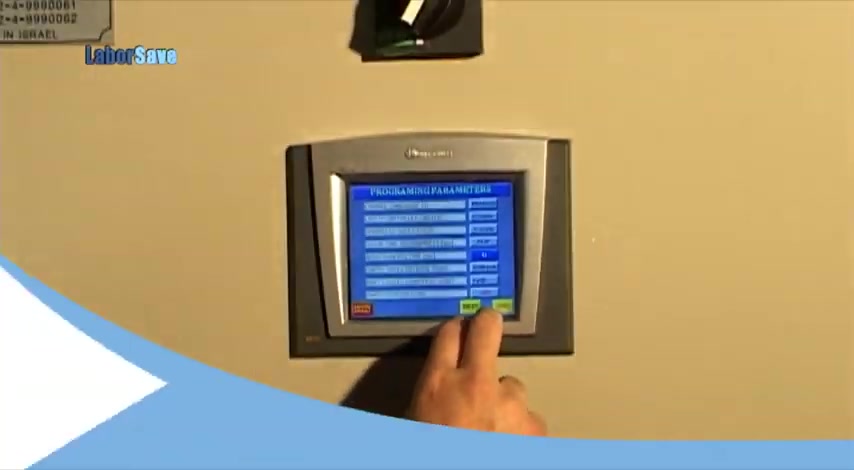
LaborSave
LaborSave: The Original Automatic Bag Emptying Machine
LaborSave presents its fully automated bag emptying machine: whole pallets of sacks are lifted, cut open and emptied into a hopper without an operator handling a single bag.
Total reach: 15,254
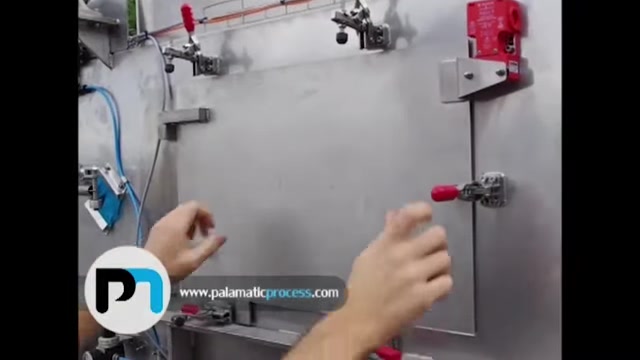
Palamatic Process
Palamatic Process MiniSlit: Automatic Bag Dump Station
Palamatic Process shows the MiniSlit automatic sack discharging station: sacks arrive on a belt conveyor, are cut open on three sides, emptied, and the empty bags are compacted.
Total reach: 8,503

F.lli Sacchi S.n.c.
Smart Pick – Fully Automated Bag Emptying and Processing of Complex Recipes
The video shows the F.lli Sacchi SmartPick robotic bag emptying system. A robot selects bags from pallet stations, presents them to a cutting and emptying station, and supports recipe controlled ingredient handling.
Total reach: 23,106