
Technology guide
Automated Bag Emptying Systems
Answer in brief
Automated bag emptying opens, discharges and manages sacks with little direct operator contact. It can cut routine dust exposure and labor, but performance depends on bag construction, residual product, dust capture, foreign-material control, empty-bag compaction, cleaning and safe intervention when a bag jams or tears.
By Editorial Team · Reviewed July 14, 2026 · Updated July 26, 2026

Sponsored visibility
Featured Automated Bag Emptying Systems videos
Paid placements are clearly marked and remain separate from the editorial related-video selection.
Automation changes the exposure pattern rather than eliminating every source. Cutting and shaking occur inside an enclosure, but bag feeding, rejected sacks, maintenance and handling of contaminated empty bags can still release dust, a pattern documented in studies of dust control during bag opening.
Define the hazard and objective
Define bag sizes, materials, closure types and acceptable residual product, plus a clear policy for liners, labels, strings and fragments. Product recovery, waste volume and contamination limits influence the equipment arrangement.
Dust control can serve several objectives: worker exposure, product loss, cross-contamination, environmental emissions and combustible-dust management. One device rarely satisfies all of them, so state the required result and the acceptance method before selecting equipment.
How the system works
Bags enter a guarded enclosure, are opened by a cutting or tearing mechanism and are agitated so material falls into a hopper. Empty sacks leave through a contained waste route. Local extraction maintains inward airflow at the necessary openings.
The enclosure must capture dust from cutting, product fall and bag collapse, with air moving away from the operator and into the collection system. Waste-bag compaction displaces contaminated air and belongs in the extraction design.
Engineering infographic
Operating sequence
Conceptual operating sequence for Automated Bag Emptying Systems; use it to structure an engineering review, not as a fabrication drawing or project-specific design.
Engineering inputs
- Bag dimensions, construction and closure.
- Powder dustiness, toxicity and flowability.
- Required throughput and residual product target.
- Foreign material detection and rejection.
- Extraction, fabric filtration and waste route.
- Cleaning, access and product changeover.
Visual cleanliness is not a sufficient design value. Dustiness, particle size, toxicity, combustibility and the energy applied during handling determine what is released; enclosure openings, displaced air and operator position determine how that release reaches the workplace or the exhaust system.
Hierarchy of controls
- Eliminate an unnecessary open powder handling step.
- Substitute a less dusty form where product requirements allow it.
- Enclose the source and automate transfer where practical.
- Capture residual release close to the point of generation.
- Use work practices, housekeeping and personal protection for remaining risk.
HSE and NIOSH guidance both emphasize enclosure and local extraction for bag and powder handling. Extraction performs best when the source is enclosed enough to establish a predictable inward air path. More airflow is not a substitute for poor enclosure geometry.
Monitoring and failure modes
- Bag jams create an open intervention.
- Fragments enter the product stream.
- Residual powder leaves with empty sacks.
- Waste compaction releases captured dust.
- Extraction falls below the required inward flow.
Useful checks include bag count, cycle faults, extraction status, waste capacity and residual product observations. Exposure verification should include interventions and waste handling, not only normal automatic running.
Combustible dust and process safety
Cutters, conveyors and compactors need guarding and energy isolation. The safe method for removing a damaged sack should prevent unexpected motion and control the powder released when the enclosure is opened.
Collection and transfer equipment can create a confined dust cloud and connect several process volumes. A dust hazard assessment should address ignition, electrostatic charging, fire, pressure development and propagation. Vacuum cleaning equipment used for combustible dust requires a suitability assessment for the material and location.
Commissioning and lifecycle checks
- Measure or verify the material hazards and exposure criteria.
- Observe the complete task, including setup, waste and cleaning.
- Confirm enclosure direction and capture under representative operation.
- Record airflow, pressure or other useful baseline indicators.
- Test alarms and the response to loss of control.
- Define filter service, waste handling and safe maintenance.
- Repeat exposure or emission verification after relevant change.
Engineering infographic
Functional zones and interfaces
Conceptual functional zone schematic for Automated Bag Emptying Systems; use it to structure an engineering review, not as a fabrication drawing or project-specific design.
How to select Automated Bag Emptying Systems
Define the material, process objective, capacity, operating conditions, cleaning needs, safety duties and evidence required before comparing equipment.
Partner with powderbulkvideos.com
Place your video in the engineering context buyers are researching.
Use a relevant company profile and technical video to demonstrate this technology before engineers reach the supplier shortlist.
Engineering infographic
Engineering review envelope
Conceptual engineering review envelope for Automated Bag Emptying Systems; use it to structure an engineering review, not as a fabrication drawing or project-specific design.
Popular on powderbulkvideos.com
Popular Automated Bag Emptying Systems videos

F.lli Sacchi S.n.c.
Smart Pick – Fully Automated Bag Emptying and Processing of Complex Recipes
The video shows the F.lli Sacchi SmartPick robotic bag emptying system. A robot selects bags from pallet stations, presents them to a cutting and emptying station, and supports recipe controlled ingredient handling.
Total reach: 23,039
Palamatic Process
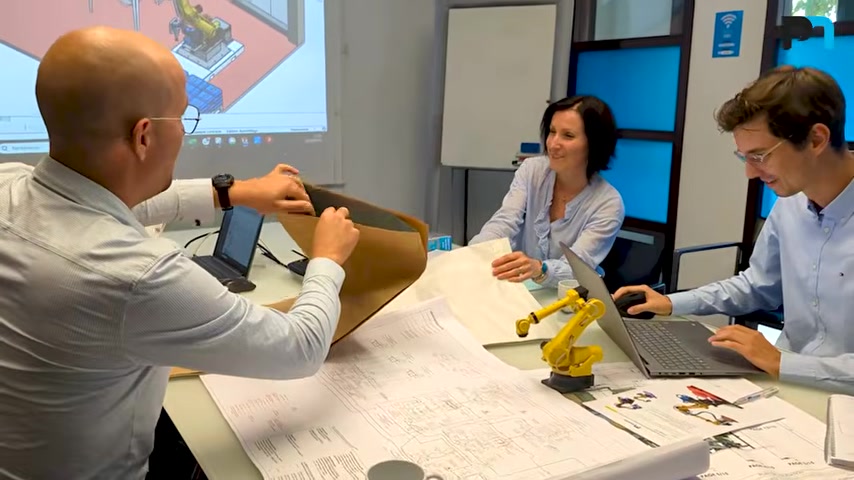
Palamatic Process SackBot Series 200: Robotic Depalletizing and Automatic Sack Emptying
Palamatic Process introduces the SackBot Series 200, a robot with 3D vision that picks sacks from pallets and feeds them to an automatic bag emptying unit.
Total reach: 16,383
LaborSave
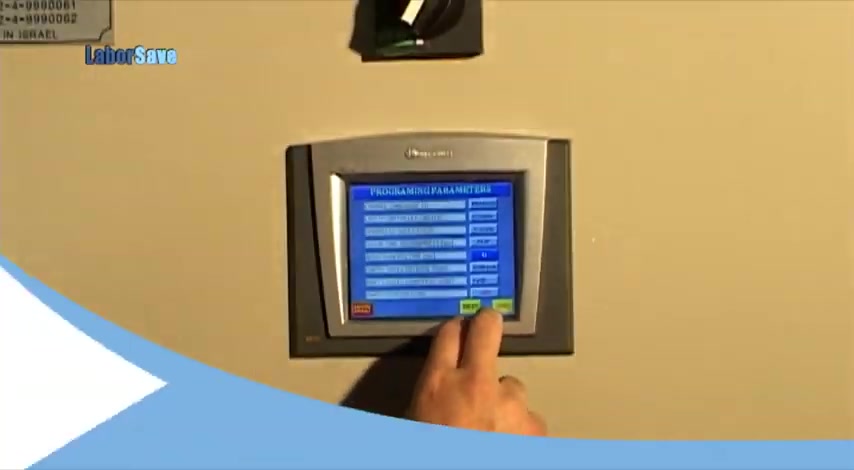
LaborSave: The Original Automatic Bag Emptying Machine
LaborSave presents its fully automated bag emptying machine: whole pallets of sacks are lifted, cut open and emptied into a hopper without an operator handling a single bag.
Total reach: 15,134
Palamatic Process
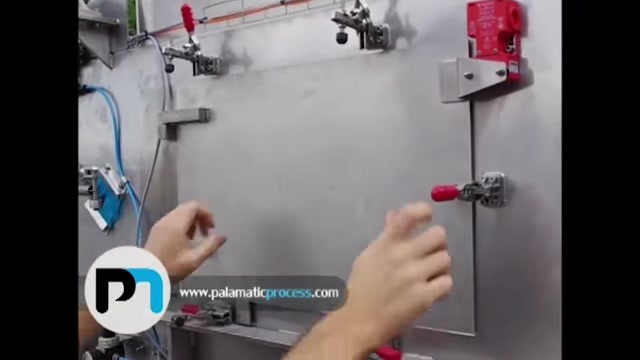
Palamatic Process MiniSlit: Automatic Bag Dump Station
Palamatic Process shows the MiniSlit automatic sack discharging station: sacks arrive on a belt conveyor, are cut open on three sides, emptied, and the empty bags are compacted.
Total reach: 8,331
Dinnissen
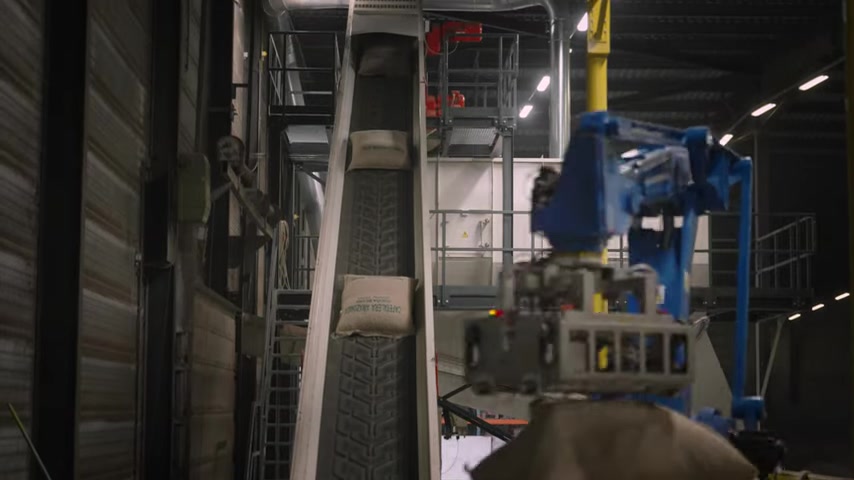
Dinnissen DIMA 1200 Bag Emptying System at Steinweg
Dinnissen shows the DIMA 1200 fully automatic bag emptying system installed at Steinweg Amsterdam for cocoa, where it saves the equivalent of two full-time jobs per truckload.
Total reach: 1,237

Telschig
Telschig Automatic Sack Emptying Plant for Milk Powder
Telschig shows a fully automatic sack emptying plant for milk powder: robotic depalletizing with optical recognition, dust-free opening and emptying, and empty bags pressed into a film tube.
Supplier discovery
Companies demonstrating Automated Bag Emptying Systems
Frequently asked questions
Which bag variables must an automated emptying system tolerate
Bag dimensions, construction, liner, closure, fill mass, product behavior, damage and presentation orientation all affect opening, discharge and empty-bag handling.
What should an automated bag-emptying trial measure
Measure bags per hour, residual product, dust release, rejected bags, downstream feed stability, empty-bag condition and recovery from a misfeed or incomplete opening.
Related content
Continue exploring
Move from this page to the companies, videos and technical topics that add useful context.