
Material
Titanium Dioxide
Answer in brief
Titanium dioxide finds every gap in a system and makes it visible.
The particles are fine, light and bright white, so a leak that would go unnoticed with another powder coats a whole room here.
- Design for containment at bag and big bag emptying, where most of the release happens.
- Expect aerated, flooding behavior after pneumatic transfer.
- Control inhalable dust exposure as a regulated matter.
Reviewed October 21, 2026 · Updated November 10, 2026
Handling challenges
Pigment-grade titanium dioxide is among the finest powders handled at industrial scale, and that single property drives the whole design.
Containment at the point of charge
Most pigment escapes during bag emptying, big bag discharge and manual charging into mixers.
- Automated or contained bag dump stations with integrated extraction.
- Big bag dischargers with a sealed spout connection rather than an open cuff.
- Local extraction designed for the task geometry, not a general room ventilation rate.
Flow and feeding
After pneumatic transfer the powder holds air, floods through feeders and defeats volumetric dosing.
Loss-in-weight feeding with a deaeration volume, a conditioning inlet and vibration isolation gives a dosing accuracy that the process can rely on.
Left to consolidate, the same powder arches, so the hopper has to work in both states.
Agglomerates and dispersion
Pigment performance depends on dispersion, and agglomerates formed in storage carry through to the finished coating as specks.
Inline screening or a lump breaker ahead of the mixer removes the agglomerates that handling created.
Exposure control
Inhalable titanium dioxide dust carries occupational exposure limits in most jurisdictions, and the classification has been subject to regulatory debate.
The practical consequence is unchanged: enclose the transfer, extract at the source and monitor rather than rely on housekeeping.
What to establish before buying equipment
- Bulk density aerated and consolidated, which differ widely.
- Required dosing accuracy and the acceptable deaeration time.
- Agglomerate size and the screening cut needed before dispersion.
- Applicable exposure limit and the measurement plan.
Storage and conditioning
Titanium dioxide is very fine, very light and holds air for a long time.
After pneumatic filling it behaves almost like a liquid and will run through any opening that is not closed. Left to settle it consolidates and bridges. Like fly ash, it is two materials in one silo.
- Design a deaeration volume for the fluid state and an outlet for the consolidated state.
- Keep it sealed: the dust is a brilliant white that marks every surface in the building.
- Expect the apparent density to change between a filled and a settled silo.
What this means for equipment
Containment and flooding drive the selection.
Vacuum conveying is preferred wherever the distance allows it, because a leak then draws in rather than out, and the visible consequence of a leak is immediate with this product. Rotary valves have to be specified for the flooding case; a standard valve passes aerated pigment as if the pocket were open.
- Closed transfer with full-face seals.
- Deaeration volume before any feeder, and gravimetric dosing where the rate matters.
- Filters sized for an extremely fine dust, with a cleaning mechanism that copes.
Safety and regulatory
Titanium dioxide is not combustible, and the control that matters is inhalation of the fine fraction.
The respirable fraction has been the subject of changing classification in several jurisdictions, and the practical consequence is the same either way: keep it contained and capture at the source.
- Closed handling first, local extraction second.
- Closed handling of collected filter dust, which is the finest fraction in the plant.
- Check the current classification in your market rather than relying on an old safety data sheet.
The physical hazard is flooding: isolation must close against a flowing column.
Material behavior
- Flowability
- Aerated and flooding, poor when consolidated
- Abrasiveness
- Low to moderate
- Cohesiveness
- Moderate; forms agglomerates
- Moisture behavior
- Mildly hygroscopic; moisture promotes lumping
- Contamination risk
- Inhalable dust exposure and visible cross-contamination of other products
Partner with powderbulkvideos.com
Put a relevant technical solution in this decision path.
Connect your company and video evidence with clearly labelled visibility where engineers evaluate this material, application, industry or product.
Frequently asked questions
Why does titanium dioxide flood?
It is extremely fine and light, so it holds entrained air for a long time after filling. Until the bed deaerates it behaves closer to a liquid than a powder.
Pressure or vacuum conveying?
Vacuum wherever the distance allows it. A leak then draws air in, and with a brilliant white pigment the consequence of an outward leak is visible across the whole building.
What exposure controls does it need?
Containment first and capture at the source second, with closed handling of filter dust. The classification of the respirable fraction has changed in several markets, so check the current one.
Related content
Continue exploring
Move from this page to the companies, videos and technical topics that add useful context.
Companies
Videos

Prater Industries
FB12 Quick Clean Flake Lump Breaker Intro and Overview
Prater Industries opens up its FB12 Quick Clean flake lump breaker on camera, showing the exposed breaking assembly and the access concept behind the design. The clip is a manufacturer's product overview, not an independent test.
Total reach: 1,789
LaborSave
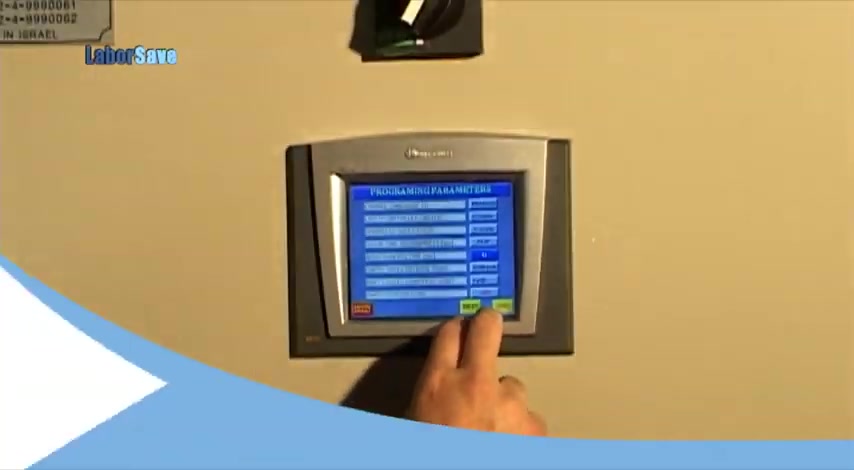
LaborSave: The Original Automatic Bag Emptying Machine
LaborSave presents its fully automated bag emptying machine: whole pallets of sacks are lifted, cut open and emptied into a hopper without an operator handling a single bag.
Total reach: 15,249
Palamatic Process
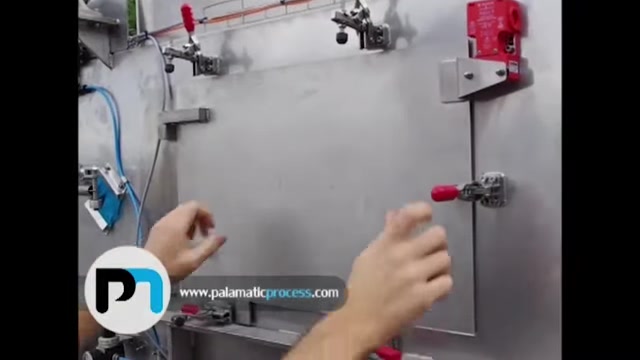
Palamatic Process MiniSlit: Automatic Bag Dump Station
Palamatic Process shows the MiniSlit automatic sack discharging station: sacks arrive on a belt conveyor, are cut open on three sides, emptied, and the empty bags are compacted.
Total reach: 8,484
Technologies
- Automated Bag Emptying Systems
- Bulk Bag Unloading Systems
- Bulk Bag Unloading Systems: Selection and Design
- Deagglomerators & Nibblers
- Dust Collection & Air Pollution Control
- Dust Collection & Air Pollution Control Technology Guide
- Feeding & Dosing Control
- Feeding & Dosing Control
- Industrial Feeders
- Screening & Sieving Systems
- Screening & Sieving Systems for Powder and Bulk Solids
- Vacuum Conveying
- Vacuum Conveying Systems
Applications
- Automated Sack Emptying in Chemical Plants
- Automated Sack Emptying in Plastics Plants
- Bulk Bag Discharge in Chemical Batching
- Bulk Bag Discharge in Plastics Compounding
- Bulk Bag Unloading with Dust Containment
- Chemical Powder Repackaging and Batching
- Dense Phase Conveying in Chemical Production
- Explosion Isolation in Chemicals
- Explosion Protection for Chemical Plants
- Gravimetric Feeding in Chemical Processing
- Gravimetric Feeding in Cosmetics Production
- Inline Screening in Conveying and Processing Lines
- Level Measurement and Inventory Control in Chemical Plants
- Mechanical Conveying in Chemical Plants
- Powder Blending in Chemical Production
- Powder Blending in Cosmetics Production
- Powder Blending in Plastics Compounding
- Routing Powder to Multiple Destinations in Chemicals
- Valve and Airlock Selection for Chemical Powder Lines