
Application
Bulk Bag Discharge in Building Materials Plants
Answer in brief
In building materials plants bulk bags carry the additives, and several of them are caustic.
The dust from lime and cement additives damages eyes and airways, which makes the untying step a protection question rather than a housekeeping one.
- Enclose and extract at the connection.
- Expect caked material after storage.
- Provide washing facilities where caustic powders are handled.
Reviewed October 21, 2026
The problem
In a cement or plaster plant the bulk bag station is exposed to the two things that destroy equipment: abrasive dust and weather.
The powders are fine, hard and often hygroscopic, so they wear the contact parts, they escape through any gap, and a bag that has stood in a damp yard discharges as lumps rather than as powder.
The station is also often outdoors or in an open bay, which means the extraction has to work against draughts that a clean indoor plant never sees.
Desired outcome
A station that empties abrasive, cohesive powder completely without releasing dust into a yard where it will be visible for a hundred metres.
Practically: a sealed connection, extraction that works in a draught, wear parts that can be changed quickly, and a frame that tolerates bags that have been stored outside.
Extraction that works in the conditions the station actually stands in. A hood sized correctly in still air does nothing in an open bay with a crosswind, and most stations in this sector are in exactly that position.
In chemical batching the same station is specified against the whole material list rather than against one powder, because a frame built for the first product meets the twelfth.
Process approach
The bag is lifted into the frame, usually by forklift in this sector, and the spout is sealed into the hopper before it is untied.
Massaging is normally essential rather than optional: cement, lime and plaster consolidate in the liner, and a bag that has stood for weeks will not empty on its own. Paddles that work the lower third of the bag do most of the useful work.
Below the spout, a sealed hopper with a generous outlet takes the powder, and a screw or rotary valve meters it onward. The outlet is sized for the consolidated condition, not for the way the powder behaved when it was packed.
Extraction is placed at the connection and shielded from draughts. In an open bay, a hood that would work indoors loses the dust to the wind.
Moisture is the failure that is specific to this sector. Cement, lime and plaster react with water rather than simply caking, so a bag that has stood in rain contains hard lumps that massaging will not recover and that block the outlet. Where the yard has no cover, that is the design case and the station needs a lump breaker or a screen rather than more vibration.
- Seal first, open second, massage always.
- Outlet sized for the stood condition.
- Extraction shielded against draughts.
- Lump breaker or screen where bags are stored uncovered and hydraulic binders have reacted.
- Hood shielded against draughts, since most stations here stand in open bays.
- Respirable silica exposure measured, because the fraction that matters is invisible.
Selection factors
- Consolidation after storage, which decides the massaging requirement and the outlet size.
- Abrasiveness, which decides the wear parts and how quickly they can be changed.
- Moisture exposure of the bags before they arrive; hydraulic binders react rather than simply caking.
- Draughts at the station, which decide the hood design and the extraction volume.
- Explosion characteristics where the product is combustible, which not all building material powders are.
- Silica content, which turns the respirable fraction into a regulated exposure.
- Lump handling where hydraulic binders have reacted with moisture in storage.
Common failure modes
- Outlet sized for fresh powder, so a bag stored for weeks will not discharge
- Massaging treated as an option, which fails on the first consolidated bag
- Extraction hood that works indoors and loses the dust to the wind in an open bay
- Wear parts that require the station to be dismantled, so they are replaced late
- Respirable silica treated as nuisance dust rather than as a regulated exposure
- Hood sized in still air and installed in a bay with a crosswind
- Hard lumps from rain damaged bags treated as a flow problem rather than a reacted material
- Respirable silica exposure judged by the look of the station
Partner with powderbulkvideos.com
Put a relevant technical solution in this decision path.
Connect your company and video evidence with clearly labelled visibility where engineers evaluate this material, application, industry or product.
Frequently asked questions
Why do bags of cement powder stop flowing?
The powder consolidates in the liner while the bag stands, and fine hydraulic binders do this quickly. Massaging the lower third of the bag is what restores the flow.
Does the station need different extraction outdoors?
Yes. A hood sized for an indoor station loses the dust to draughts. The hood has to be shielded and the volume set for the real air movement at the station.
Is the dust a regulated exposure?
Where the product contains crystalline silica, the respirable fraction is regulated rather than a nuisance dust, and the controls follow from that rather than from housekeeping.
What happens to a cement bag stored in the rain?
It reacts rather than cakes. The result is hard lumps that no amount of massaging recovers, so an uncovered yard means the station needs a lump breaker or a screen, not more vibration.
Why is draught the critical factor for extraction here?
Because most of these stations are in open bays. A capture velocity that works in still air is overwhelmed by a crosswind, so the hood has to be shielded as well as sized.
Related content
Continue exploring
Move from this page to the companies, videos and technical topics that add useful context.
Companies
Videos
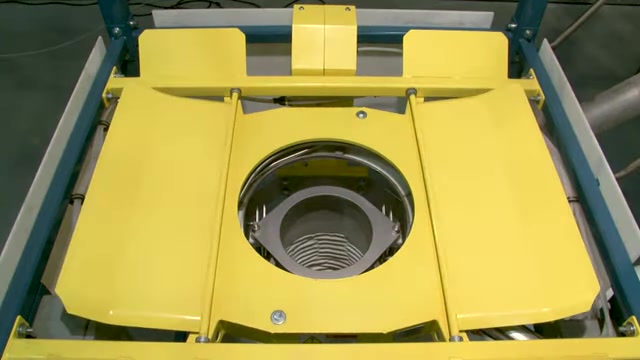
Flexicon
Flexicon BULK-OUT Bulk Bag Dischargers
Flexicon presents its BULK-OUT bulk bag discharger range: forklift-loaded BFF frames, hoist-and-trolley BFC frames, split and half frames, and accessories for dust-free untying, retying and flow promotion.
Total reach: 73,122
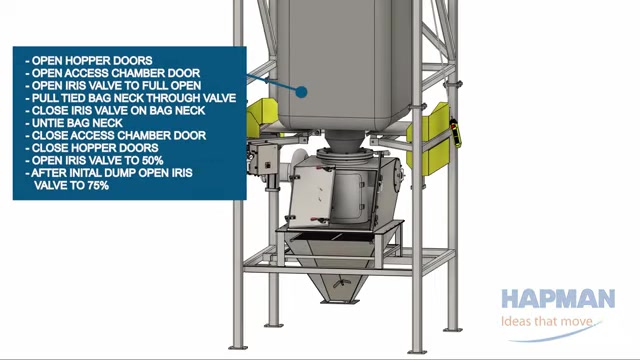
Hapman
Hapman Bulk Bag Hoist Unloader with Dust Collection
Hapman shows a hoist-loaded bulk bag unloader with a round access chamber and integrated dust collection for dust-free discharge.
Total reach: 2,978
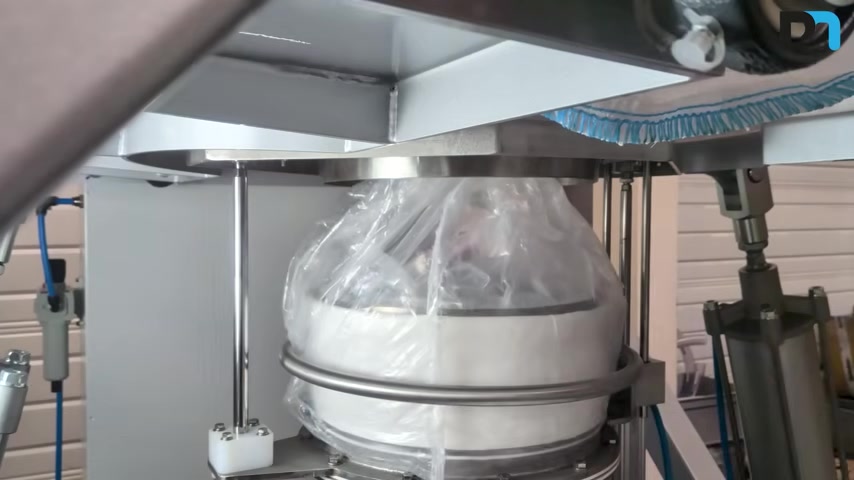
Palamatic Process
Palamatic Process: Emptying Big Bags of Sensitive Powders with OEB Containment
A Palamatic Process engineer explains the OEB big bag discharge station for toxic, CMR and ultra-fine powders, including the sleeve tie-off that keeps containment through a bag change.
Total reach: 18,760
Technologies
- Bulk Bag Unloading Systems
- Bulk Bag Unloading Systems: Selection and Design
- Dust Collection & Air Pollution Control
- Dust Collection & Air Pollution Control Technology Guide
- Feeding & Dosing Control
- Feeding & Dosing Control
- Screening & Sieving Systems
- Screening & Sieving Systems for Powder and Bulk Solids
- Vacuum Conveying
- Vacuum Conveying Systems