
Application
Explosion Isolation in Petrochemicals
Answer in brief
In petrochemical plants dust isolation has to coexist with gas safety rules.
The devices sit in classified areas and must satisfy both sets of requirements, which narrows the selection sharply. A hybrid atmosphere narrows it further, because hydrocarbon vapour lowers the ignition energy the dust assessment assumed.
- Assess dust and gas together for each device position.
- Cover polymer and catalyst handling, which is where the dust actually is.
- Keep the documentation consistent with the existing safety case.
Reviewed October 21, 2026
The problem
The dust hazard in a petrochemical plant is easy to overlook because the site is organised around a different one. Attention and paperwork follow the hydrocarbons, and the polymer powder on the way to the extruder gets treated as a handling problem.
It is not. Polymer fluff and catalyst powders form explosible clouds, and the equipment that moves them is connected: a conveying line, a silo, a collector, a feeder. A deflagration in one of them travels to the next through the duct.
What makes isolation awkward here is the surroundings. The device sits in an area classified for gas, so it has to be suitable for that classification as well as for the dust duty. And where hydrocarbon vapour can credibly be present with the dust, the atmosphere is hybrid: the minimum ignition energy drops, sometimes by orders of magnitude, and a static discharge that would not have ignited the dust alone becomes sufficient.
Desired outcome
Every connection between protected vessels carries a tested isolation device, or is shown not to need one, with the device suitable for the classified area it stands in.
The dust assessment and the gas safety case point at each other instead of sitting in separate folders. A reader who starts from either one can find the other.
Where inerting is the basis of safety rather than isolation, that is stated as a decision with its own monitoring and its own failure case, not left as an assumption that the nitrogen will always be there.
For a pharmaceutical plant the suppressant needs product compatibility before it needs performance, because quality can reject it after the device has been bought.
Process approach
Selection starts from two inputs at once: the area classification at the device position and the measured characteristics of the dust. Taking them in sequence is how plants end up with a device that is correct for one and unusable for the other.
The hybrid question comes next. If hydrocarbon vapour can reach the dust handling equipment, through a leak, a shared vent, a wet feedstock or a dryer, the ignition energy used in the assessment has to come from the hybrid case. Detection based systems are affected most, because the event they have to catch starts earlier and develops faster.
Static is the ignition source worth naming. Polymer powder charges heavily in pneumatic conveying, and a line that ends in a silo with no isolation downstream is a line that will deliver whatever starts in it.
Maintenance is the last constraint and it bites. A device that needs inspection and reset inside a classified area is maintained under permit, which means the testing interval has to be something the plant can actually keep.
- Area classification and dust characteristics assessed together, not in sequence.
- Hybrid atmosphere evaluated wherever vapour and dust can meet.
- Static control treated as the primary ignition source in polymer lines.
- Device materials checked against the process chemicals they will see.
- Documentation integrated with the plant safety case, not kept beside it.
- Testing interval set to what is achievable under permit conditions.
Selection factors
- Area classification at each device position, which is often different from the classification of the room the duct passes through.
- Explosion characteristics of the polymer or catalyst dust, measured on the material as handled, including fines generated in conveying.
- Credible presence of hydrocarbon vapour, and the ignition energy that follows from the hybrid case rather than the dust alone.
- Duct geometry and available distances, which in a congested plant are rarely what the certificate would prefer.
- Material compatibility of seals, membranes and moving parts with the process stream.
- Maintenance regime under permit conditions, which decides whether a detection based system can be kept in test.
Common failure modes
- Device suitable for the dust duty but not for the classified area it stands in
- Hybrid atmosphere lowering the ignition energy unnoticed, so the detection system is set for the wrong event
- Dust safety case kept separate from the gas safety case, so neither reader finds the other
- Static ignition in a polymer conveying line with no isolation downstream of it
- Inerting assumed as the basis of safety without monitoring or a stated failure case
- Testing interval written to the certificate and not to what permit conditions allow
Partner with powderbulkvideos.com
Put a relevant technical solution in this decision path.
Connect your company and video evidence with clearly labelled visibility where engineers evaluate this material, application, industry or product.
Frequently asked questions
Is polymer powder really an explosion hazard next to the hydrocarbon risk?
Yes, and the two do not substitute for each other. Polymer fluff and catalyst fines form explosible clouds in their own right, and the equipment handling them is connected in exactly the way that lets a deflagration travel.
What does a hybrid atmosphere change?
Mainly the ignition energy. Vapour mixed with dust can lower it by orders of magnitude, so an ignition source dismissed in the dust assessment becomes sufficient, and detection has to catch an event that starts earlier.
Can nitrogen inerting replace isolation?
It can be the basis of safety, but then it carries the duty: continuous oxygen monitoring, a defined action on loss of inerting, and a documented case for what happens during startup and maintenance when the inerting is not yet established.
Related content
Continue exploring
Move from this page to the companies, videos and technical topics that add useful context.
Companies

Videos

REMBE® GmbH Safety+Control
REMBE®: Explosion Isolation – REMBE® EXKOP®
This REMBE video explains an active explosion isolation system intended to stop propagation through connected ductwork. The shown equipment is part of explosion mitigation, not a substitute for ignition prevention. Selection requires representative dust test data, a hazard assessment and a coordinated venting, suppression and isolation strategy.
Total reach: 23,512
BS&B Safety Systems
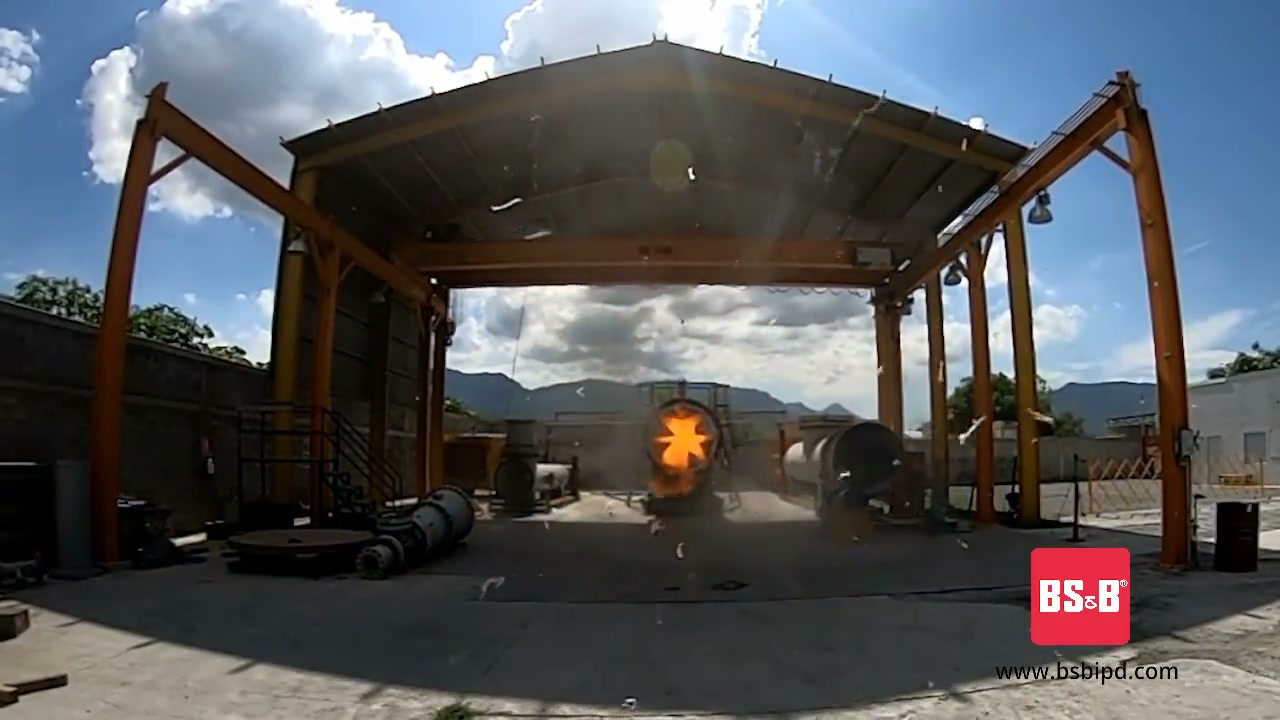
BS&B Industrial Explosion Protection Devices
BS&B Safety Systems presents its range of industrial explosion protection devices: explosion vents, flameless venting, and chemical explosion suppression and isolation systems.
Total reach: 2,102

VIGILEX by STIF
VIGILEX by STIF: Explosion Vent Panel and Flameless Devices Protection
The video introduces VIGILEX explosion vent panels and flameless venting devices from STIF. These are mitigation components for limiting pressure effects after a deflagration begins inside protected equipment.
Total reach: 28,590