
Application
Dense Phase Conveying in Feed and Grain Plants
Answer in brief
In a feed mill the conveying system is judged by the fines it makes.
Pellet durability is a specification the customer measures, and a fast conveying line takes a good pellet and delivers a broken one. Dense phase keeps the velocity low enough to preserve it.
- Measure durability before and after the line, not just at the press.
- Step the pipeline; the far end does the damage.
- Keep the line dry, because damp feed sticks and then blocks.
Reviewed October 21, 2026
The problem
Pellet durability is tested and sold. A feed pellet that leaves the press with a good durability index arrives at the farm with a lower one, and the difference was made by the handling in between: every drop, every bend and every metre of fast conveying.
Fines are not only a quality loss. They segregate in the bin, they dust at loading, and in a medicated feed they carry a different additive concentration from the pellets, which turns a handling issue into a composition one.
Dilute phase conveying is the fastest damage mechanism in the plant, which is why dense phase is attractive for finished feed. The constraint is that feed pellets are large, permeable and variable, so plug behaviour has to be established rather than assumed, and a plant that switches between mash and pellets is asking the same line to carry two very different materials.
Moisture is the practical hazard. Feed pellets pick up moisture, feed meals contain fat, and a dense phase line that stops full with damp material in it is difficult to restart.
What a grain and feed plant asks of a conveying line is unusual: the product carries a measured durability figure, and the line is allowed to spend part of it.
Desired outcome
A conveying system whose contribution to fines is measured, with durability tested before and after the line so the loss is attributed rather than argued about.
Velocity held below the damage threshold along the whole pipeline, with the increase towards the receiving end designed out.
A line that can be emptied and restarted, with a procedure for the case where it stops full of damp material.
In a pet food plant the velocity limit belongs to the coated kibble and not to the bare one, because a coating that survived the press breaks at a velocity the uncoated product tolerated.
Process approach
The design starts with a measurement that most plants do not have: durability in and durability out for the existing handling route. That number tells you whether the conveying is worth changing and gives a target for the new system.
Conveying trials then establish the flow mode and the damage threshold for the actual pellet, which varies with diameter, formulation and press conditions. A mash duty on the same line is trialled separately, because a fine fibrous meal behaves nothing like a pellet.
The pipeline is stepped so the velocity limit holds at the far end, and the bends are long radius and smooth, since a pellet striking a sharp bend breaks rather than abrades.
Then the line is detailed for the awkward realities: a drain and a restart arrangement for a line stopped full, access at the low points, and attention to condensation where a line runs outside and cools. The dust explosion case is assessed on the fines the line creates, not on the pellet.
- Durability measured before and after the existing route to establish a target.
- Conveying trials for the pellet and, separately, for any mash duty on the same line.
- Stepped pipeline so the damage threshold velocity holds at the far end.
- Long radius smooth bends, since pellets break rather than abrade at a sharp change of direction.
- Drain points and a restart procedure for a line stopped full.
- Dust explosion case assessed on the fines generated, not on the intact pellet.
Selection factors
- Pellet durability specification and the loss the plant can afford across handling.
- Pellet diameter and formulation, which change both plug behaviour and fragility.
- Whether mash shares the line, which is effectively a second, different duty.
- Required rate and distance to the silos or the load out.
- Moisture and fat content, which decide the blockage and restart risk.
- Medicated feed carryover, since the line is part of the flushed route.
Common failure modes
- Durability measured at the press and never after the conveying line
- Single diameter pipeline, so the last section runs fast enough to break pellets
- Sharp or short radius bends breaking pellets that a long radius bend would have passed
- Mash and pellets run on one line with trials for only one of them
- No drain or restart arrangement, so a trip with the line full costs a shift
- Line left out of the medicated feed flush route
Partner with powderbulkvideos.com
Put a relevant technical solution in this decision path.
Connect your company and video evidence with clearly labelled visibility where engineers evaluate this material, application, industry or product.
Frequently asked questions
How much durability does conveying cost?
Enough to be worth measuring. Testing before and after the line attributes the loss properly, and in a fast dilute phase route the conveying is often the largest single contributor.
Can one line handle both mash and pellets?
It can, but it is two duties. Fine fibrous meal and a large permeable pellet behave very differently in dense phase, so both need their own trial and often their own air settings.
What happens if a dense phase line stops full?
With damp or fatty feed it can be difficult to restart. Drain points, a defined air injection sequence and a written procedure turn that from a shift of work into a routine recovery.
Related content
Continue exploring
Move from this page to the companies, videos and technical topics that add useful context.
Companies

Videos
Qlar
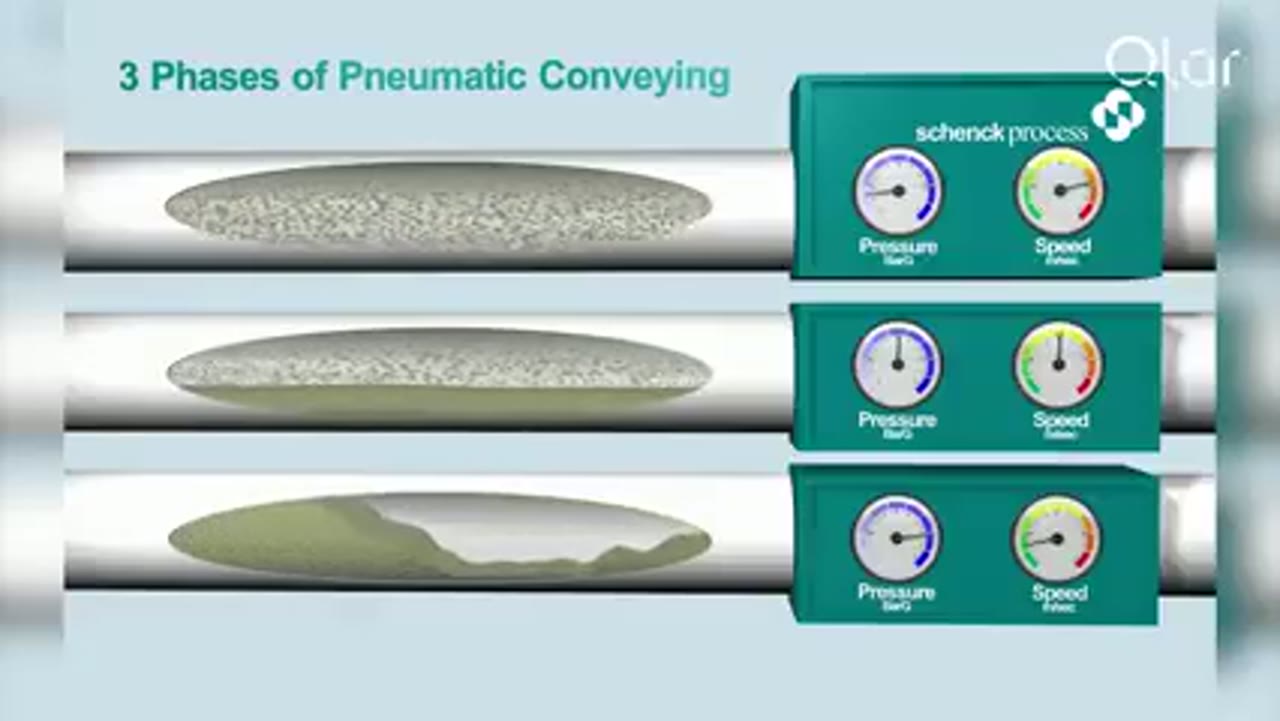
Pneumatic Conveying Explained: The 3 Key Phases of Dense Phase Conveying
Qlar explains the three phases of dense phase pneumatic conveying and where each one fits when powders, granules and bulk solids have to move without being damaged.
Magnum Systems
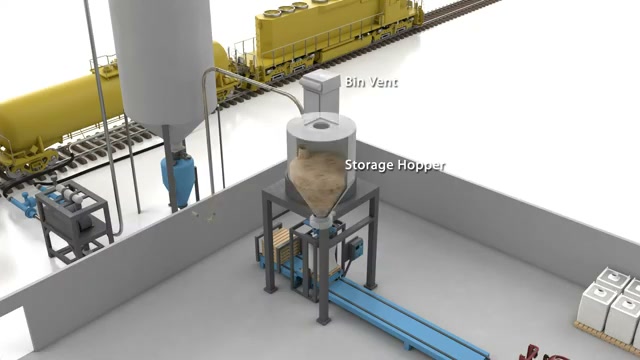
Dense Phase Conveying Process Flow Animation
Magnum Systems shows in a short animation how material travels through a dense phase line in slugs rather than as a continuous stream.
Total reach: 1,747

Coperion
E-finity Continuous Dense Phase Conveying
Coperion presents E-finity, a continuous dense phase conveying system for fragile granular and pelleted materials that monitors pressure and corrects the airflow during the run.
Total reach: 1,905