
Material
Wheat Grain
Answer in brief
Grain handling looks simple until you count the fatalities, which come from two sources: dust explosions and engulfment.
The kernel itself flows well, but it carries dust, chaff and insects, and a silo full of grain behaves like a fluid that will not let go.
- Control dust at intake, elevators and transfer points, where it is generated.
- Aerate stored grain to hold moisture and temperature in a safe band.
- Never enter a bin with grain flowing, and never without a documented procedure.
Reviewed October 21, 2026 · Updated November 10, 2026
Handling challenges
Wheat is the material most people picture when they think of bulk solids, and the grain industry has the accident record that comes with volume.
Dust at every transfer
Kernels abrade and carry field dust, and the elevator leg is the classic place where a dust cloud, an ignition source and confinement meet.
- Enclosed transfers with extraction at intake pits, elevator boots and conveyor heads.
- Housekeeping that removes settled dust rather than relocating it with compressed air.
- Explosion venting and isolation on elevators and filters.
Storage condition
Grain is a biological product with living contents, and both the kernel and anything living in it respire.
Aeration controls moisture migration and temperature gradients that would otherwise create a wet, mouldy layer at one end of the silo.
Temperature cables and regular sampling catch a developing hot spot before it becomes a quality loss or a fire.
Engulfment
Flowing grain pulls a person under in seconds, and bridged grain collapses without warning.
Lockout of all discharge equipment, fall protection, a trained observer and a tested rescue plan are the baseline for any entry.
Mechanical choices
Belt conveyors, chain conveyors and bucket elevators each have a place; the selection usually turns on capacity, grain damage and how much dust each generates.
Pneumatic conveying is used for shorter transfers and ship unloading, with velocity kept low enough to avoid kernel damage and excessive fines.
What to establish before buying equipment
- Intake rate and the peak harvest surge, which usually sets the design.
- Moisture range on receipt and the drying capacity needed.
- Dust extraction volumes at each generation point.
- Entry procedure and rescue capability before the first silo is commissioned.
Storage and conditioning
Grain is stored longer than almost anything else in this list, and the storage is the process.
Moisture and temperature decide whether a bin holds a crop or grows a problem. Above roughly fourteen percent moisture, respiration and mould activity rise sharply, and a warm damp pocket spreads from the inside out.
- Dry to the storage target before filling, not after the problem appears.
- Aerate to equalise temperature; a warm core in a cold bin drives moisture migration.
- Monitor temperature at several depths, because the first sign of trouble is a hot spot nobody can see.
What this means for equipment
Grain handles easily, which is why grain plants are built around throughput and gentleness rather than around flow problems.
The limits are breakage and dust. Every drop and every bend cracks kernels, and cracked kernels are both a quality loss and the dust that creates the hazard.
- Bucket elevators and belt or chain conveyors rather than long pneumatic lines.
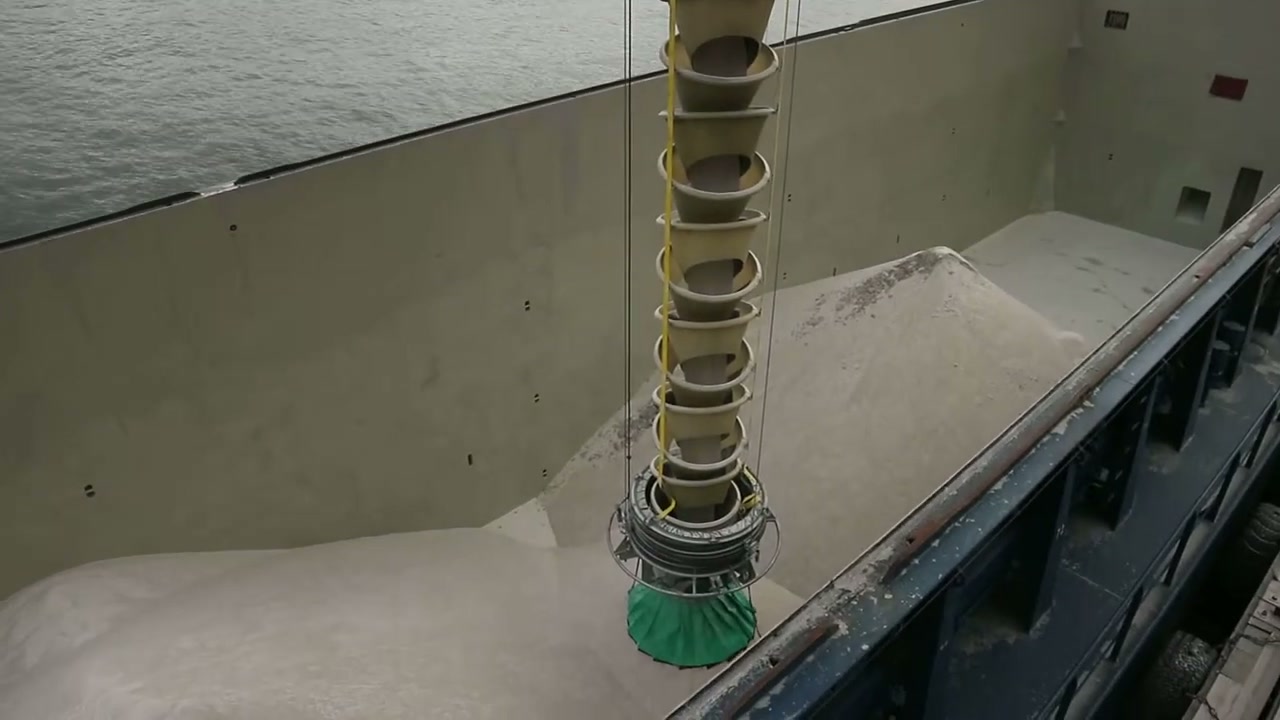
- Cascade or spiral chutes where material has to fall a long way.
- Aspiration at every transfer, sized for a coarse stream with a fine dust fraction.
Safety and regulatory
Grain dust explosions are the reason much of modern dust safety regulation exists.
Elevators concentrate exactly the conditions needed: a fine organic dust, confinement, and mechanical equipment that can supply the ignition. The controls are well established and non-negotiable.
- Housekeeping with documented frequency; settled dust is the fuel for the second explosion.
- Explosion protection and isolation on elevators, filters and bins.
- Bearing and belt monitoring on elevators, where the ignition usually comes from.
Entry into a bin is a separate and frequently fatal hazard: flowing grain traps a person in seconds.
Material behavior
- Flowability
- Free flowing
- Abrasiveness
- Low
- Cohesiveness
- Low when dry, rises with moisture and spoilage
- Moisture behavior
- Mould and heating risk above 14 percent
- Contamination risk
- Insects, mycotoxins and foreign material
Partner with powderbulkvideos.com
Put a relevant technical solution in this decision path.
Connect your company and video evidence with clearly labelled visibility where engineers evaluate this material, application, industry or product.
Frequently asked questions
What moisture content is safe for storage?
It depends on the crop, the temperature and the storage period, but above roughly fourteen percent respiration and mould activity rise sharply. Drying before filling is the control.
Why are bucket elevators the dangerous part?
They confine a fine organic dust and contain the bearings and belts that can supply an ignition. That combination is why elevator protection and monitoring are standard.
Why is bin entry so dangerous?
Flowing grain behaves like a fluid and traps a person within seconds, and a bridged surface can collapse without warning. Entry needs isolation, harnessing and a watcher.
Related content
Continue exploring
Move from this page to the companies, videos and technical topics that add useful context.
Companies

Videos

Laidig Systems
Laidig Systems: Applications – Powder and Bulk Solids
Laidig Systems designs and builds custom storage and reclaim systems that automate the unloading of dry bulk materials. The company focuses on materials with poor flow characteristics and delivers reclaimers for flat- and cone-bottom structures in industries such as food processing, biomass, power, cement, and mining.
Total reach: 24,494
Cleveland Cascades
Cascade Chute Loading at 500 Tonnes per Hour
Cleveland Cascades shows a cascade chute loading material at 500 tonnes per hour, with the falling stream held together inside the chute.
Technologies
- Bulk Loading & Unloading
- Dust Collection & Air Pollution Control
- Dust Collection & Air Pollution Control Technology Guide
- Explosion Protection
- Level Measurement
- Level Measurement and Status Indication for Bulk Solids
- Mechanical Conveying & Belt Conveyors
- Silo Reclaim Systems
- Storage & Transportation
Applications
- Bulk Truck Loading
- Combustible Dust Collection and Mitigation
- Dense Phase Conveying in Feed and Grain Plants
- Dust Collection in Grain and Feed Plants
- Dust Suppression at Transfer Points in Grain Handling
- Dust-free Loading in Grain and Feed Terminals
- Explosion Isolation in Agriculture
- Explosion Protection for Grain and Agricultural Plants
- Intake Pit and Bin Gates in Grain Handling
- Mechanical Conveying in Grain and Feed Handling
- Routing Powder to Multiple Destinations in Agriculture
- Valve and Airlock Selection for Grain and Feed Plants