
Application
Valve and Airlock Selection for Pharmaceutical Powder Handling
Answer in brief
In pharmaceutical handling the valve is the place where the closed system opens.
Every transfer point is a connection that has to be made and broken without exposing the operator or the product, which is why the split butterfly valve exists and why a rotary valve is rarely the answer.
- Design the connection, then the valve.
- Make the cleaning route part of the specification.
- Expect to prove the containment, not to claim it.
Reviewed October 21, 2026
The problem
A pharmaceutical powder line is a series of closed vessels, and every valve is a deliberate hole in that arrangement. The hole has to be opened to transfer and closed afterwards, and both of those actions are where the containment either holds or does not.
The quantities are small, which removes the usual engineering comfort. A few milligrams of a potent compound on an outer surface is a real exposure, and the surface that carries it is the one an operator touches when disconnecting.
Cleaning is the second constraint and it works against mechanical ingenuity. Every shaft, bearing, spring and crevice is a place that has to be reached, swabbed and shown to be clean to a validated limit. A valve with a clever internal mechanism is a valve with places that cannot be proven clean.
And the whole arrangement has to be documented in a form that survives a qualification review, which means the containment performance is a measured number from a standard test, not a description of how well the valve fits.
Desired outcome
A transfer that can be connected and disconnected inside the containment band the product requires, with that performance supported by a measured figure rather than a claim.
Surfaces that can all be reached by the validated cleaning method, with no internal volume that is cleaned only by assumption.
Documentation that reads as part of the qualification package: materials, surface finish, containment test data, cleaning method and change control status.
In plastics processing the same position often needs no airlock at all: the question is whether a pressure boundary is required, and a rotary valve where a slide gate would do makes angel hair.
Process approach
The work starts from the exposure band of the compound, because that number decides the technology. A low potency product transfers through a conventional butterfly valve with a sleeve; a potent one needs a split butterfly valve, where the two halves of the disc mate before the valve opens and separate after it closes, so the contaminated faces are never exposed.
Where containment has to go further, the valve stops being the barrier and the isolator takes over, with the valve inside it. Choosing between those two is a plant decision, not a valve decision, and it is made before the equipment list is written.
Cleaning is specified next. A valve that is cleaned in place needs spray coverage to every internal surface and a drain path that actually drains; a valve that is cleaned out of place needs a dismantling route and a confirmed reassembly procedure. Both are valid, and both have to be chosen rather than defaulted.
Rotary valves do appear, mainly as airlocks below a dryer or a mill where an air boundary is genuinely needed, and there they carry the same duties: cleanable pockets, a seal that can be reached, and often a second role as explosion isolation with the clearance and vane count that imposes.
- Exposure band fixed first; it decides valve technology before anything else.
- Split butterfly used where contaminated faces must not be exposed on disconnection.
- Cleaning route chosen explicitly: in place with proven coverage, or out of place with a procedure.
- Containment performance taken from a standard test, with the figure in the documentation.
- Materials, surface finish and elastomer grades listed against product contact requirements.
- Explosion isolation duty, where it applies, reconciled with the cleaning requirement.
Selection factors
- Occupational exposure band of the compound, which sets the containment technology and is the first number to establish.
- Cleaning strategy, in place or out of place, including whether every internal surface can be reached and swabbed.
- Containment test data for the specific valve and size, since performance does not scale linearly between sizes.
- Product contact materials and surface finish, including elastomer grades and extractables.
- Frequency of connection, which decides whether a manual arrangement is realistic or an automated one is required.
- Explosion isolation duty where a solvent or a fine organic powder is involved.
Common failure modes
- Conventional butterfly valve used on a potent compound, so the contaminated disc faces are exposed on disconnection
- Containment claimed from a supplier statement with no standard test figure behind it
- Internal volume that the validated cleaning method cannot reach, discovered during swab recovery
- Containment test data taken from a different valve size than the one installed
- Manual connection specified for a transfer that happens forty times a shift
- Explosion isolation added late, imposing a clearance that the cleaning design did not expect
Partner with powderbulkvideos.com
Put a relevant technical solution in this decision path.
Connect your company and video evidence with clearly labelled visibility where engineers evaluate this material, application, industry or product.
Frequently asked questions
Why a split butterfly valve rather than a normal one?
Because the two halves of the disc mate before the valve opens and separate after it closes. The faces that touched product stay facing each other, so disconnection does not expose them to the room or to the operator.
Is containment performance comparable between valve sizes?
Not reliably. Performance comes from a standard test on a specific size and configuration, and a figure measured on one size should not be carried across to another without its own data.
Do pharmaceutical lines use rotary valves at all?
Yes, where a genuine air boundary is needed, typically under a dryer or a mill. They then carry the same cleaning and documentation duties as everything else, and often a second role as explosion isolation.
Related content
Continue exploring
Move from this page to the companies, videos and technical topics that add useful context.
Companies

Videos

Hecht Technologie GmbH
HECHT: Containment Sampling Stick – Closed Sampling up to OEB 5
HECHT presents the handling sequence for its CPS disposable containment sampling system.
Total reach: 27,222
Palamatic Process
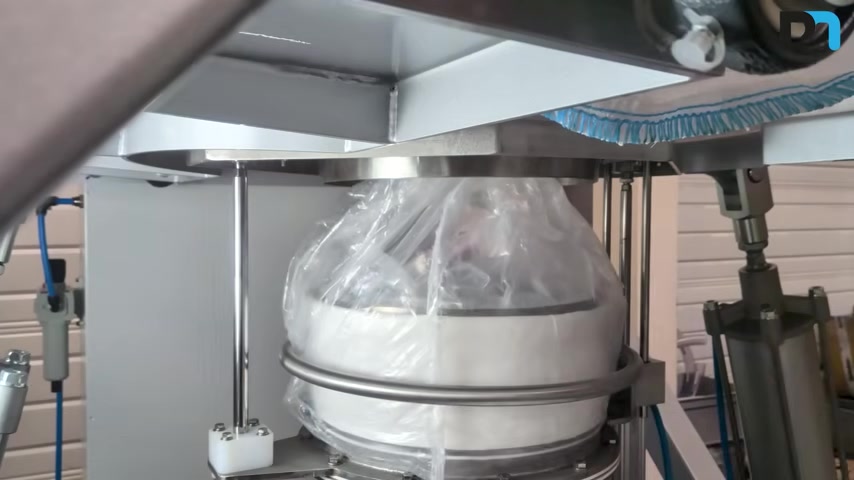
Palamatic Process: Emptying Big Bags of Sensitive Powders with OEB Containment
A Palamatic Process engineer explains the OEB big bag discharge station for toxic, CMR and ultra-fine powders, including the sleeve tie-off that keeps containment through a bag change.
Total reach: 18,760
Bürkle GmbH
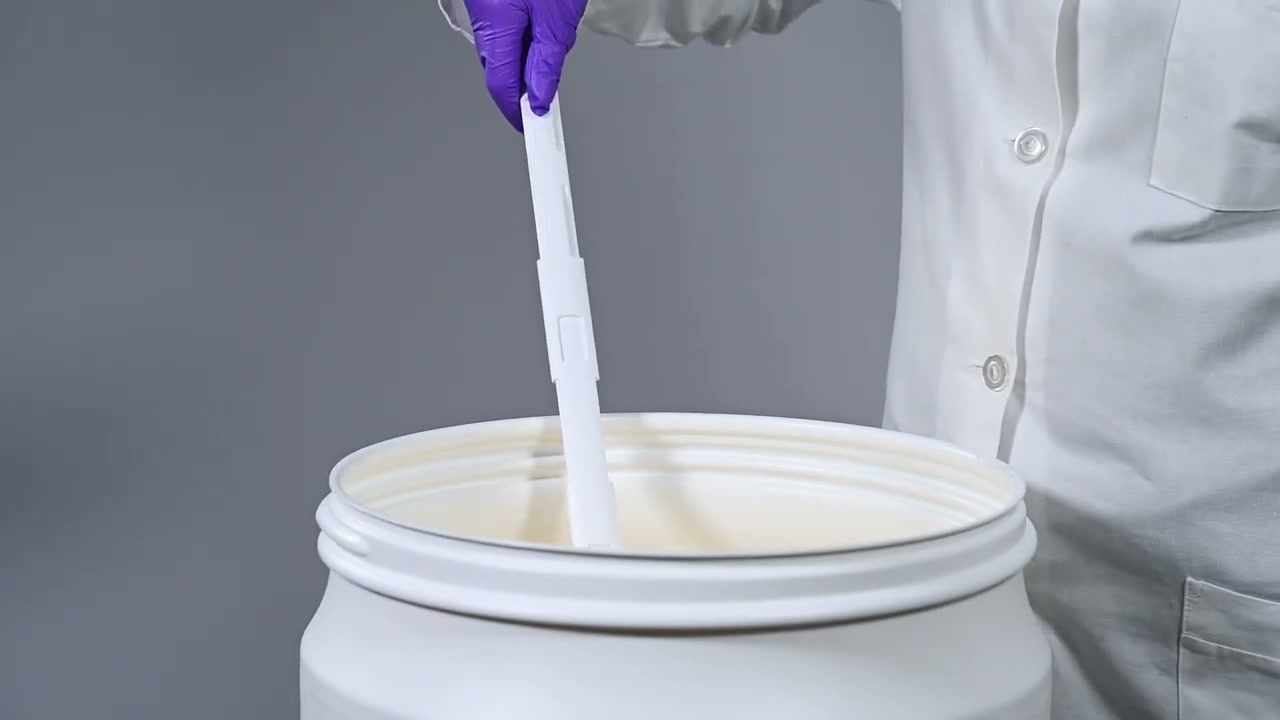
PharmaDispo Disposable Powder Sampler
Bürkle shows the PharmaDispo, a disposable powder sampler that takes three separate samples from different depths of a container in a single pass.