
Material
Wood Pellets
Answer in brief
Wood pellets are handled as fuel but behave as a fragile, living material.
Every transfer turns pellets into dust, and the dust is the explosion hazard; meanwhile the stored pile oxidises, warms up and releases carbon monoxide.
- Design transfers for durability, because fines are both a hazard and a loss.
- Monitor silo temperature and gas, not just level.
- Treat confined space entry into a pellet silo as a specialised, permit-controlled task.
Reviewed October 21, 2026 · Updated November 10, 2026
Handling challenges
Pellet terminals move millions of tonnes with equipment that looks like grain handling, and the differences are the dangerous part.
Fines are made by the plant
Durability is measured in the laboratory, but the fines percentage at the boiler is set by how many times the pellet was dropped on the way.
- Cascade and spiral chutes instead of free fall into ships and silos.
- Conveyor transfer points designed to match belt speeds and limit impact.
- Screening before loading, so the dust is removed where it can be captured.
Dust explosion risk
Wood dust is combustible and the terminal has every ingredient in one place: fine dust, enclosed conveyors, elevators and ignition sources.
Explosion venting, isolation between vessels and a housekeeping regime that removes settled dust before it can be lofted are standard rather than optional.
Self-heating and off-gassing
Fresh pellets oxidise, and the reaction is exothermic in a large pile with poor ventilation.
Carbon monoxide builds in the headspace to concentrations that are lethal and odourless, which has caused fatalities during silo entry.
Temperature profiling, gas monitoring and controlled ventilation before entry are the controls that matter.
Water is the enemy
A wetted pellet swells and falls apart, and a block of swollen pellet mass inside a chute or silo is a mechanical problem as well as a quality one.
What to establish before buying equipment
- Durability index and the fines limit agreed with the offtaker.
- Drop heights across the whole chain from production to boiler.
- Silo ventilation, gas monitoring and entry procedure.
- Explosion characteristics of the dust fraction actually collected.
Storage and conditioning
Wood pellets look robust and store badly if treated as such.
They absorb water and swell, so a wet pellet is no longer a pellet. Stored in bulk they also release heat and gases as they age, and a large silo can develop a hot spot deep in the bed where nobody can see it.
- Keep the store dry; pellets that have taken water break down into sawdust at the first transfer.
- Monitor temperature in large volumes. Self-heating is slow, deep and invisible from a hatch.
- Treat a pellet silo as a confined space with a possibly depleted and toxic atmosphere: off-gassing consumes oxygen and produces carbon monoxide.
What this means for equipment
The design question is how much fines the handling creates.
Every drop, every bend and every screw turns pellets into sawdust, and the fines are what blocks grates, dusts the plant and feeds the explosion risk. Gentle transfer is therefore an economic matter, not only a quality one.
- Minimise drop heights and use cascade chutes where material has to fall.
- Prefer belt or chain conveying over long pneumatic lines.
- Screen out fines deliberately rather than letting them accumulate downstream.
Safety and regulatory
Two hazards dominate, and both come from the bulk rather than the individual pellet.
The dust is explosible, and the stored bulk gives off carbon monoxide while consuming oxygen. People have died entering pellet stores that looked harmless.
- Atmosphere testing before entry, every time, for oxygen and carbon monoxide.
- Dust collection and explosion protection on collectors, elevators and silos.
- Temperature monitoring in large stores, with a response plan agreed in advance.
Material behavior
- Flowability
- Free flowing
- Abrasiveness
- Low
- Cohesiveness
- Low
- Moisture behavior
- Swells and disintegrates on contact with water
- Contamination risk
- Carbon monoxide accumulation in enclosed storage is the dominant risk
Partner with powderbulkvideos.com
Put a relevant technical solution in this decision path.
Connect your company and video evidence with clearly labelled visibility where engineers evaluate this material, application, industry or product.
Frequently asked questions
Why do pellets turn into sawdust?
Mechanical handling. Every drop, bend and screw breaks a fraction, and the fines accumulate downstream where they block grates and feed the dust explosion risk.
Is entering a pellet silo dangerous?
Yes. Stored pellets consume oxygen and give off carbon monoxide as they age. The atmosphere has to be tested before every entry, not once.
What happens if pellets get wet?
They swell and disintegrate. A wet batch arrives at the first transfer point as sawdust, with all the handling and dust problems that follow.
Related content
Continue exploring
Move from this page to the companies, videos and technical topics that add useful context.
Companies

Videos

DSH Systems
DSH Systems: Installation Profile – Phu My Port in Vietnam
DSH Systems documents a dust-suppression hopper installation for dry granular material transfer at Phu My Port in Vietnam.
Total reach: 23,752
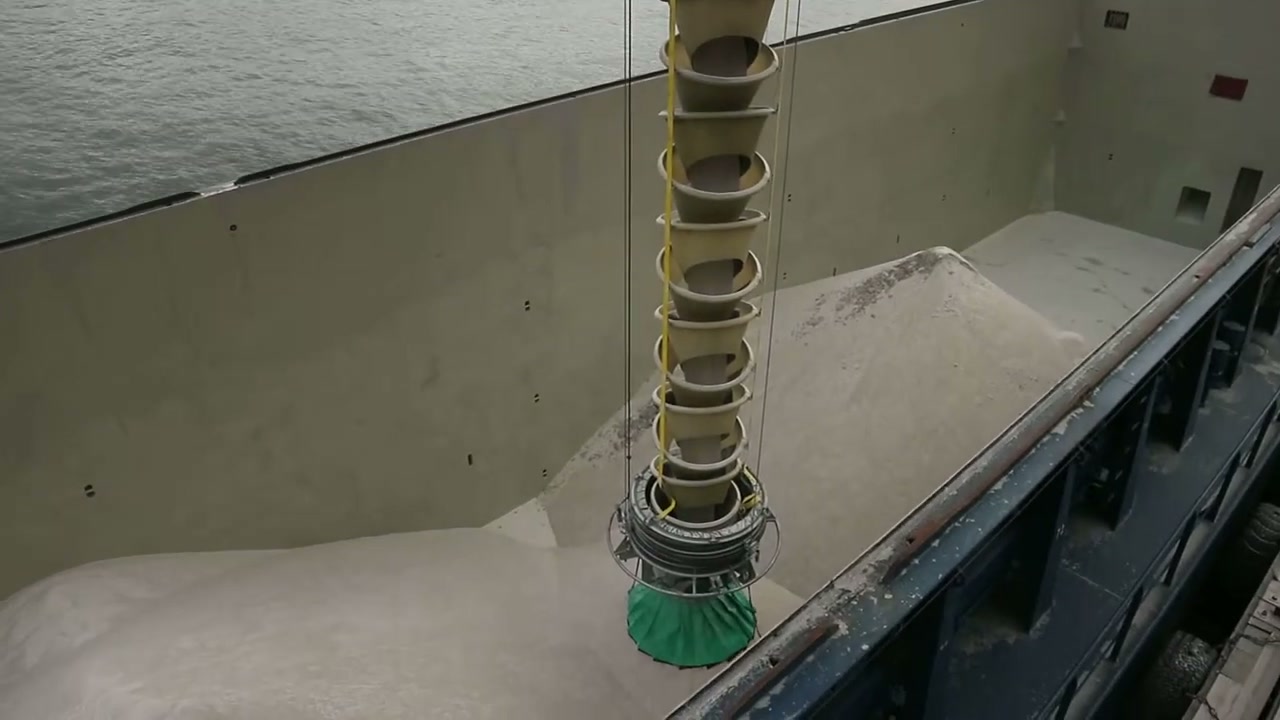
Cleveland Cascades
Cascade Chute Loading at 500 Tonnes per Hour
Cleveland Cascades shows a cascade chute loading material at 500 tonnes per hour, with the falling stream held together inside the chute.
Technologies
- Bulk Loading & Unloading
- Dust Collection & Air Pollution Control
- Dust Collection & Air Pollution Control Technology Guide
- Dust Suppression Hoppers
- Explosion Protection
- Loading Spouts
- Loading Spouts for Trucks, Railcars and Ships
- Mechanical Conveying & Belt Conveyors
- Screening & Sieving Systems
- Screening & Sieving Systems for Powder and Bulk Solids
- Storage & Transportation