
Application
Explosion Isolation in Building Materials
Answer in brief
Most of what a building materials plant handles will not explode, and some of it will.
Cement, sand and limestone are inert. The coal mill, the alternative fuel line, the aluminium powder in autoclaved concrete and some pigment and additive dusts are not, and they sit inside the same dusty, abrasive plant.
- Separate the inert streams from the explosible ones on paper first.
- Expect abrasion and heavy dust loading to defeat moving parts.
- Protect the fuel preparation line as its own system.
Reviewed October 21, 2026
The problem
The hazard here is concentrated rather than general. A plant can run thousands of tonnes an hour of material that cannot ignite and still have three or four places where a deflagration is entirely credible.
The coal or petcoke mill is the obvious one, and in a plant burning alternative fuels the preparation line for refuse derived fuel, sewage sludge or tyre crumb joins it. Aluminium powder dosing in aerated concrete is a severe hazard in a small package. Pigments, fibres and some chemical admixtures contribute dusts that are explosible even though the product they go into is not.
What makes isolation difficult is the plant around them. The dust is abrasive and relentless. A flap valve in a cement works sees quartz bearing dust across its seat, and the device that was fitted to close in milliseconds wears into one that does not close at all. Access is poor, the runs are long, and the maintenance culture is built around heavy rotating equipment rather than around millisecond safety devices.
Desired outcome
The explosible systems are identified and bounded, so the protection effort goes where the hazard is instead of being spread thinly across the whole plant.
Within those systems, every connection between protected vessels carries a tested isolation device within its certified range, built to survive abrasive dust and inspected often enough to prove it still can.
And the boundary is real: a duct that leaves an explosible system and enters an inert one is where the protection stops, documented as a decision rather than as an absence.
A chemical plant faces the same question per campaign: protection designed around the current product and left unchanged is the usual finding once the material list has moved on.
Process approach
Work starts with a materials inventory, because the plant inventory and the hazard inventory are different documents. Every dust in the plant gets a yes or a no on explosibility, measured where there is doubt, and the yes list defines the systems that need protection.
Fuel preparation is then treated as a system of its own. Mill, classifier, filter and the ducts between them are protected together, with isolation at the boundaries so that an event inside the mill circuit does not reach the silo or the firing line.
Device selection is dominated by wear. Where the process already needs a rotary valve, a certified isolation valve does two jobs and has a housing built for the duty. Where a fast acting device is needed, the seat and the guide surfaces are what to ask about, not the closing time.
Aluminium powder is handled separately in every sense. The quantities are small, the consequences are not, and the dosing system is normally protected as a contained unit rather than integrated into the plant protection scheme.
- Explosibility decided per dust and written down, including the negatives.
- Fuel preparation protected as a bounded system with isolation at its edges.
- Devices chosen for abrasion resistance, with wear parts treated as consumables.
- Aluminium powder dosing protected as its own contained system.
- Inspection intervals driven by measured wear, not by the certificate minimum.
- Protection boundaries between explosible and inert systems stated explicitly.
Selection factors
- Explosibility of each dust, measured rather than inherited from the product datasheet, with special attention to metal powders and pigments.
- Abrasiveness of the stream crossing the device, which sets wear life and therefore the inspection interval.
- Fuel type in the mill circuit, including the alternative fuels the plant is permitted to burn.
- Duct geometry in a congested plant where the ideal device position is often occupied.
- Dust loading and build up, which decides whether a moving part will still move.
- Access for inspection and reset at height and in a running plant.
Common failure modes
- Whole plant treated as inert because the main product is, so the fuel mill circuit is unprotected
- Aluminium powder dosing added to an existing line with no review of the explosion case
- Flap valve seat worn open by abrasive dust while still carrying a valid certificate
- Alternative fuel introduced without reassessing the mill circuit protection
- Isolation installed but never inspected, because the plant maintenance plan has no entry for it
- Protection boundary between the explosible and inert systems never defined, so nobody knows where the duty ends
Partner with powderbulkvideos.com
Put a relevant technical solution in this decision path.
Connect your company and video evidence with clearly labelled visibility where engineers evaluate this material, application, industry or product.
Frequently asked questions
If cement dust is not explosible, why is isolation needed at all?
Because the plant handles more than cement. The coal or alternative fuel mill circuit, aluminium powder in aerated concrete, and some pigments and admixtures are explosible, and they are connected systems inside an otherwise inert plant.
What usually fails on an isolation device in this industry?
The sealing surface. Abrasive dust crossing a seat wears it until the device no longer seals, and nothing about the certificate changes when that happens. Wear measurement, not paperwork, is what shows the device still works.
Does burning alternative fuels change the protection case?
Yes. Refuse derived fuel, sludge and biomass have different explosion characteristics and different self heating behaviour from coal, so the mill circuit protection has to be reassessed before the fuel is accepted.
Related content
Continue exploring
Move from this page to the companies, videos and technical topics that add useful context.
Companies

Videos

REMBE® GmbH Safety+Control
REMBE®: Explosion Isolation – REMBE® EXKOP®
This REMBE video explains an active explosion isolation system intended to stop propagation through connected ductwork. The shown equipment is part of explosion mitigation, not a substitute for ignition prevention. Selection requires representative dust test data, a hazard assessment and a coordinated venting, suppression and isolation strategy.
Total reach: 23,512
BS&B Safety Systems
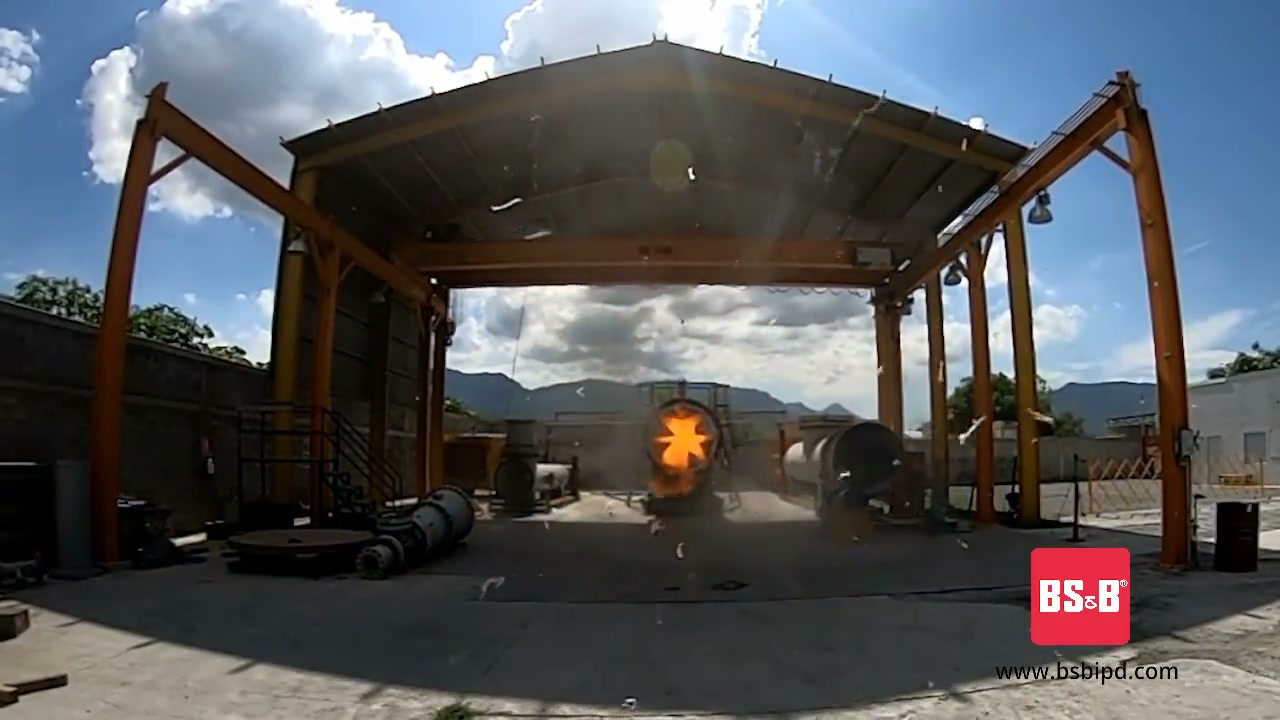
BS&B Industrial Explosion Protection Devices
BS&B Safety Systems presents its range of industrial explosion protection devices: explosion vents, flameless venting, and chemical explosion suppression and isolation systems.
Total reach: 2,102

VIGILEX by STIF
VIGILEX by STIF: Explosion Vent Panel and Flameless Devices Protection
The video introduces VIGILEX explosion vent panels and flameless venting devices from STIF. These are mitigation components for limiting pressure effects after a deflagration begins inside protected equipment.
Total reach: 28,590