
Application
Explosion Isolation in Food & Beverage
Answer in brief
Isolation is the measure most often missing in food plants, and the duct to the dust collector is the usual gap.
Venting the collector protects the collector; it does nothing for the mill connected to it by four metres of duct.
- List every duct between protected vessels.
- Check the distance each device needs, and measure it.
- Stop assuming the rotary valve does the job.
Reviewed October 21, 2026
The problem
A food plant is a network of connected vessels, and that connection is what turns one explosion into several.
A dust collector, a silo and a mill joined by ducts share their pressure. An ignition in any one of them sends a flame front along every pipe that leaves it, and the receiving vessel is hit by a flame travelling fast into a cloud that is already stirred up. The second event is usually worse than the first.
In food plants the problem is widespread because the dusts are explosible almost without exception: flour, starch, sugar, milk powder and cocoa all qualify, and the plants are full of ducts.
Desired outcome
An explosion that stays in the vessel where it started.
Practically: every connection between protected vessels carries a device that stops flame and pressure propagation, the device sits at a distance where it can still act, and its function is verified on a schedule rather than assumed.
Devices that can be cleaned in the changeover window the plant actually has, because an isolation device in a food line is a product contact surface and an allergen item as well as a safety component.
A grain and feed plant has the same map problem in a different place: the aspiration ducts are left unisolated, and the filter becomes the route the flame takes.
Process approach
The design starts with a drawing of what is connected to what, because isolation is a property of the network rather than of a machine.
Each connection then gets a device suited to it. A fast-acting valve detects the pressure rise or the flame optically and closes within milliseconds. A chemical barrier injects a suppressant across the duct. A rotary valve with a certificate acts as a passive barrier, provided its clearances and the number of blades in contact meet the certified conditions.
The minimum installation distance is the figure that decides whether any of this works, and it comes from the device certificate. Too close, and the device cannot complete its action before the flame arrives; too far, and the pressure has already propagated.
Hygiene sets the rest. The device sits in a product line, so it has to be cleanable to the plant standard, and a chemical barrier has to be compatible with food contact.
Testing is the part that quietly decides whether the concept is real. A device that cannot be function tested in place will not be tested, and an untested detection based system is an assumption rather than a protection. That requirement belongs in the selection, alongside the distance and the dust severity.
- Draw the network first, select devices second.
- Respect the certified minimum distance.
- Choose a device that can be cleaned in a food line.
- Test the function on a schedule.
- Function testing in place included in the selection, not left to the maintenance plan.
- Devices treated as product contact surfaces and entered in the allergen matrix.
- Rotary valve clearances and blade contact checked against the certificate, not the catalogue.
Selection factors
- The connection map, because an unprotected duct defeats every other device.
- Dust characteristics, measured for the actual product, which set the severity.
- Available distance, which often decides the device type by itself.
- Cleanability and whether the device can be opened in the changeover window.
- Food contact compatibility of any suppressant.
- Testing regime: a device that cannot be function tested in place will not be tested.
- Changeover window, which decides whether a device can realistically be cleaned at the required frequency.
Common failure modes
- Devices fitted on the obvious ducts and not on the one short connection nobody drew
- Installation distance shorter than the certificate allows, so the device cannot complete its action
- A rotary valve treated as isolation without the certificate and the clearance conditions it requires
- Device that cannot be cleaned in the changeover window, so it is opened less often than the hygiene plan assumes
- Function testing planned but not possible in place, so it quietly stops happening
- Detection based system installed with no way to function test it in place
- Rotary valve counted as isolation while its clearance has worn past the certified value
- Isolation device left out of the allergen matrix although it is a product contact surface
Partner with powderbulkvideos.com
Put a relevant technical solution in this decision path.
Connect your company and video evidence with clearly labelled visibility where engineers evaluate this material, application, industry or product.
Frequently asked questions
Why is isolation needed if every vessel is vented?
Because venting protects the vessel it is on. The flame still travels down the ducts into the next vessel, where it arrives fast into a disturbed cloud. Isolation is what stops that chain.
Can a rotary valve count as isolation?
Only with a certificate and only within the conditions it states: clearances, number of blades in contact and the duty. A standard valve is not an isolation device.
What decides the device type in a food plant?
Usually the available distance and cleanability. The distance comes from the certificate, and the device has to be openable in the changeover window or it will not be maintained.
When does a certified rotary valve stop being an isolation device?
When its clearance or the number of blades in contact no longer meets the certified condition. Wear does that gradually, so the clearance has to be measured rather than assumed from the certificate.
Why does testability belong in the selection?
Because a device that cannot be function tested in place will not be tested, and an untested detection system is an assumption. Testability is as much a selection criterion as the distance window.
Related content
Continue exploring
Move from this page to the companies, videos and technical topics that add useful context.
Companies

Videos

REMBE® GmbH Safety+Control
REMBE®: Explosion Isolation – REMBE® EXKOP®
This REMBE video explains an active explosion isolation system intended to stop propagation through connected ductwork. The shown equipment is part of explosion mitigation, not a substitute for ignition prevention. Selection requires representative dust test data, a hazard assessment and a coordinated venting, suppression and isolation strategy.
Total reach: 23,512
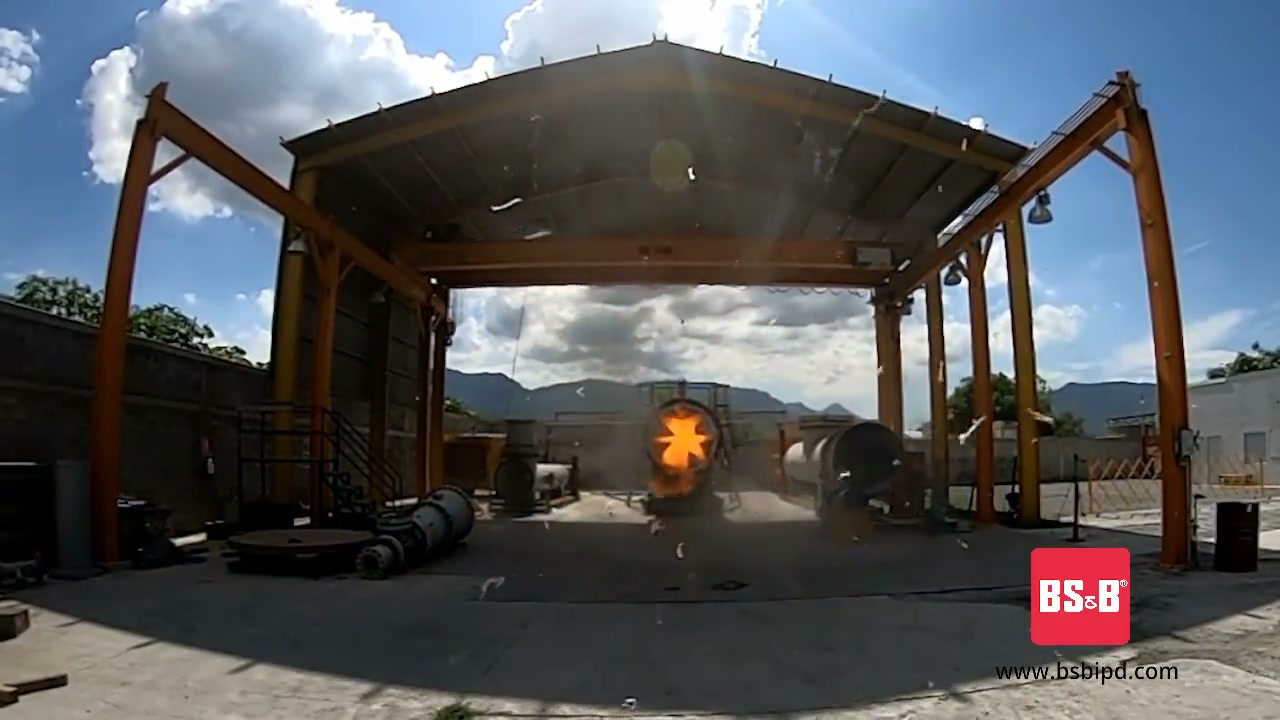
BS&B Safety Systems
BS&B Industrial Explosion Protection Devices
BS&B Safety Systems presents its range of industrial explosion protection devices: explosion vents, flameless venting, and chemical explosion suppression and isolation systems.
Total reach: 2,102

VIGILEX by STIF
VIGILEX by STIF: Explosion Vent Panel and Flameless Devices Protection
The video introduces VIGILEX explosion vent panels and flameless venting devices from STIF. These are mitigation components for limiting pressure effects after a deflagration begins inside protected equipment.
Total reach: 28,590