Product
IEDCO Vacuum Feed Wand
Answer in brief
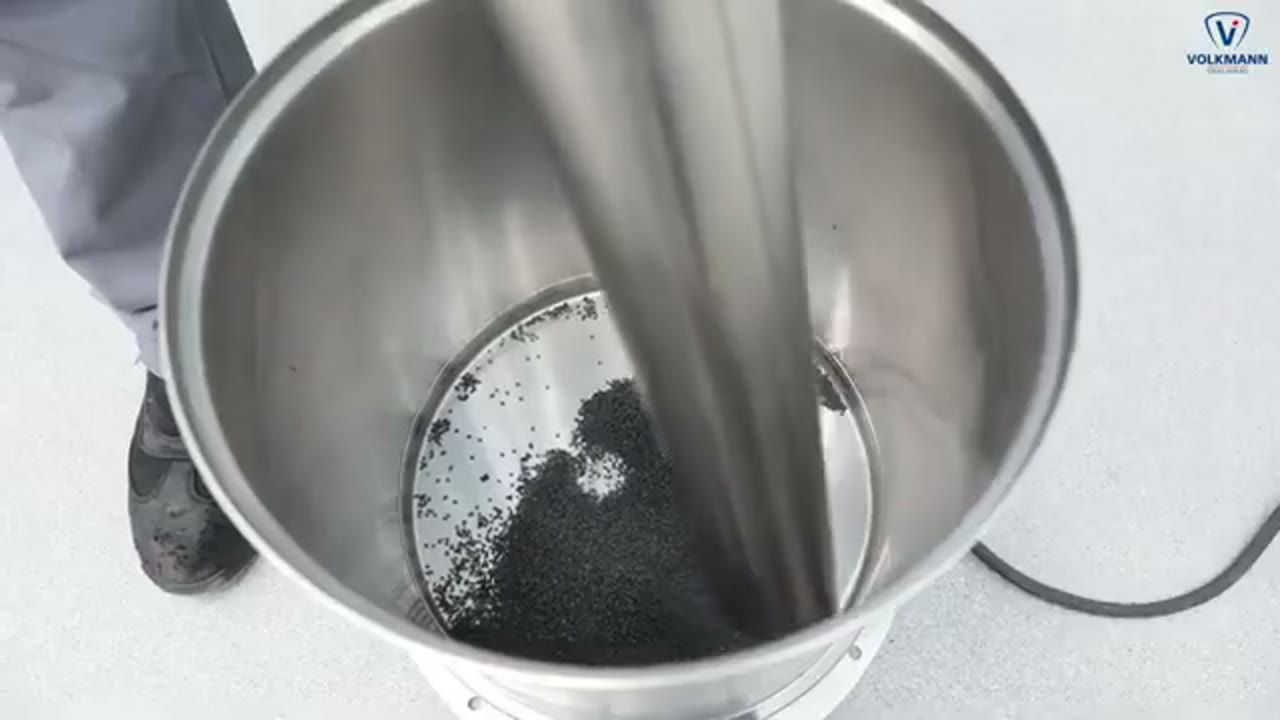
The IEDCO Vacuum Feed Wand is a manually or mechanically positioned pickup lance that draws powder from a drum or similar open-top container into a vacuum conveying line. Its real-world performance depends as much on material behavior and operator technique as on the hardware itself.
Reviewed July 27, 2026 · Updated October 14, 2026
Pickup from drums and containers
Process role: The feed wand is the material inlet of a vacuum conveying system when powder is supplied in drums or similar open-top containers.
Air entering around the wand entrains solids into the conveying hose. Wand geometry, insertion depth and operator movement set the solids loading and decide whether the powder bridges, surges or pulls excessive air.
Annular air path: Most wands admit conveying air close to the material inlet. Too much open area favors air over solids and lowers capacity. Too little can pull a dense plug into the hose, raise vacuum and stall the system. The useful setting is material-specific.
Containment and handling options
IEDCO documents an upright holster for storing the wand and a fabric drum cover with a viewing window for a more contained pickup.
A cover can reduce open handling, but the connection, ventilation path and changeover method still determine actual dust release and operator exposure.
Material behavior at the pickup point
Free-flowing granules may feed steadily with little intervention, though they can wear a thin inlet over time. Cohesive or compacted powders can form a stable cavity around the wand and starve the line, and a fine, aeratable powder may surge after the wand disturbs it.
Fragile products may need a lower pickup velocity or a different inlet arrangement. Abrasive particles influence wand, bend and hose wear.
Tests should cover a full drum, the low-level heel and the compacted condition found after transport or storage.
Selection and operating questions
- Drum dimensions, liner arrangement and usable heel.
- Powder cohesion, aeration response and dustiness.
- Required containment and local extraction.
- Ergonomic load, reach and frequency of repositioning.
- Grounding, conductive construction and combustible-dust controls.
- Cleaning, inspection and prevention of cross-contamination.
A suction lance is simple hardware, but it sits where the process meets the operator. That makes ergonomics and exposure control just as important as conveying rate.
Operator method and safe recovery
Define how deep the wand is inserted, how quickly it is moved and when the container may be tilted. A balanced support or automated holder can reduce repetitive load without removing the need to manage liners and residual product.
If flow stops, the response should avoid forcing the wand deeper while the line remains under vacuum. Isolate the transfer, identify bridging or blockage, then restore the approved pickup condition. For combustible dust, include conductive continuity across the wand, hose and receiving system in routine inspection rather than assuming a metal tube is automatically grounded.
Features
- Drum and container pickup
- Optional upright holster
- Optional fabric drum cover
- Viewing window option
- Integration with vacuum conveying
Partner with powderbulkvideos.com
Put a relevant technical solution in this decision path.
Connect your company and video evidence with clearly labelled visibility where engineers evaluate this material, application, industry or product.
Frequently asked questions
What is IEDCO Vacuum Feed Wand used for?
The wand is the pickup point of a vacuum conveying system: inserted into a drum or similar open-top container, it lets conveying air entrain powder into the hose toward the receiving system.
Which project data should be confirmed for IEDCO Vacuum Feed Wand?
Confirm the actual material and its behavior, source and destination, required duty, plant interfaces, utilities, controls, cleaning method, hazards and measurable acceptance criteria.
Does this profile prove that IEDCO Vacuum Feed Wand fits every powder?
No. Fit must be checked against representative material behavior, the process duty and the current manufacturer specification for the exact configuration.
Related content
Continue exploring
Move from this page to the companies, videos and technical topics that add useful context.