
Application
Vacuum Conveying for Battery Powder
Answer in brief
Vacuum conveying moves battery powders through an enclosed line, which helps with dust and contamination control — but the enclosure alone proves nothing. The design has to match the actual powder: its moisture sensitivity, electrostatic behavior, cohesion and quality limits, verified with representative material before the duty is accepted.
Reviewed July 26, 2026 · Updated October 9, 2026
Sponsored visibility
Featured Vacuum Conveying for Battery Powder videos
Paid placements are clearly marked and remain separate from the editorial related-video selection.


VAC-U-MAX
VAC-U-MAX: Signature Series Packaged Vacuum Conveying Systems
With over 65 years of experience in pneumatic conveying and more than 10,000 powders and granular materials handled, VAC-U-MAX packages its Signature Series vacuum conveying systems as complete units: receiver, UL-listed controls, convey hose, filters, and vacuum producer.
Total reach: 10,587
This featured spot is open
Show your video here, in front of engineers who are researching this topic.
The problem
Open or poorly controlled powder transfer can create dust, contamination, product loss and unstable feeding. The conveying method must fit the material and the receiving process.
Desired outcome
A controlled transfer that delivers the required mass without unacceptable contamination, moisture exposure, dust release or change to the powder.
Process approach
Battery powder transfer is not a generic conveying duty. Cathode and anode materials can differ greatly in density, particle size, cohesiveness, abrasiveness and sensitivity to contamination. The design basis must identify the specific material and the quality attributes that transfer may affect.
Define the material and process boundary
Record the powder condition at pickup, the required transfer rate, the route, the receiving equipment and the permitted environmental exposure. Include moisture limits, foreign material limits and any restrictions on product contact materials.
Control the transfer path
A closed vacuum line can reduce open handling. It does not by itself prove containment or cleanliness. Review every connection, receiver, filter, discharge valve and cleaning step. Dead areas, worn seals and unsuitable flexible connections can create retention or contamination risks.
Verify performance with representative powder
Confirm pickup stability, transfer rate, filter loading, discharge consistency and product condition. When the powder is hazardous or combustible, the risk assessment must also address credible ignition sources, electrostatic charge and connected equipment.
Build an engineering data sheet
The supplier should receive one controlled data set. It should identify the material source, expected variation, minimum and maximum rate, operating hours, route, available utilities, destination conditions and required interfaces. Record which values were measured and which remain assumptions. This prevents a successful test with one powder condition from being treated as proof for every future batch.
Define controls and fault recovery
The control description should cover pickup permission, receiver level, filter cleaning, discharge, destination readiness and alarms. Define what happens after loss of vacuum, loss of air, a blocked line, high filter differential pressure or an interrupted discharge. A safe and predictable restart is part of the process duty.
Plan cleaning and inspection
List every product contact part and state how it is accessed, cleaned, inspected and released. Flexible hose, filters, seals and discharge devices deserve specific attention because retained powder may not be visible from outside. The procedure should also prevent cleaning residues or moisture from becoming the next source of contamination.
Require documented acceptance evidence
Commissioning should use representative material and the intended route. Record mass transferred, time, pressure behavior, filter condition, residual material and product observations. Test more than one cycle and include a controlled interruption. Keep the configuration, settings and acceptance results with the equipment record so that later changes can be assessed against a known baseline.
Engineering visual guide
How the system behaves
These conceptual diagrams connect the operating principle, equipment internals and engineering review points. They are explanatory and not fabrication drawings or a substitute for project-specific calculations.
Engineering infographic
Source-to-destination process flow
Conceptual source-to-destination process flow for Vacuum Conveying for Battery Powder; use it to structure an engineering review, not as a fabrication drawing or project-specific design.
Selection factors
Material identity, bulk density, particle size distribution, cohesion, abrasiveness, moisture sensitivity, transfer rate, route, receiver design, filter media, cleaning method, grounding, hazard data and quality acceptance criteria.
Engineering infographic
Engineering input and decision path
Conceptual engineering input and decision path for Vacuum Conveying for Battery Powder; use it to structure an engineering review, not as a fabrication drawing or project-specific design.
Common failure modes
- Insufficient material data
- Moisture ingress
- Cross contamination
- Filter blinding
- Unstable pickup
- Powder retention
- Unverified combustible dust controls
Engineering infographic
Fault recovery and acceptance workflow
Conceptual fault recovery and acceptance workflow for Vacuum Conveying for Battery Powder; use it to structure an engineering review, not as a fabrication drawing or project-specific design.
Partner with powderbulkvideos.com
Put a relevant technical solution in this decision path.
Connect your company and video evidence with clearly labelled visibility where engineers evaluate this material, application, industry or product.
Frequently asked questions
What should a battery-powder transfer trial measure?
Run the trial with representative powder over the intended route, and repeat it — one clean cycle proves little. Record pickup stability, transfer rate, filter loading, residual material, discharge consistency and any change in product condition, and include a controlled interruption to check restart behavior.
Related content
Continue exploring
Move from this page to the companies, videos and technical topics that add useful context.
Companies
Videos
VAC-U-MAX
VAC-U-MAX: Signature Series Packaged Vacuum Conveying Systems
With over 65 years of experience in pneumatic conveying and more than 10,000 powders and granular materials handled, VAC-U-MAX packages its Signature Series vacuum conveying systems as complete units: receiver, UL-listed controls, convey hose, filters, and vacuum producer.
Total reach: 10,587

VAC-U-MAX
VAC-U-MAX: 10 Critical Design Factors to Consider When Designing Vacuum Conveying Systems
VAC-U-MAX presents ten design factors for vacuum conveying, including pickup, material behavior, route, receiver, filtration, discharge and controls.
Total reach: 10,989

VAC-U-MAX
VAC-U-MAX: Direct Charge Blender Loading Whiteboard Video
VAC-U-MAX whiteboard video on direct-charge blender loading by vacuum conveying: the system boundary, the major components, and the data to verify before selecting equipment.
Total reach: 28,187

VAC-U-MAX
VAC-U-MAX: Vacuum Receiver Designs, Features, Benefits and Filter Types
This VAC-U-MAX video explains vacuum receiver configurations and the roles of filtration, discharge, and cleaning. It helps define the system boundary and major components. Capacity, filtration, pressure loss, discharge, and combustible dust suitability depend on the material and the complete installation.
Total reach: 18,078
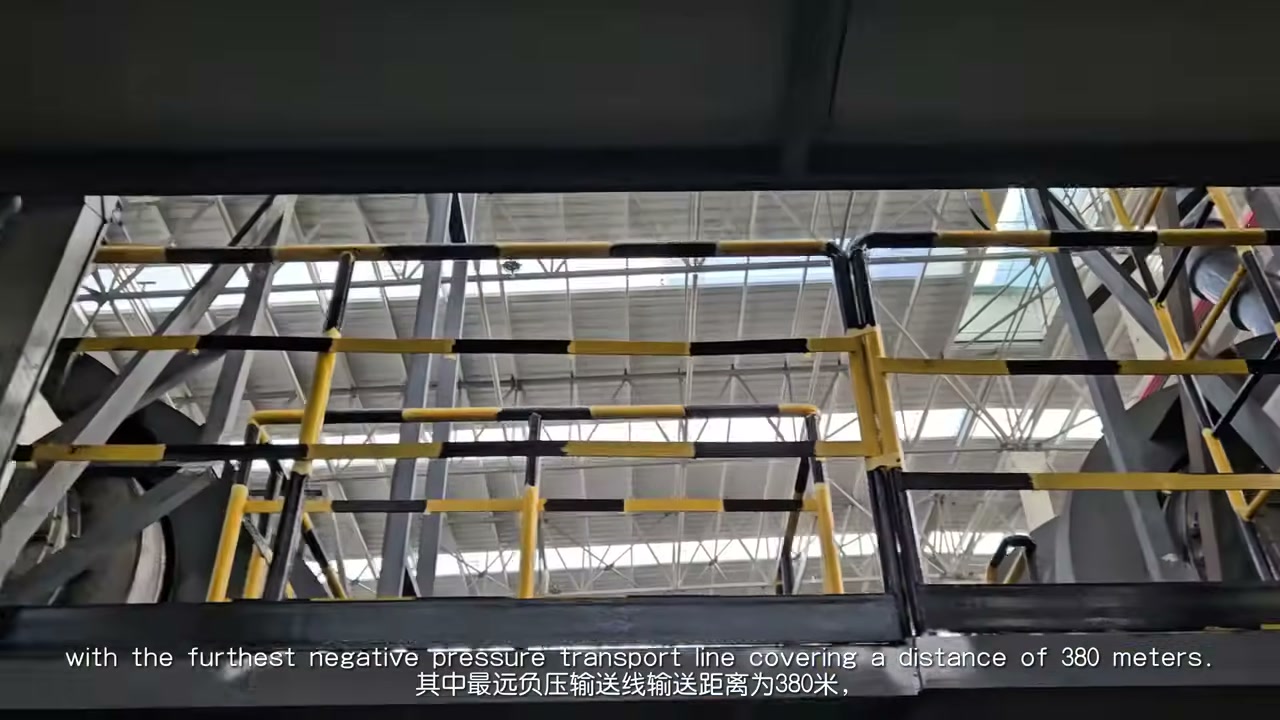
Wijay System
Negative Pressure Conveying over 380 Meters for Lithium Battery Anode Material
Wijay System documents a negative pressure conveying line of 380 metres for anode material at a plant producing 200,000 tonnes of lithium battery negative electrode material a year.
Total reach: 79,413

Piab
Vacuum Conveying in Battery Production
Piab shows vacuum conveying used to automate the anode and cathode production process in battery manufacturing.