
Application
Valve and Airlock Selection for Battery Material Production
Answer in brief
In battery material production the valve is judged by what it adds to the product.
Iron from a wear surface is measured in parts per million and rejected at parts per million, and air drawn in through a shaft seal carries moisture into a material that is handled in a dry room for exactly that reason.
- Specify the wetted materials against the iron limit, not against wear life.
- Make inward leakage the governing leak case.
- Treat nickel and cobalt dust as an exposure problem.
Reviewed October 21, 2026
The problem
Cathode active material arrives with a contamination specification tighter than almost anything else in bulk solids handling. Iron, chromium and nickel from wear surfaces are counted in parts per million, and a batch that fails goes nowhere. A valve is a wear surface by definition, so every rotating or sliding contact is a potential source of the thing that disqualifies the product.
Moisture is the mirror image. These materials are handled in dry rooms at very low dew points because water on the surface ruins electrochemical performance, and a valve is also the place where the system can draw room air in. A shaft seal specified for outward tightness may be entirely porous in the other direction under a slight vacuum.
The materials are also hazardous to people. Nickel and cobalt compounds have low exposure limits, so the same seal that protects the product has to protect the operator, and the cleaning and maintenance procedures have to assume the dust is harmful rather than merely messy.
And the industry builds fast. Lines are specified before the final material is fixed, so a valve selected for one cathode chemistry often ends up handling another.
The general question behind valves, gates and airlocks is where a line needs a pressure boundary and where it needs a shut-off. Here a third question arrives: what the part leaves behind in the product.
Desired outcome
A valve whose wetted materials are chosen against the contamination specification, with wear surfaces either non metallic, non ferrous, or positioned where their debris does not reach the product.
Leak tightness defined inward as well as outward, with the inward case governing, because that is the one that carries moisture.
Maintenance and cleaning procedures written for a hazardous dust, and documentation good enough to trace a contamination excursion back to a component.
The same decision in a building materials plant runs the other way: there the wear mechanism and the material head govern, and a hardened wear part is the right answer rather than a source of contamination.
Process approach
Selection starts from the contamination specification, as a list of elements and limits, and every wetted component is checked against it. Ceramic and polymer liners, hardened non ferrous surfaces and coatings all appear here, and so does the simpler answer of moving the wear surface out of the product path.
Leak testing is then specified in both directions. The usual catalogue figure describes outward leakage of conveying air; what matters here is how much dry room air enters under the operating pressure difference, and that number is often not published. It has to be asked for or measured.
Where the material is oxygen or moisture sensitive the honest answer is often an inert purge on the seal rather than a tighter seal, with the purge treated as a utility that has a monitor and a defined action when it fails.
Operator protection is designed with the assumption that the valve will be opened. Nickel and cobalt dust on an internal surface becomes an exposure the moment an end plate comes off, so the dismantling procedure, the extraction at the point of work and the cleaning method are part of the valve specification, not of the maintenance manual.
- Contamination specification used as the primary material selection input.
- Wear surfaces moved out of the product path, or made non ferrous or non metallic.
- Inward leakage specified and measured, not inferred from the outward figure.
- Inert purge used where moisture or oxygen sensitivity demands it, with monitoring.
- Dismantling, extraction and cleaning procedures written for a hazardous dust.
- Component traceability kept so a contamination excursion can be attributed.
Selection factors
- Metallic contamination limits element by element, which usually decide the valve before any other factor.
- Dew point requirement of the process and the inward leakage the valve permits at operating pressure.
- Exposure limits for the active material, which set the shaft sealing concept and the maintenance procedure.
- Abrasiveness of the material, which still matters but is now solved without ferrous wear surfaces.
- Chemistry flexibility, since the line may handle a different cathode material than the one it was specified for.
- Cleanability between chemistries, which is a product quality issue rather than a hygiene one.
Common failure modes
- Hardened steel wear parts specified for service life, becoming the source of the iron that fails the batch
- Outward leak figure used to size a system whose real risk is air coming in
- Dry room air drawn through a shaft seal, raising the dew point inside the equipment
- Valve opened for maintenance with no extraction, exposing the technician to nickel or cobalt dust
- Purged seal fitted with no monitor, so loss of purge is invisible
- Line re purposed for a different cathode chemistry with no review of material compatibility
Partner with powderbulkvideos.com
Put a relevant technical solution in this decision path.
Connect your company and video evidence with clearly labelled visibility where engineers evaluate this material, application, industry or product.
Frequently asked questions
Why is a hardened steel rotor a problem here?
Because its wear debris is iron, and iron is one of the elements the product specification limits to parts per million. Long service life is worth nothing if the wear it allows disqualifies the batch.
Which leak direction matters most?
Inward. The process is run at a low dew point on purpose, and air entering through a seal brings moisture with it. Catalogue leak figures usually describe the outward case, so the inward one has to be asked for.
Does the valve need containment for the operator?
Yes. Nickel and cobalt compounds have low exposure limits, so the sealing concept and the procedure for opening the valve both have to assume the dust is harmful, not just dirty.
Related content
Continue exploring
Move from this page to the companies, videos and technical topics that add useful context.
Companies

Videos

Hecht Technologie GmbH
HECHT: Containment Sampling Stick – Closed Sampling up to OEB 5
HECHT presents the handling sequence for its CPS disposable containment sampling system.
Total reach: 27,222
Wijay System
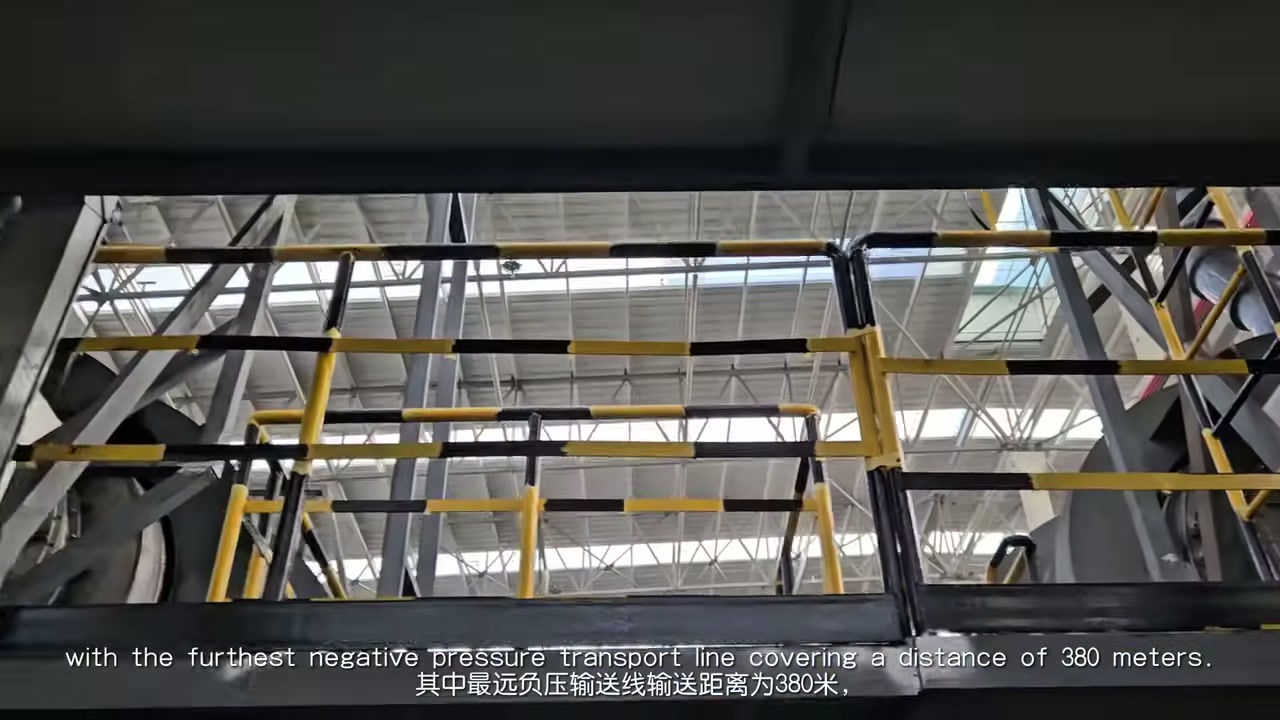
Negative Pressure Conveying over 380 Meters for Lithium Battery Anode Material
Wijay System documents a negative pressure conveying line of 380 metres for anode material at a plant producing 200,000 tonnes of lithium battery negative electrode material a year.
Total reach: 79,438

Piab
Vacuum Conveying in Battery Production
Piab shows vacuum conveying used to automate the anode and cathode production process in battery manufacturing.