
Material
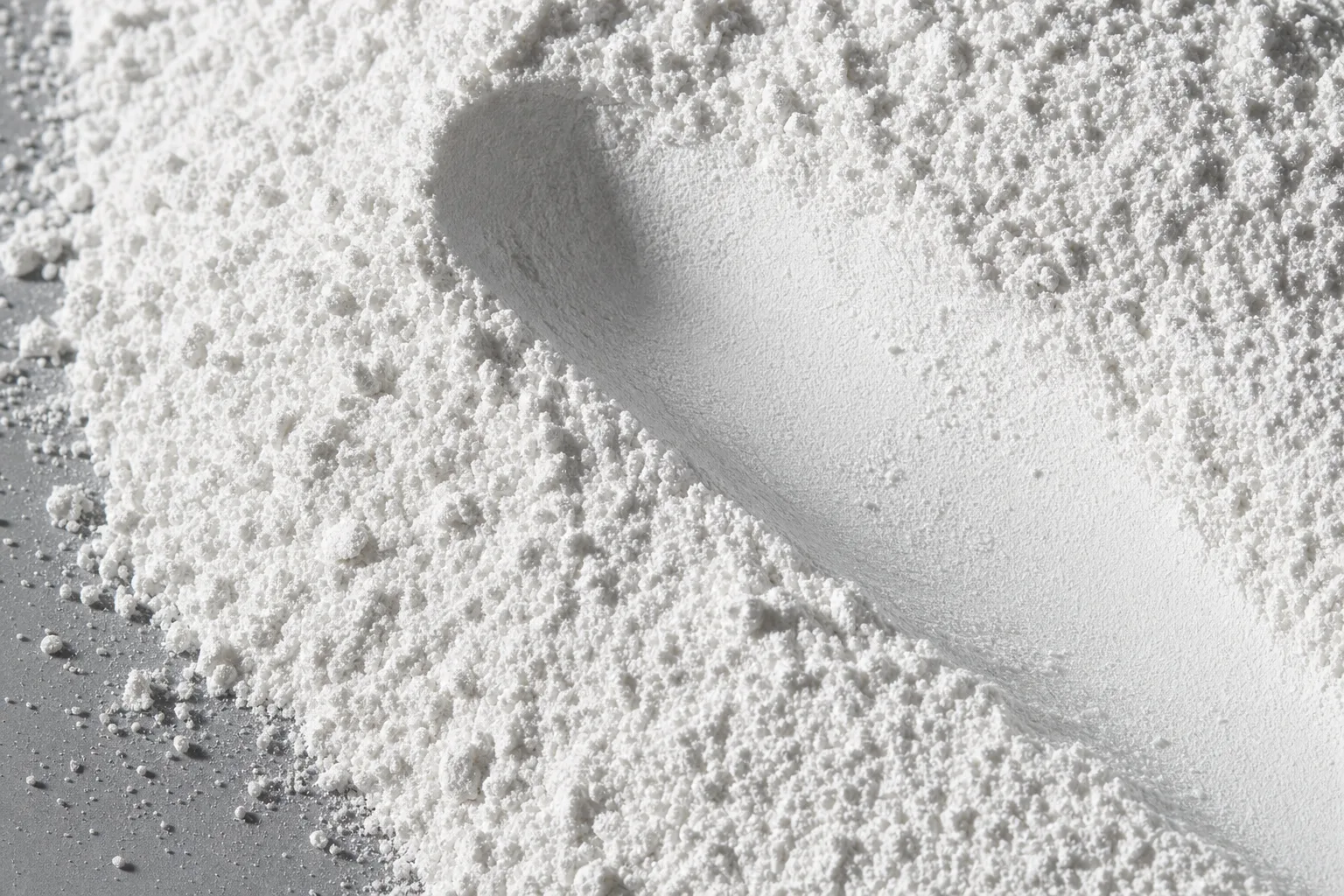
Titanium Dioxide
Titanium dioxide finds every gap in a system and makes it visible.
The particles are fine, light and bright white, so a leak that would go unnoticed with another powder coats a whole room here.
powderbulkvideos.com knowledge hub
Equipment does not fail on its own. It fails on a material it was not sized for.
Every page here describes one material the way a handling engineer needs to see it: how it flows, how it packs, what it does to steel, what it does in air, and what that means for the machines around it.
54 published
Material
Titanium dioxide finds every gap in a system and makes it visible.
The particles are fine, light and bright white, so a leak that would go unnoticed with another powder coats a whole room here.
Material
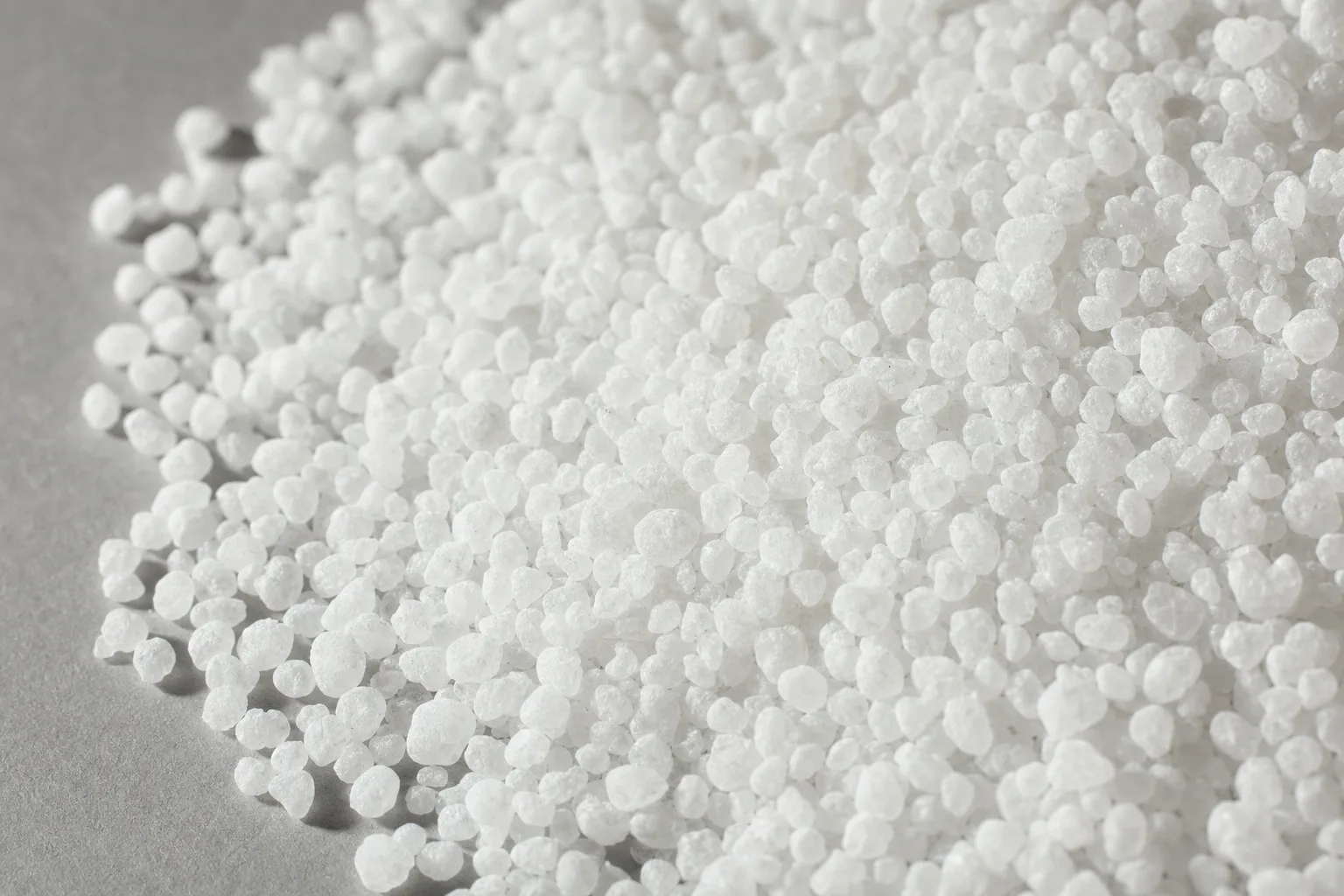
Urea sets the humidity agenda for the whole terminal.
It is strongly hygroscopic, so a warehouse that is comfortable for people is already too humid for the product, and the result is a cake that has to be broken mechanically.
Material
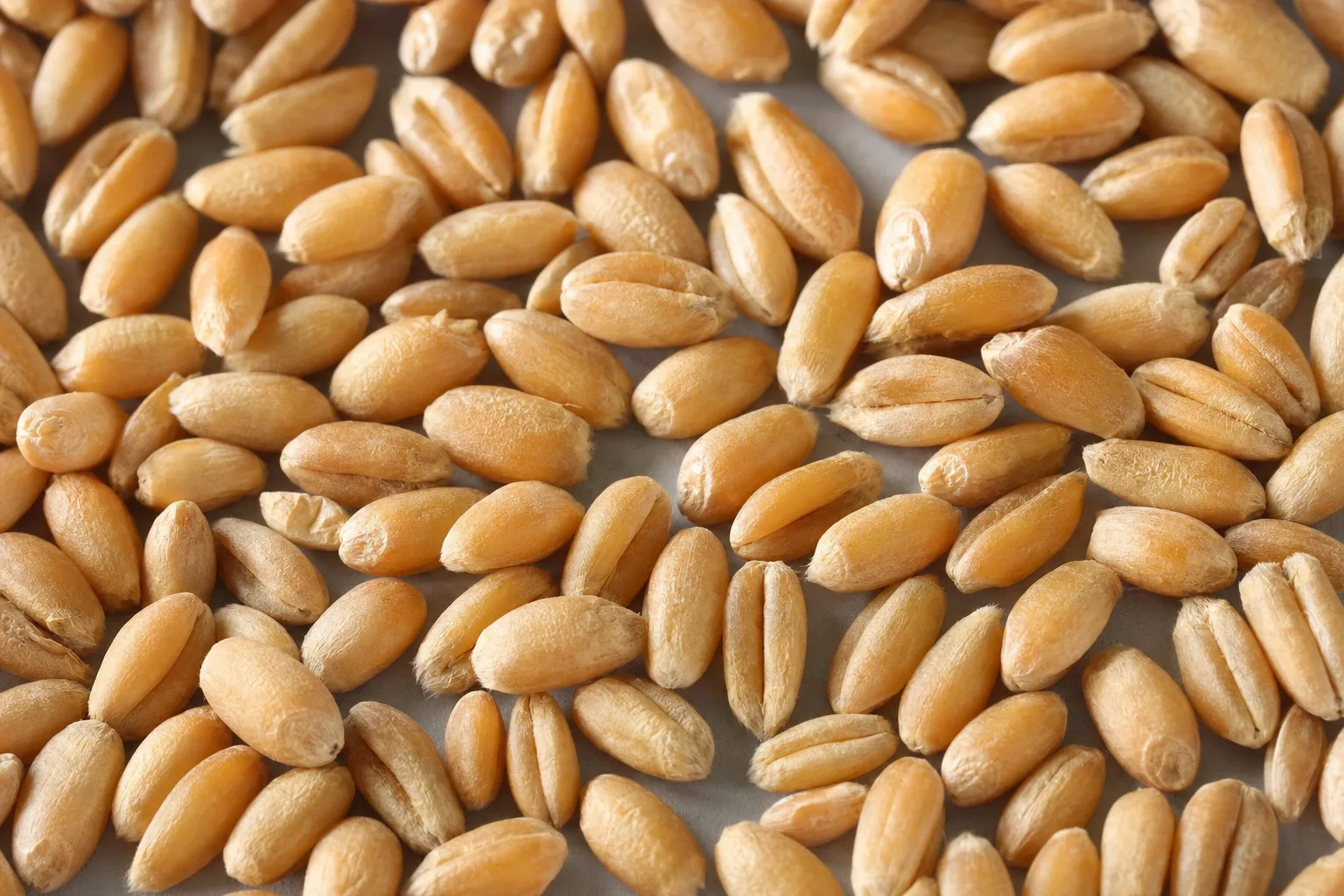
Grain handling looks simple until you count the fatalities, which come from two sources: dust explosions and engulfment.
The kernel itself flows well, but it carries dust, chaff and insects, and a silo full of grain behaves like a fluid that will not let go.
Material
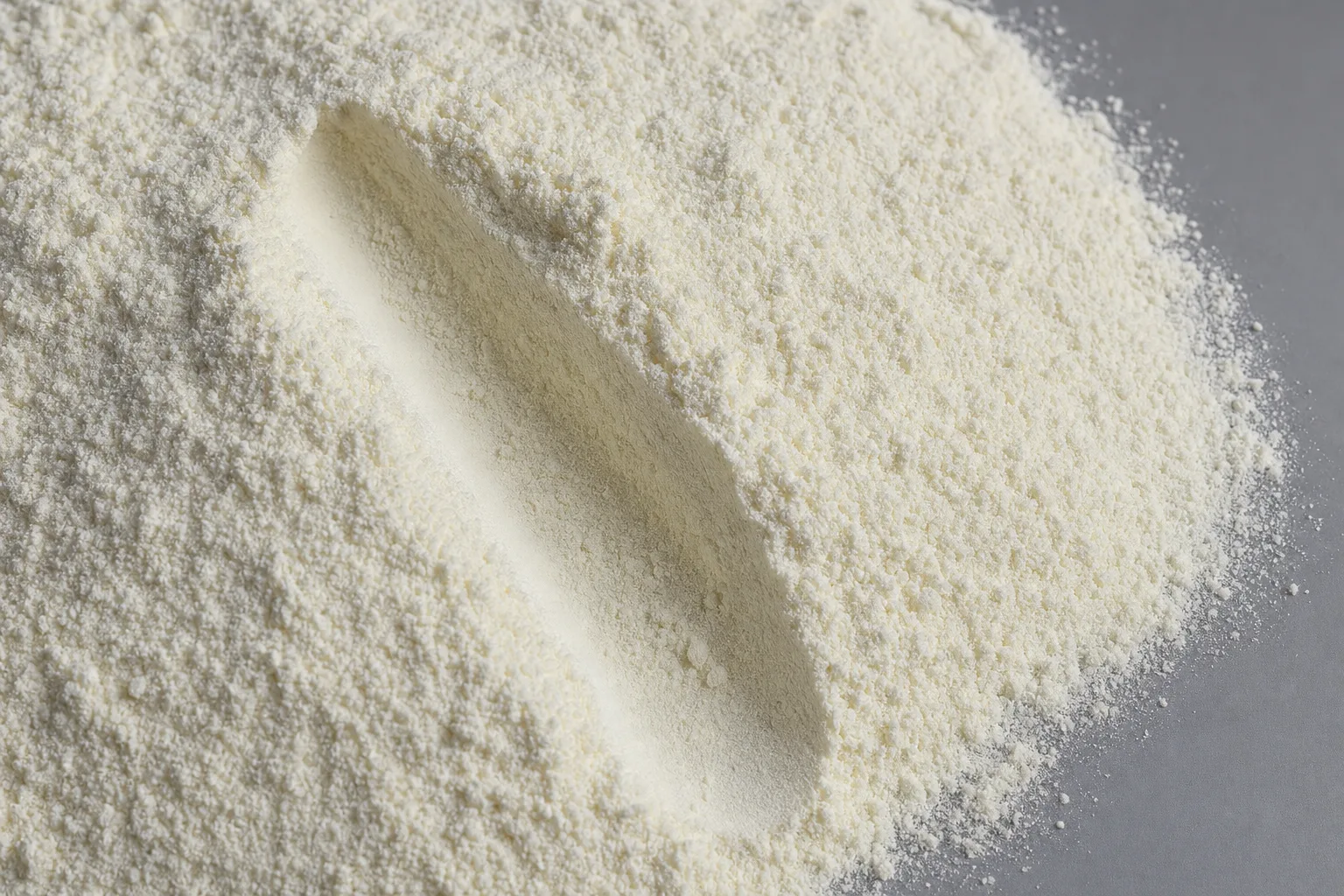
Whey protein is sold on solubility, and solubility is what handling damages first.
The powder is hygroscopic, cakes readily and loses dispersibility when agglomerates are broken by aggressive conveying.
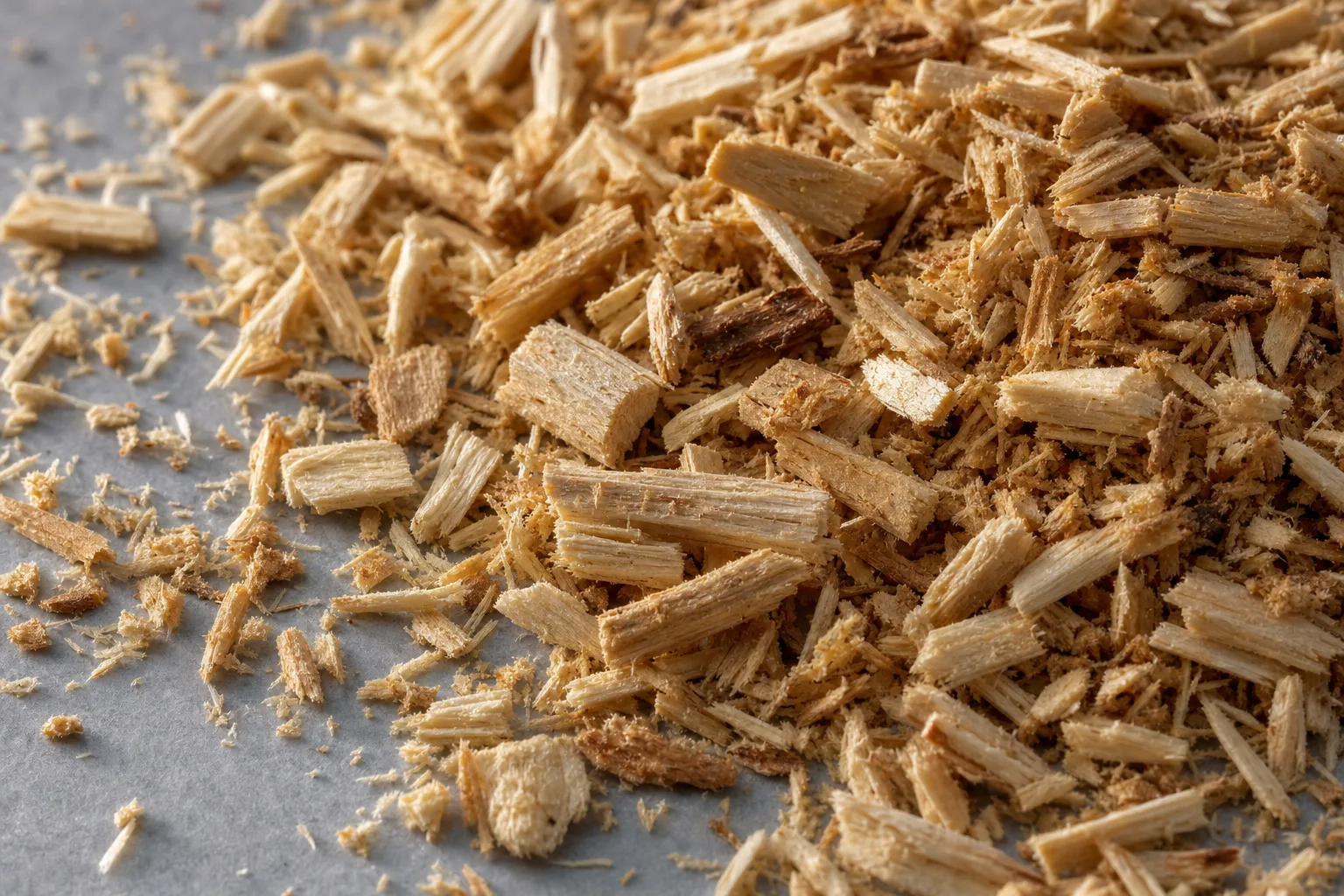
Material
Wood chips do not flow, they interlock, and that distinction decides every design choice.
Long slivers bridge over openings that would pass the nominal particle size easily, and moisture swings between delivery and use change the bulk density by half.
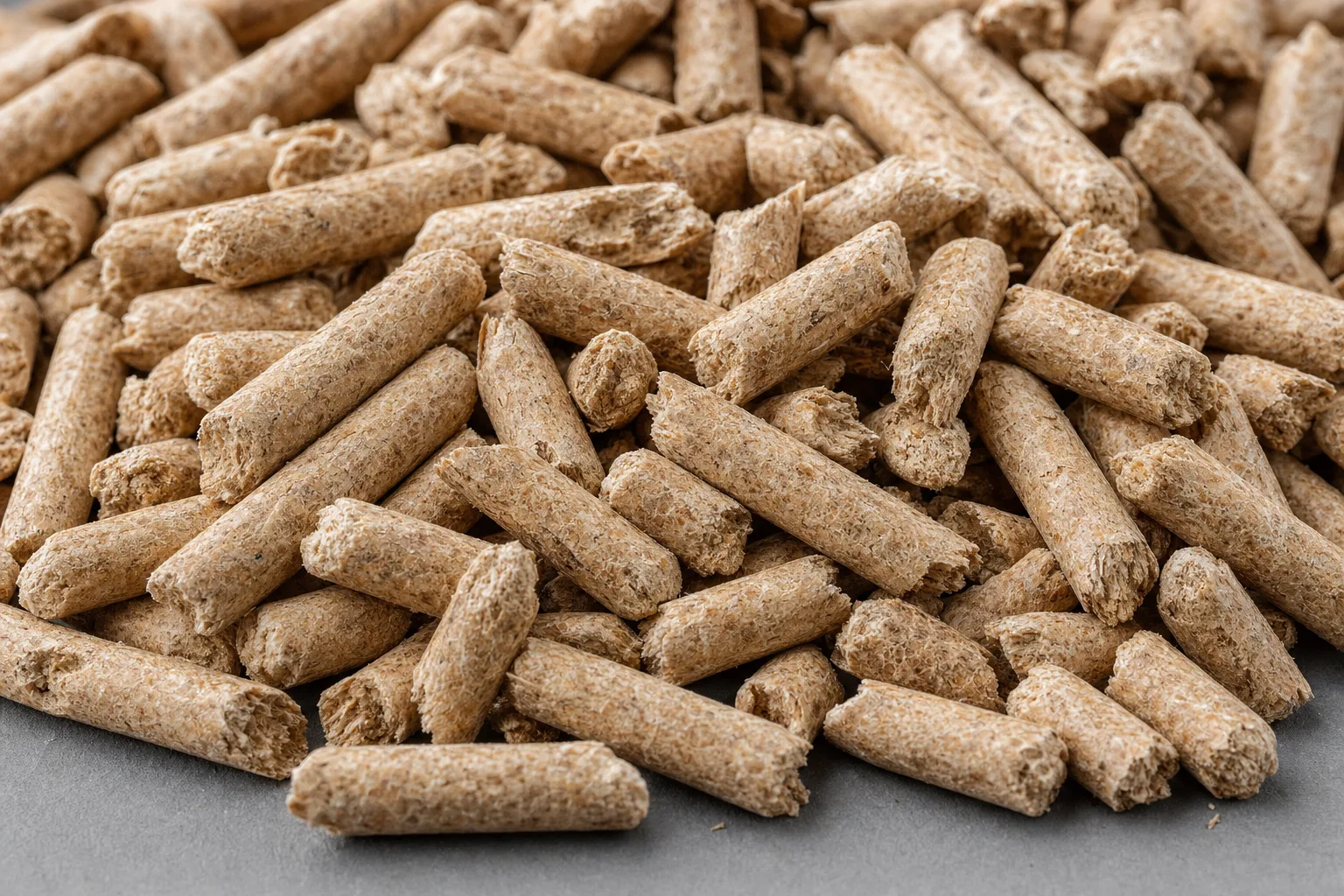
Material
Wood pellets are handled as fuel but behave as a fragile, living material.
Every transfer turns pellets into dust, and the dust is the explosion hazard; meanwhile the stored pile oxidises, warms up and releases carbon monoxide.
Two plants buy the same rotary valve. One runs it for nine years. The other replaces the rotor after eleven months.
The valve is identical. The material is not.
Bulk solids are not a single class of substance. They are thousands of substances that happen to be divided into pieces, and the division is what makes them difficult. A powder can flow like water in one hour and stand like a wall in the next, after nothing changed but the humidity in the building.
That is why every page in this section starts with the material and works outward to the equipment, rather than the other way round.
Flow behaviour decides the shape of the outlet, the wall angle and whether a discharge aid is needed at all. It is not a single number. The usual measurement is a shear test that produces a flow function, from which the minimum outlet dimension for arching and for ratholing is calculated.
Free-flowing sugar needs a small outlet and no help. A cohesive filter dust may need an outlet three times wider, steeper walls and a live bottom, for the same tonnes per hour.
Many materials gain strength while they sit. Hygroscopic powders take up water and cake. Fine mineral powders consolidate under their own weight.
A silo that discharges correctly on Friday can be solid on Monday. If a material does this, the measurement has to include time consolidation, not just the fresh condition.
Abrasiveness sets the velocity limit and the wear budget. Alumina, sand, cement and fly ash erode bends, valve seats and screw flights, and the damage goes up steeply with speed.
In pneumatic conveying the usual response is dense phase at low velocity rather than dilute phase at high velocity. In mechanical conveying it is a harder liner, a larger radius or a slower belt.
Moisture changes almost everything else. It makes cohesive materials more cohesive, starts hydration in binders such as cement and lime, and turns a free-flowing powder into a crust on the wall.
Where moisture matters, the conveying air is part of the specification: a dew point, a filtration class and, in food plants, an oil-free compressor.
Most organic powders and many metal powders form explosible dust clouds. The design values are the maximum explosion pressure and the deflagration index, measured in a standard test vessel, together with the minimum ignition energy and the minimum ignition temperature.
These numbers decide vent area, isolation and whether an inerting system is required. They are properties of the specific material, not of the material class, and a change of supplier can change them.
A page describes typical behaviour of a named material. It does not replace a test on your material.
Two batches of the same product can differ enough to change the outlet size, because particle size distribution, moisture and additives differ. Where a decision is expensive or safety-related, the sequence is the same everywhere: sample the real material, measure it in a laboratory, then size the equipment from the measurement.
What a page can do is tell you which property is likely to govern, which question to ask the supplier, and which failure mode to look for before it happens.
A material rarely appears alone. It arrives in a bag or a tanker, passes a feeder, a conveyor and a mixer, and leaves in a package.
Each material page therefore links into the technologies that handle it, the industries that use it and the applications where the two meet. If you arrived here with a material in mind, that chain is the fastest way to the equipment decision behind it.
Loose poured density and tapped or consolidated density can differ by a third for a fine powder. A silo sized on the loose figure holds less than planned; a feeder calibrated on the tapped figure runs light after a refill.
Where both matter, both are given.
It is easy to measure and widely quoted, and it tells you roughly whether a material is free flowing or cohesive. It does not give an outlet dimension, because it says nothing about the strength the material gains under consolidation.
Use it to sort materials. Use a shear test to size the hopper.
The deflagration index is measured in a standard test vessel and sorts combustible dusts into bands: St 1 up to 200 bar m/s, St 2 from above 200 to 300, St 3 above 300. Metal dusts such as aluminium commonly reach St 3; most food and plastic powders sit in St 1.
The band decides the scale of the protection, not whether protection is needed. A St 1 dust in a confined vessel is still an explosion.
Most handling problems trace back to the fines, not the average. A free-flowing granule with ten percent fines behaves like the fines in a silo, because the fines fill the gaps, carry the load and bridge the outlet.
When a material changes supplier and starts causing trouble, the distribution is the first thing to compare.
Partner with powderbulkvideos.com
Build a connected company, video and technology presence with clearly labelled partner visibility and measurable placement performance.