Skip to content
powderbulkvideos.com
Menu

powderbulkvideos.com knowledge hub

Powder and Bulk Solids Applications

In brief

An application is a job, not a machine.

Each page here takes one job in one industry, explains what makes it difficult, and shows which equipment combinations solve it.

  • The job defines the duty, the material defines the limits.
  • Most jobs are solved by two or three machines working together, not one.
  • The same job in food and in cement needs different answers.

Browse applications

127 published

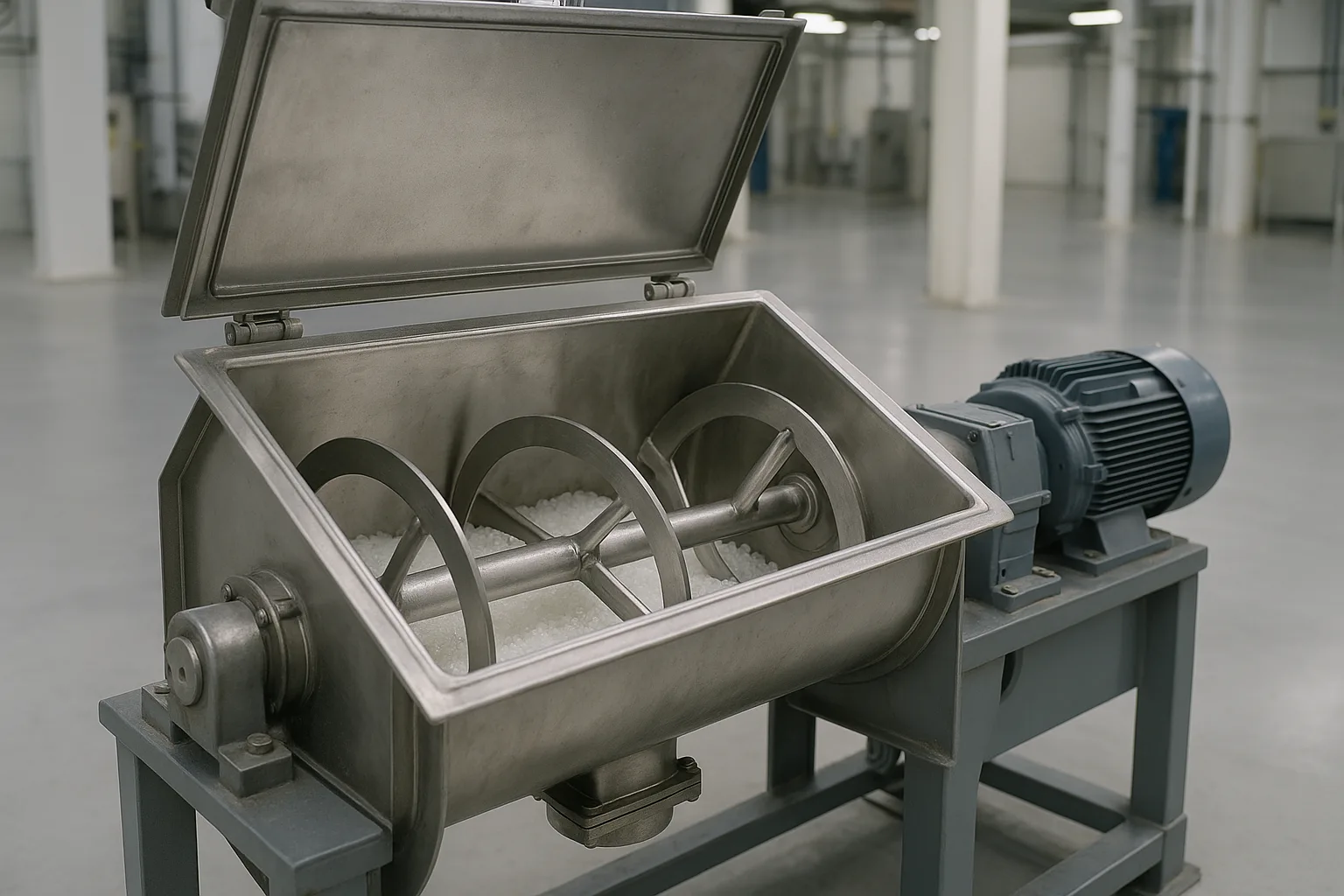
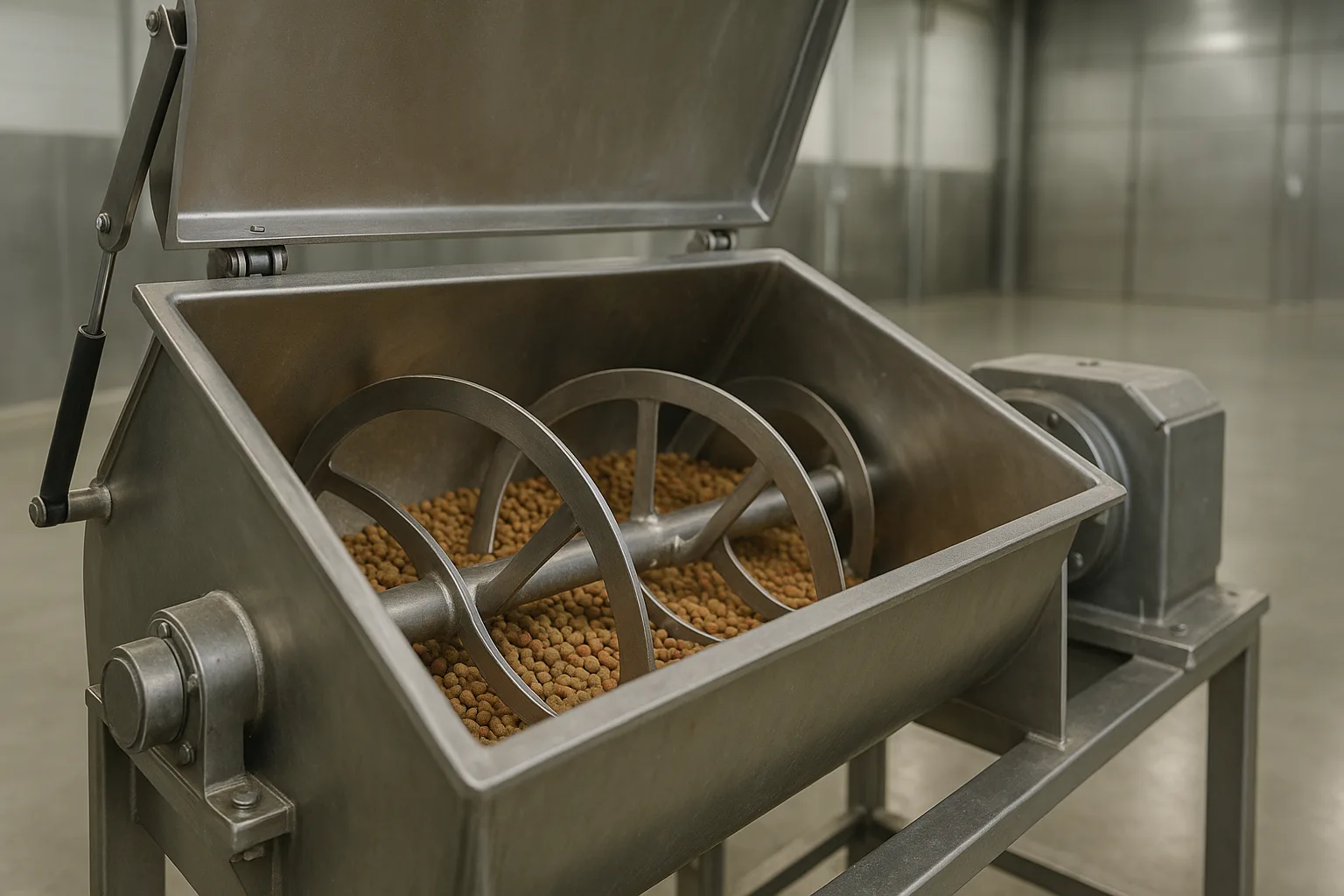
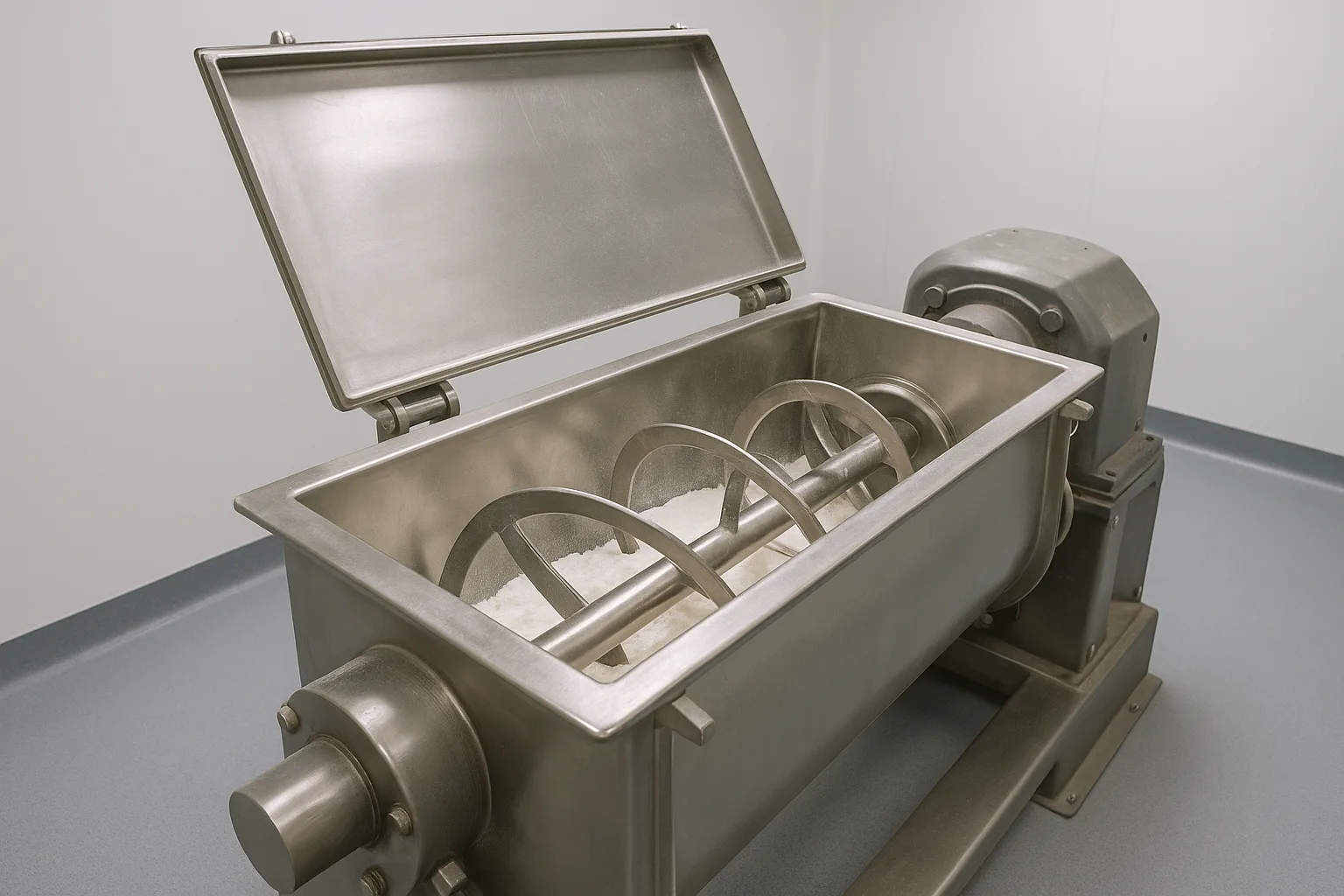
A horizontal ribbon blender with its cover open, product visible in the trough.

Application

Powder Blending in Pharmaceutical Production

In pharmaceutical production the blend is only as good as what reaches the press.

A blend that passes in the mixer can fail at the tablet if it segregates on the way, and more mixing is as likely to cause that as to cure it.

Explore
A horizontal ribbon blender with its cover open, product visible in the trough.

Application

Powder Blending in Plastics Compounding

Dry blending and separate feeding solve the same problem in different places.

A PVC dry blend absorbs additives into the resin before extrusion; separate gravimetric feeding keeps flexibility for recipe changes.

Explore
Photorealistic industrial process installation representing Powder Sampling.

Application

Powder Sampling

Powder sampling is the controlled collection of material for testing.

The sampling plan determines whether the result can represent the lot or process.

Explore
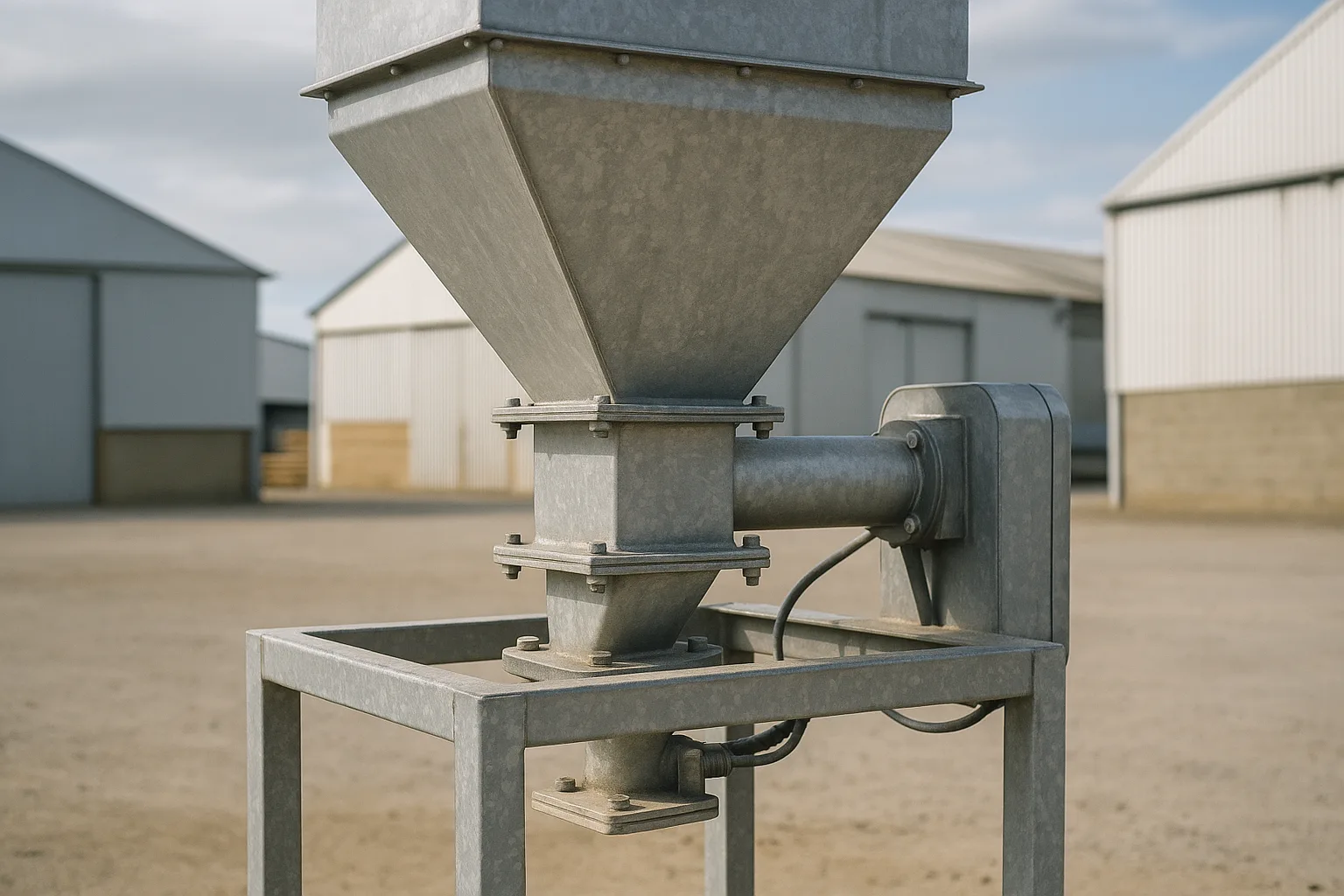
A loss-in-weight feeder, its hopper standing on load cells, discharging through a short screw into the inlet below.

Application

Routing Powder to Multiple Destinations in Agriculture

Grain and feed plants route one intake line to many bins, and the diverter decides whether the right product reaches the right bin.

Foreign objects jam the junction, and a jammed diverter sends material where nobody intended.

Explore
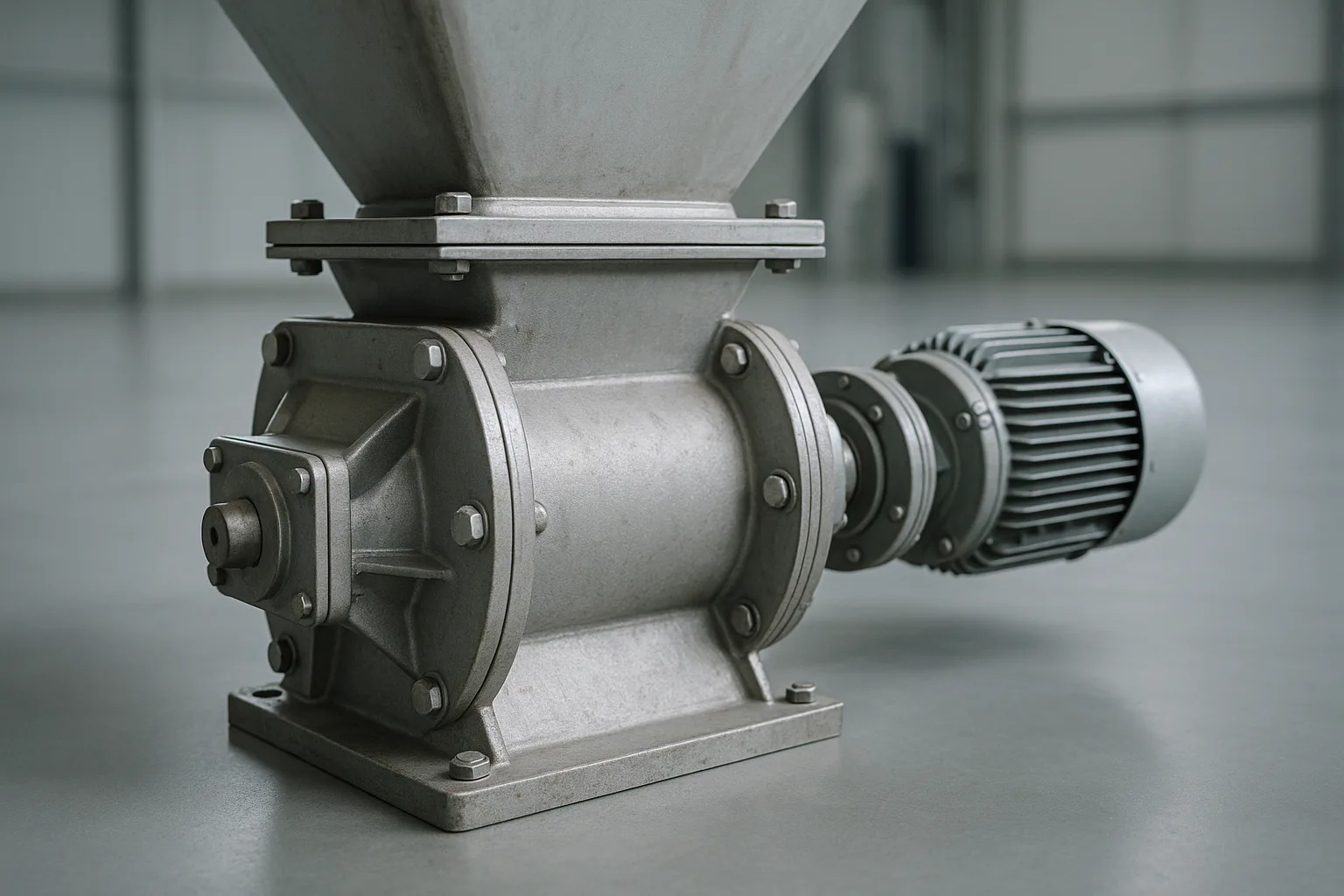
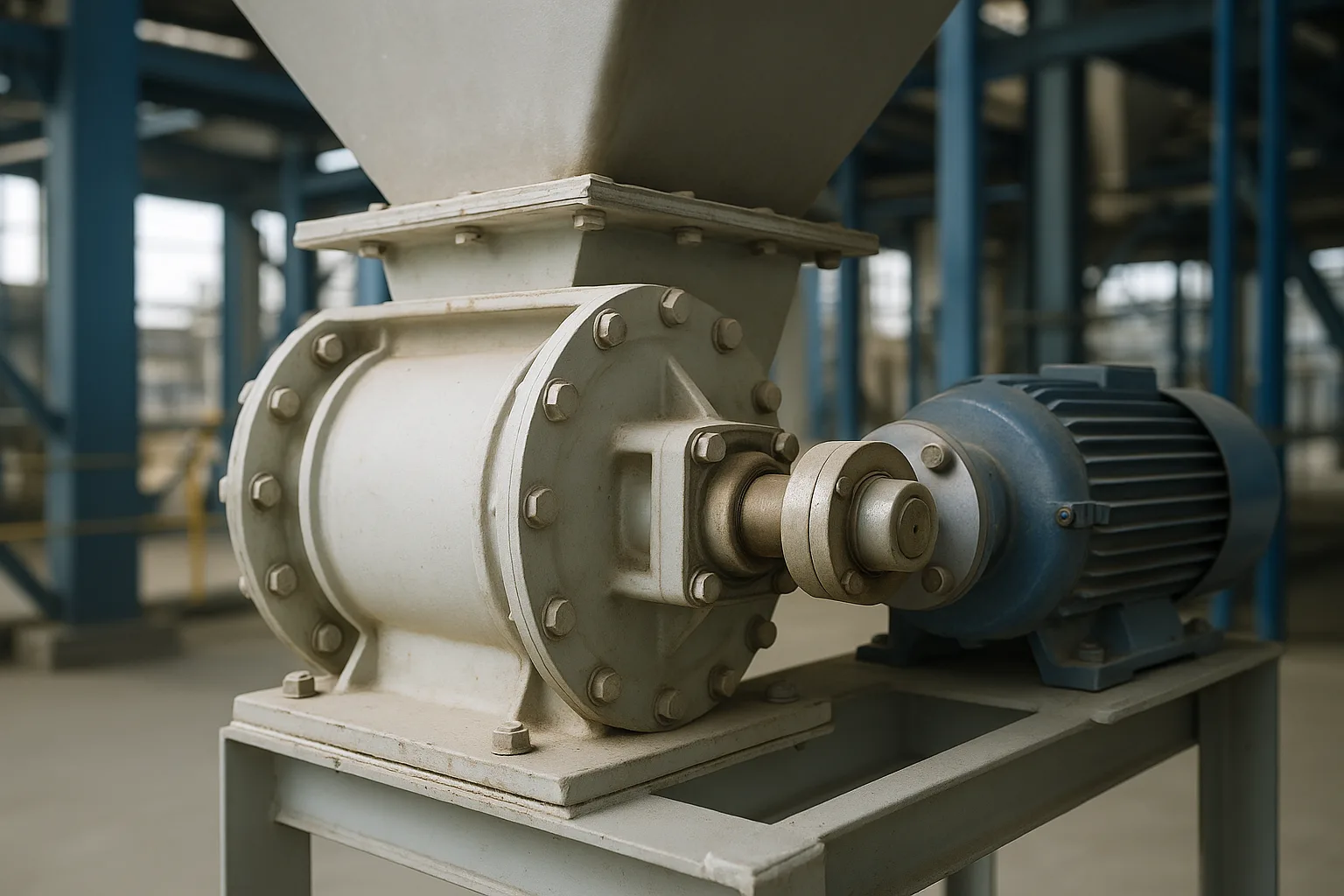
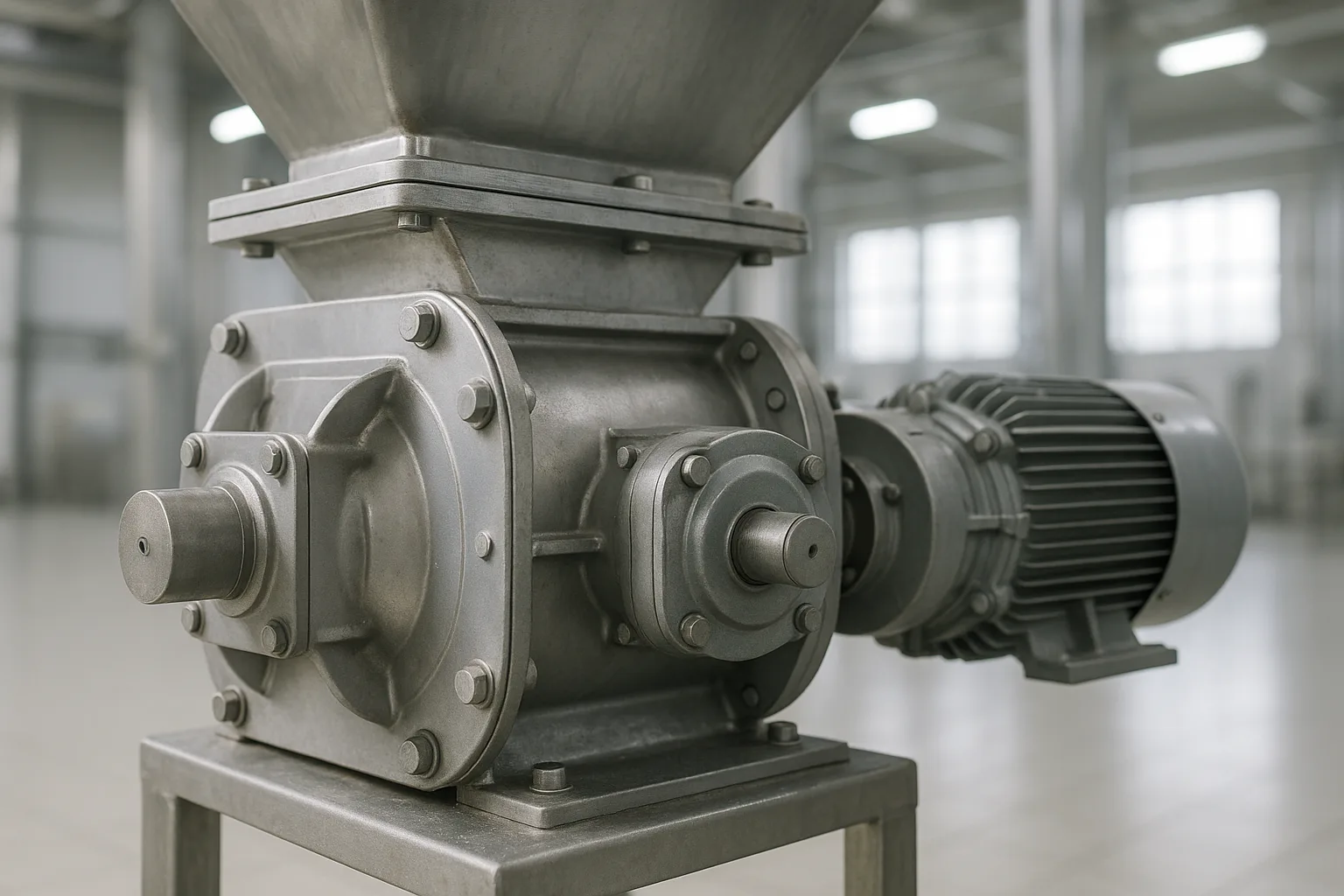
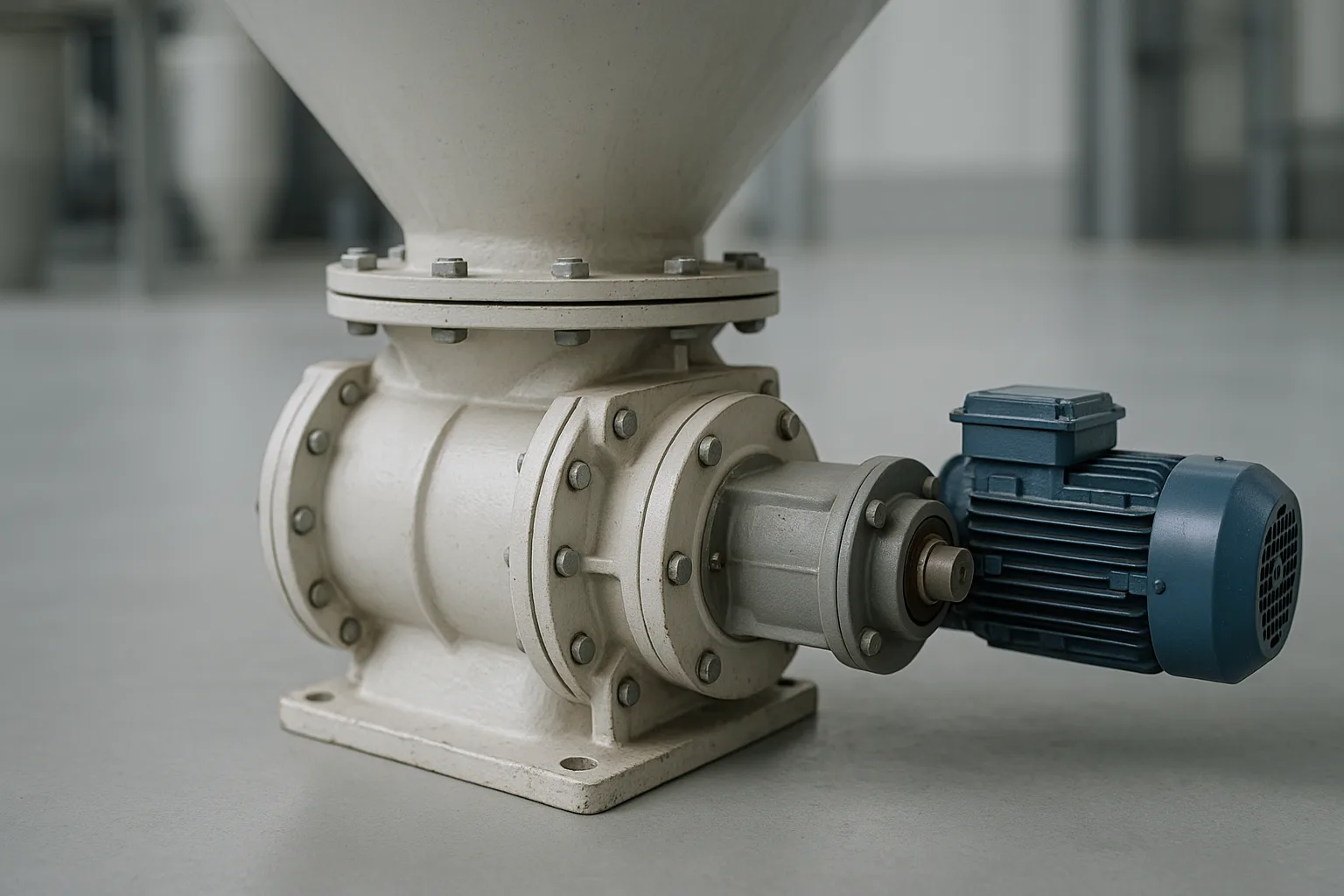
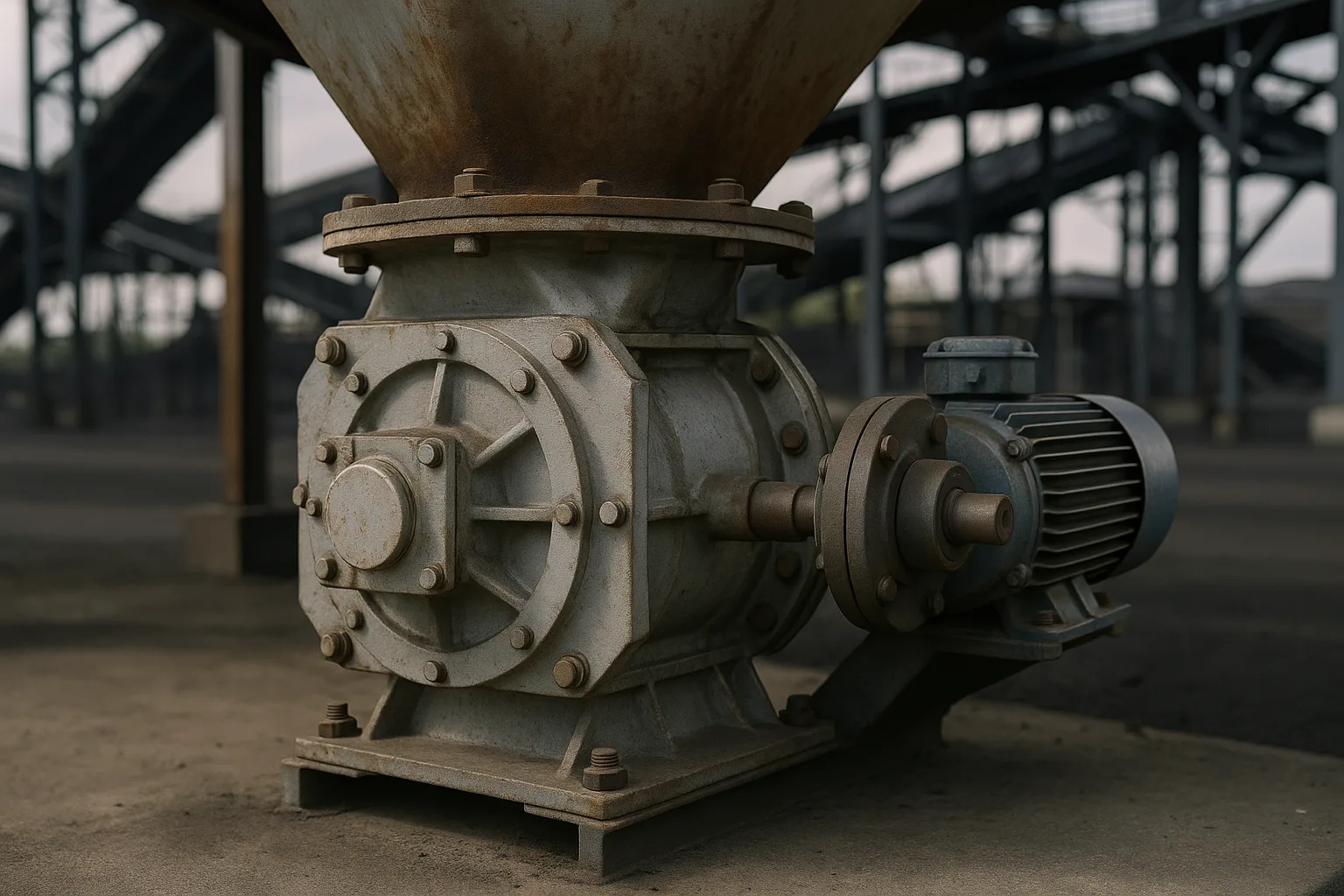
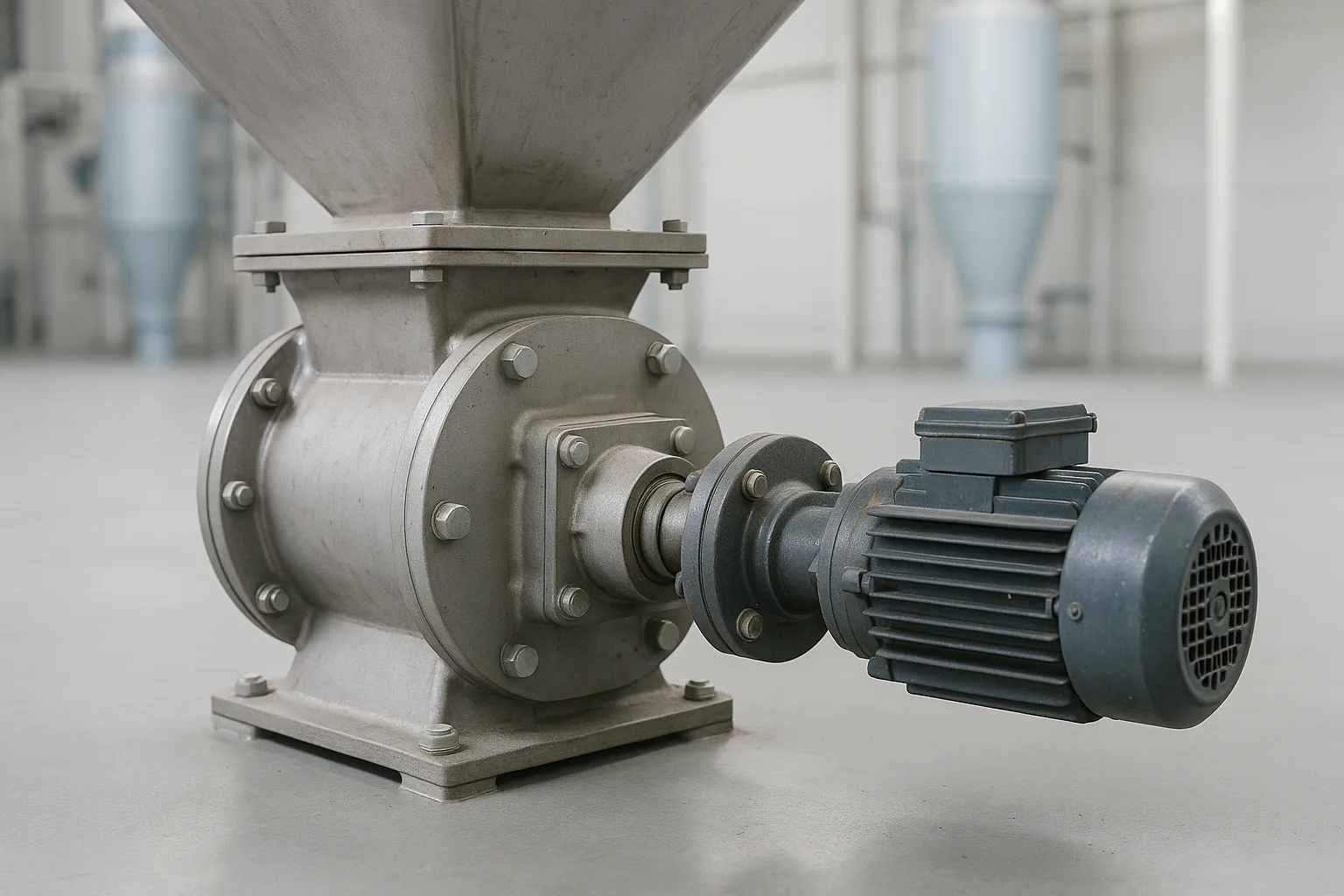
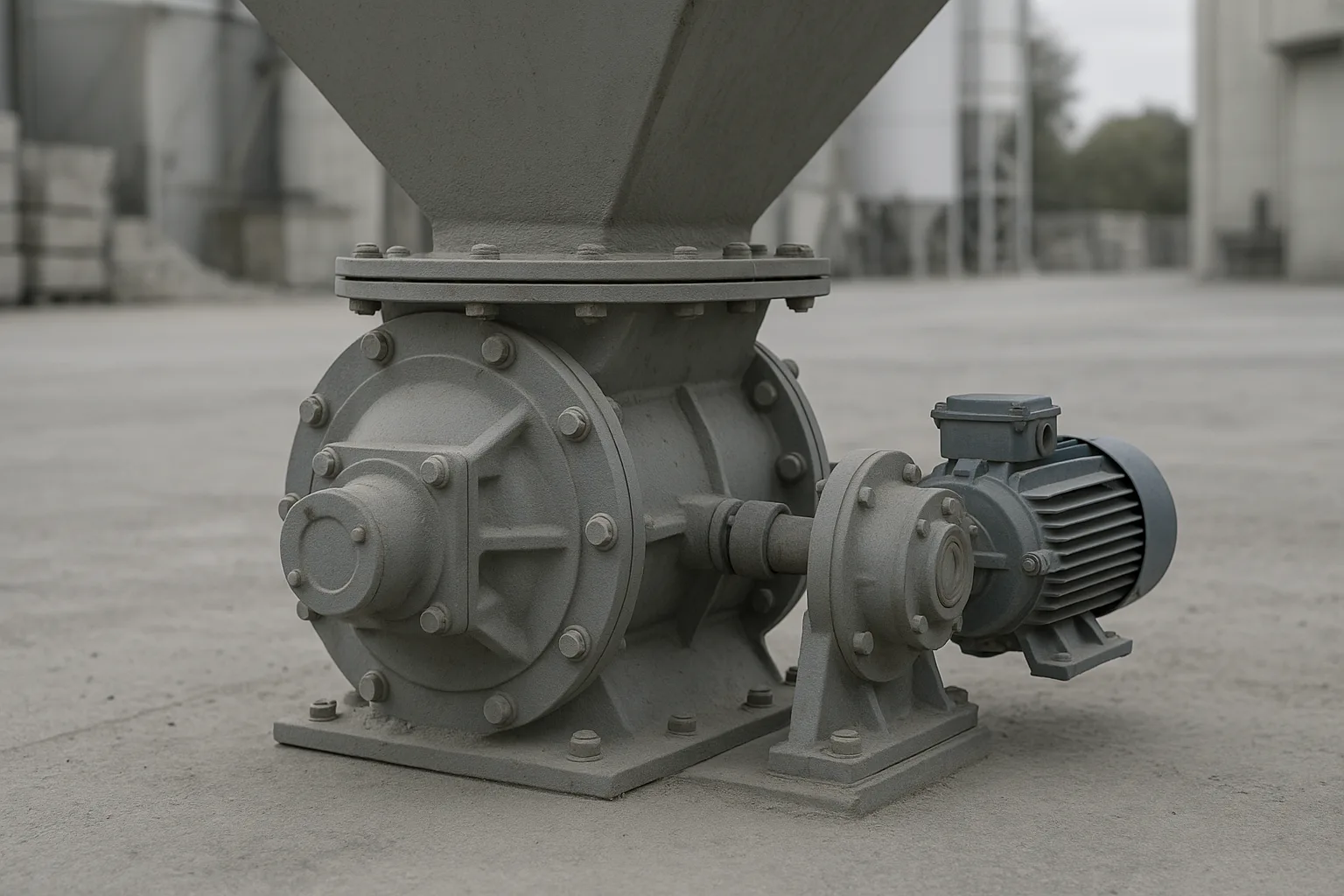
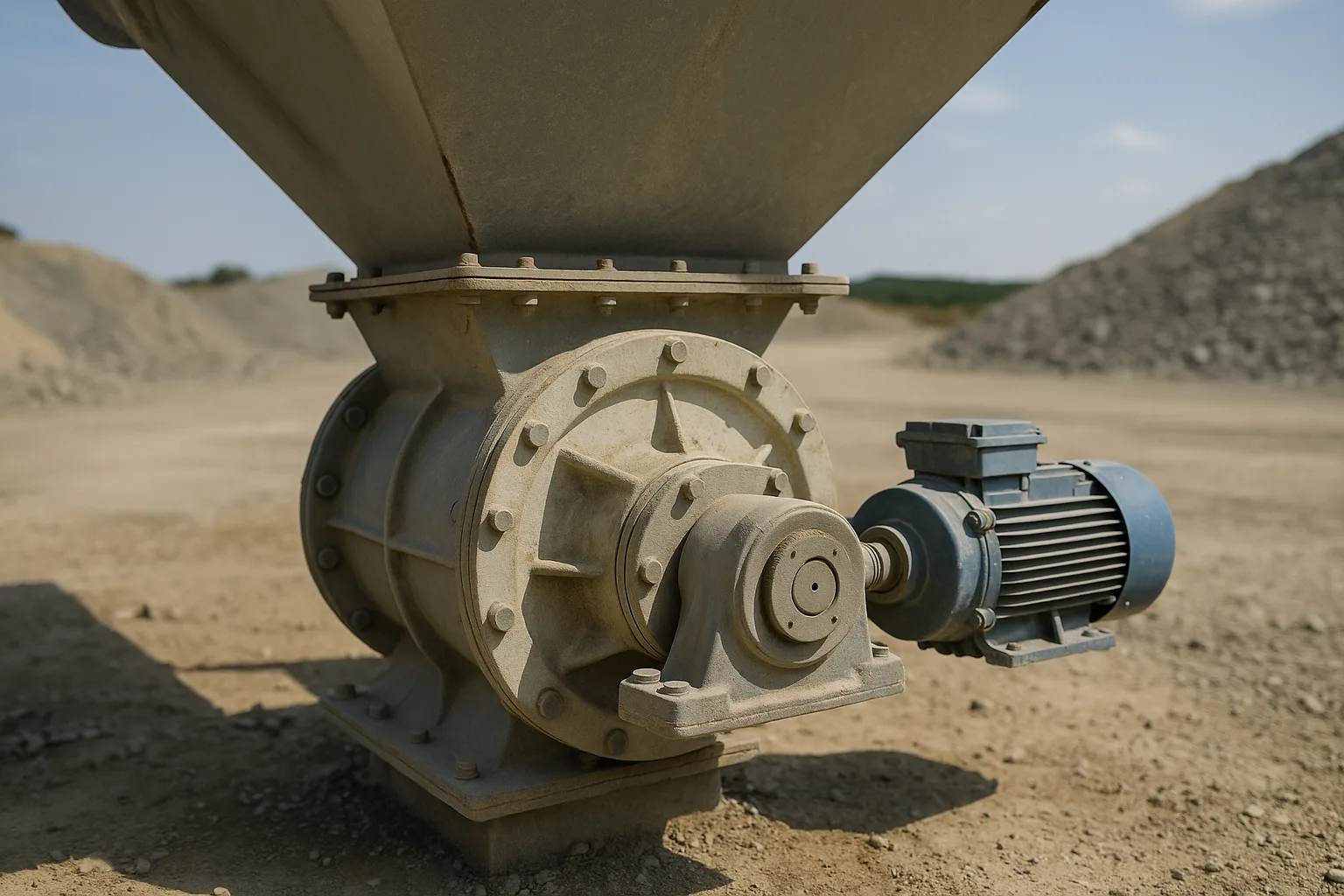
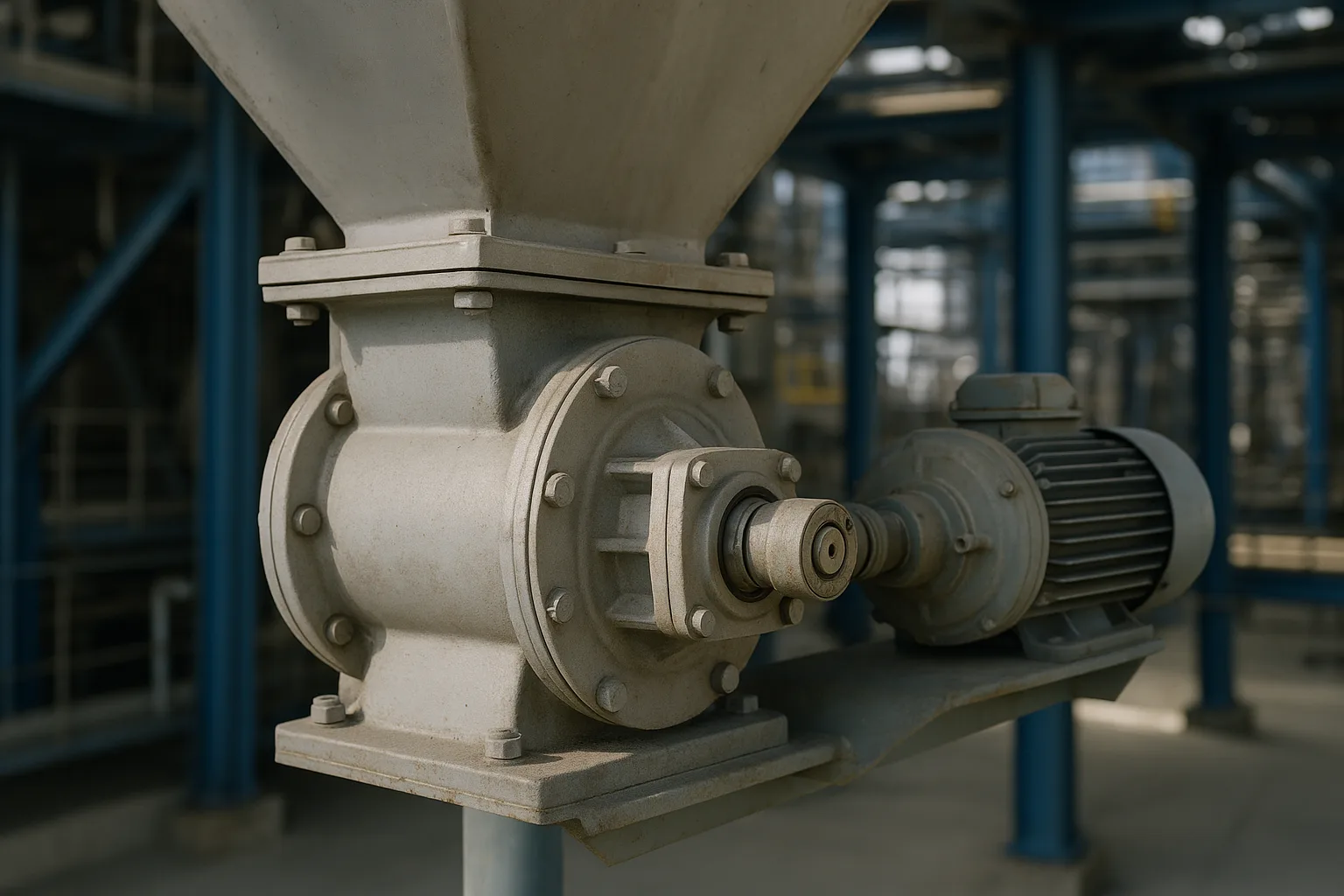
A rotary valve bolted under a hopper outlet, drive and bearing visible on one side.

Application

Routing Powder to Multiple Destinations in Building Materials

In a cement or lime plant the diverter sends one conveying line to several silos, and the junction is where the abrasion concentrates.

Wear here does not announce itself; it appears as material reaching the wrong silo or as a conveying line that no longer holds pressure.

Explore
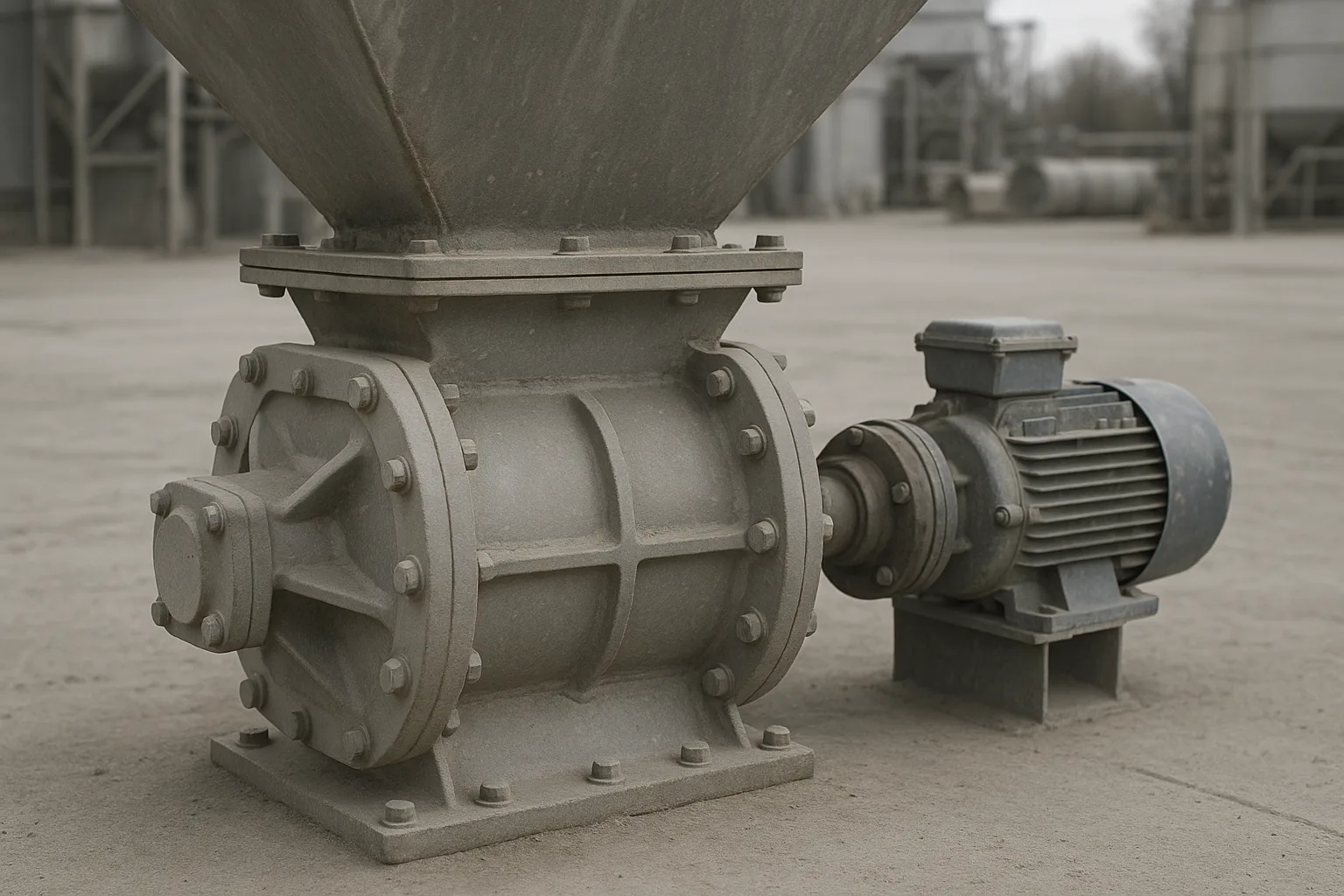
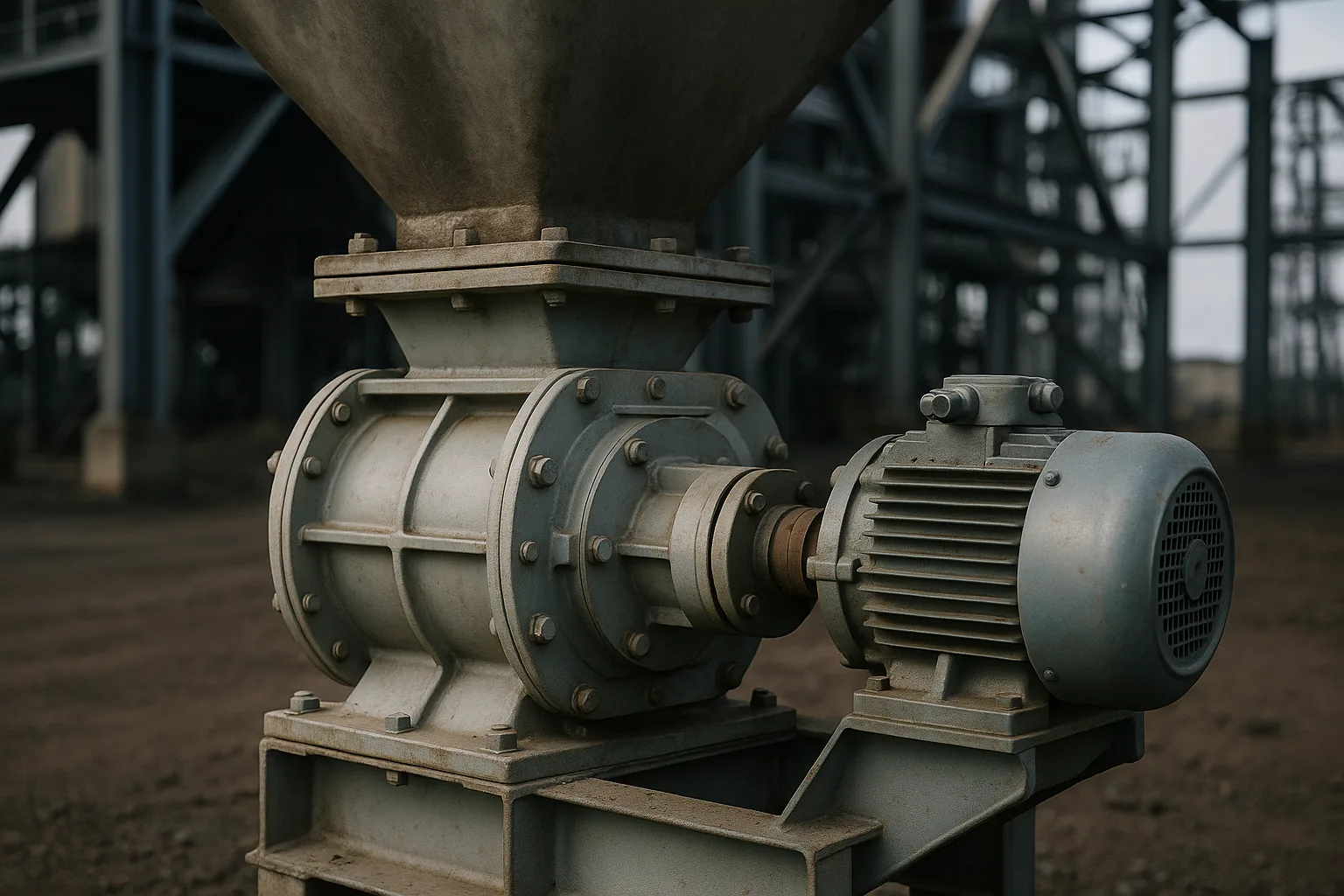
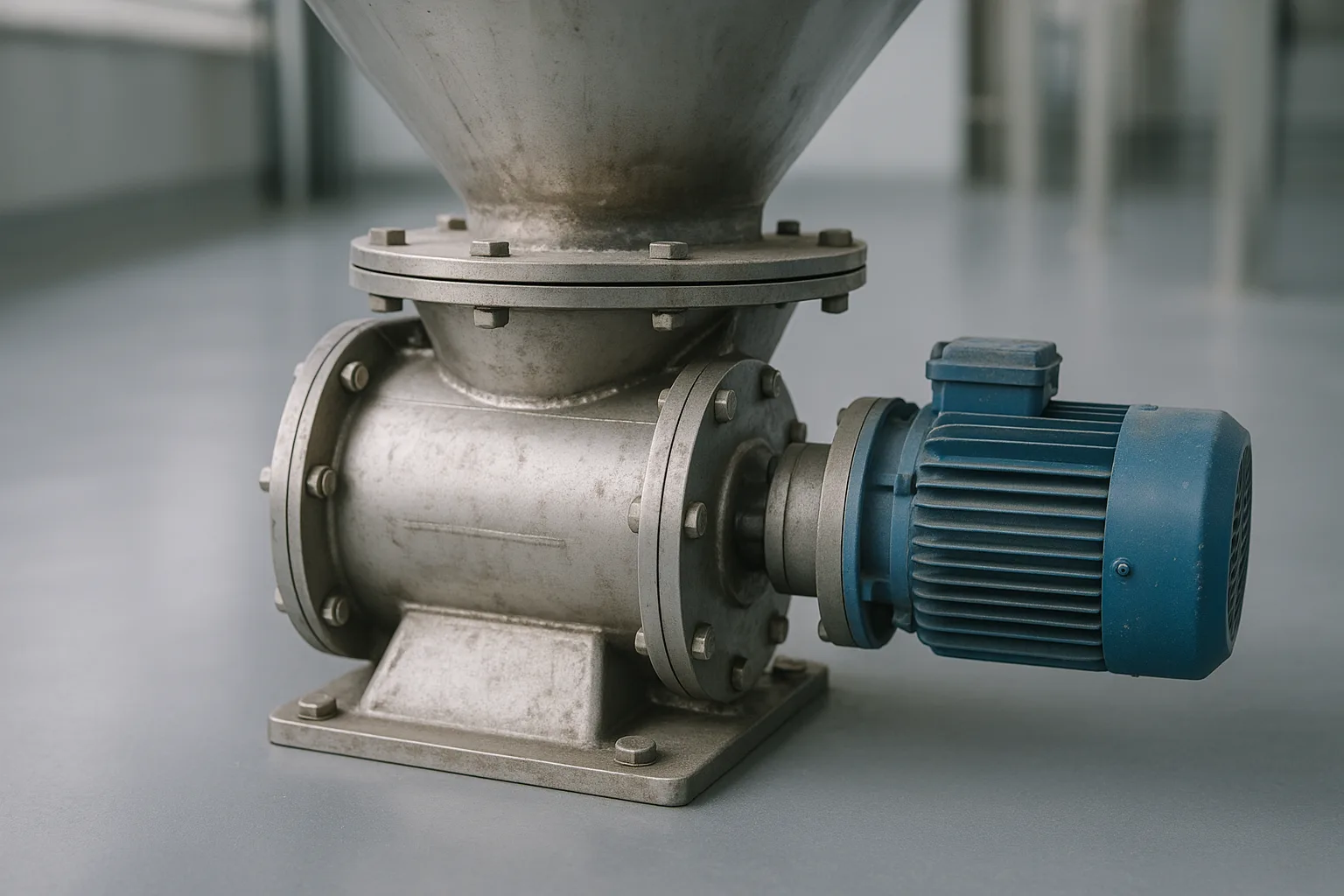
A rotary valve bolted under a hopper outlet, drive and bearing visible on one side.

Application

Routing Powder to Multiple Destinations in Chemicals

One source feeding several reactors or silos is normal in chemical plants, and the junction is where products meet.

Residue left at a diverter after a changeover is the most common route for cross-contamination in an otherwise closed system.

Explore
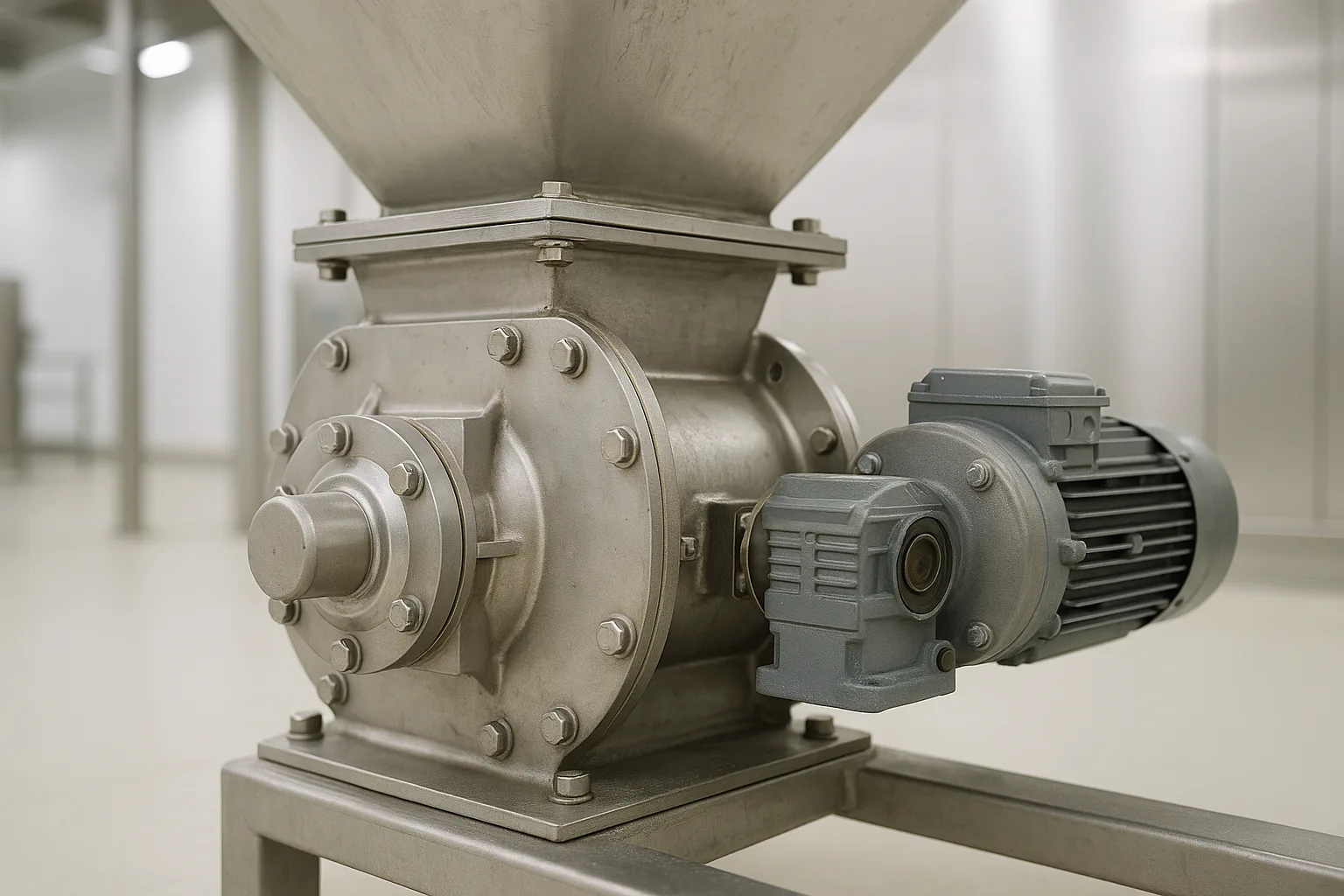
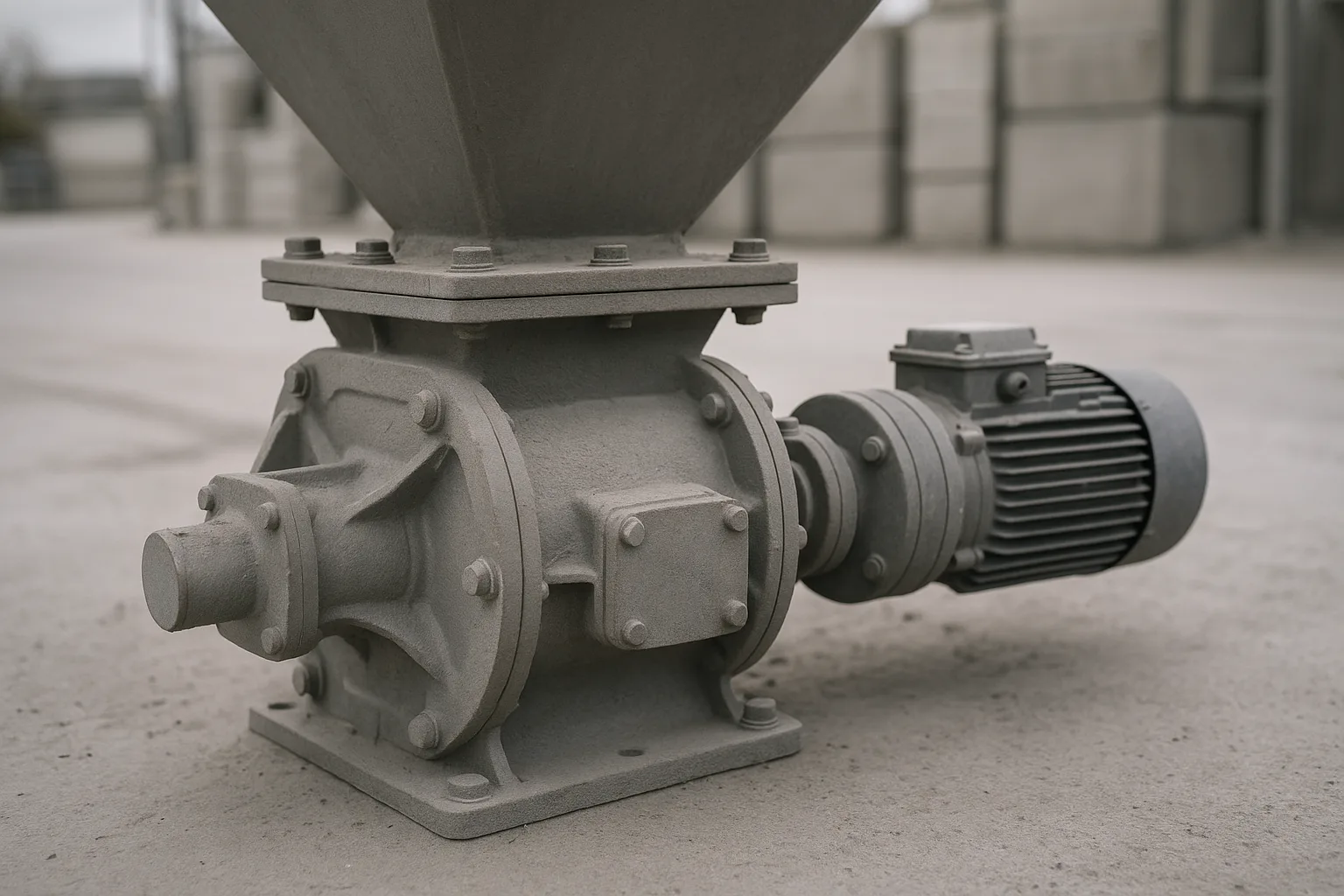
A rotary valve bolted under a hopper outlet, drive and bearing visible on one side.

Application

Routing Powder to Multiple Destinations in Energy & Power

A power plant routes ash from several collectors to several silos, and the diverters run continuously in abrasive service.

Aerated ash finds every leak path, and a worn junction quietly fills a silo nobody selected.

Explore
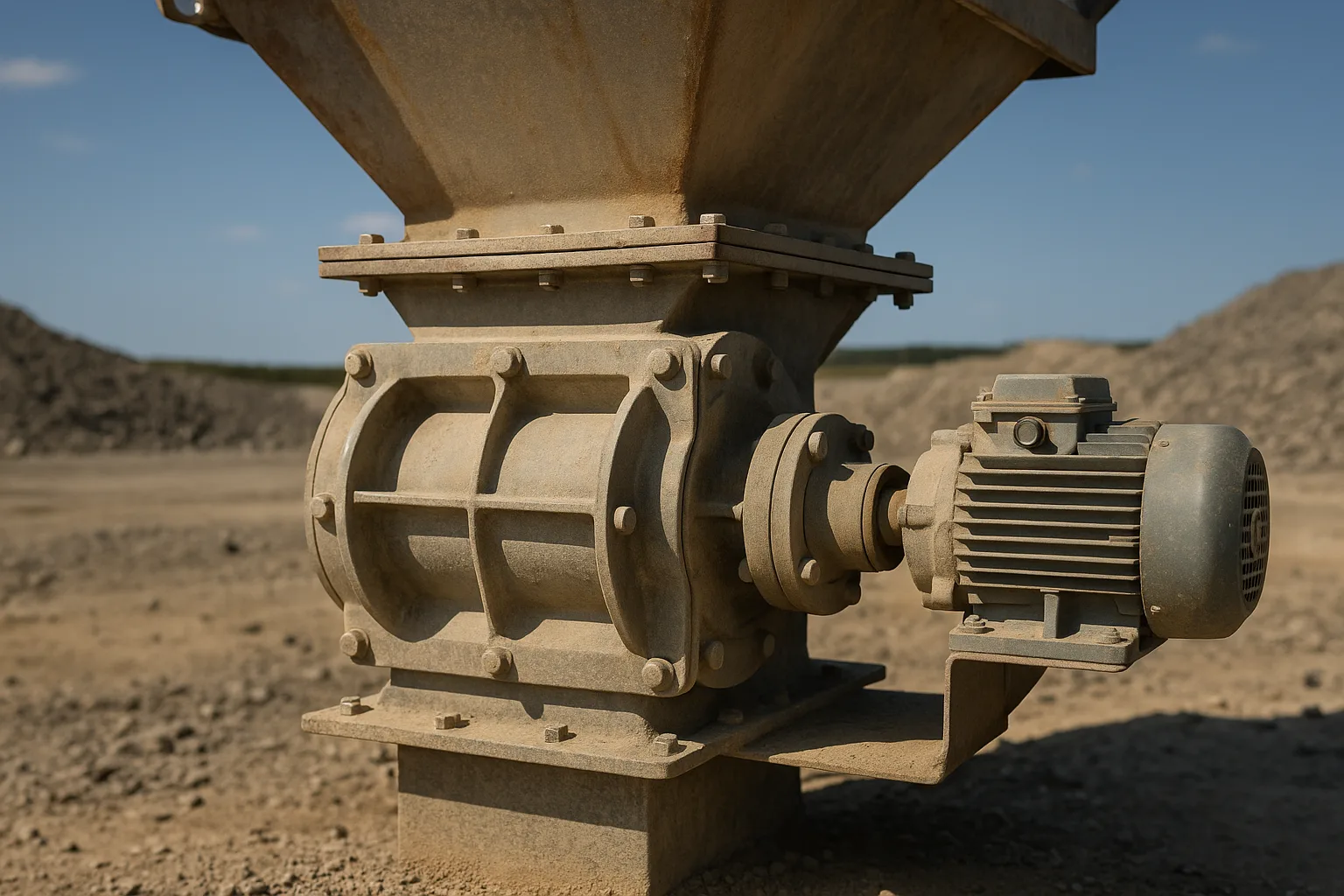
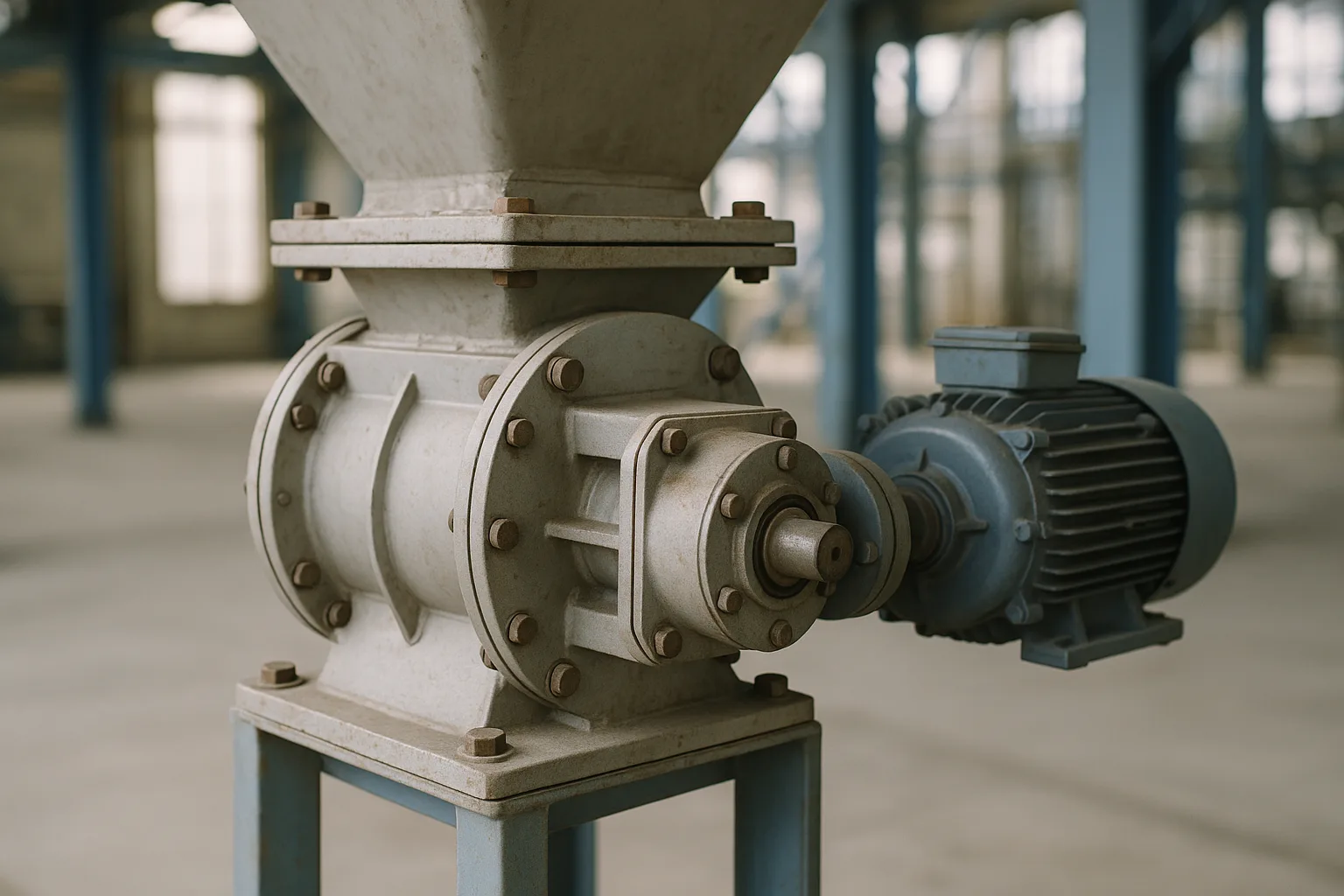
A rotary valve bolted under a hopper outlet, drive and bearing visible on one side.

Application

Routing Powder to Multiple Destinations in Pet Food

Pet food lines route finished kibble to several packers and premixes to several mixers, and the junction sees both.

Fat builds up where the stream changes direction, and that build-up is both a hygiene finding and a flow problem.

Explore
A rotary valve bolted under a hopper outlet, drive and bearing visible on one side.

Application

Routing Powder to Multiple Destinations in Plastics

A plastics plant routes many grades through few lines, so the diverter is where grades meet.

A pellet left in the junction appears in the next product as a colour speck or a property deviation.

Explore
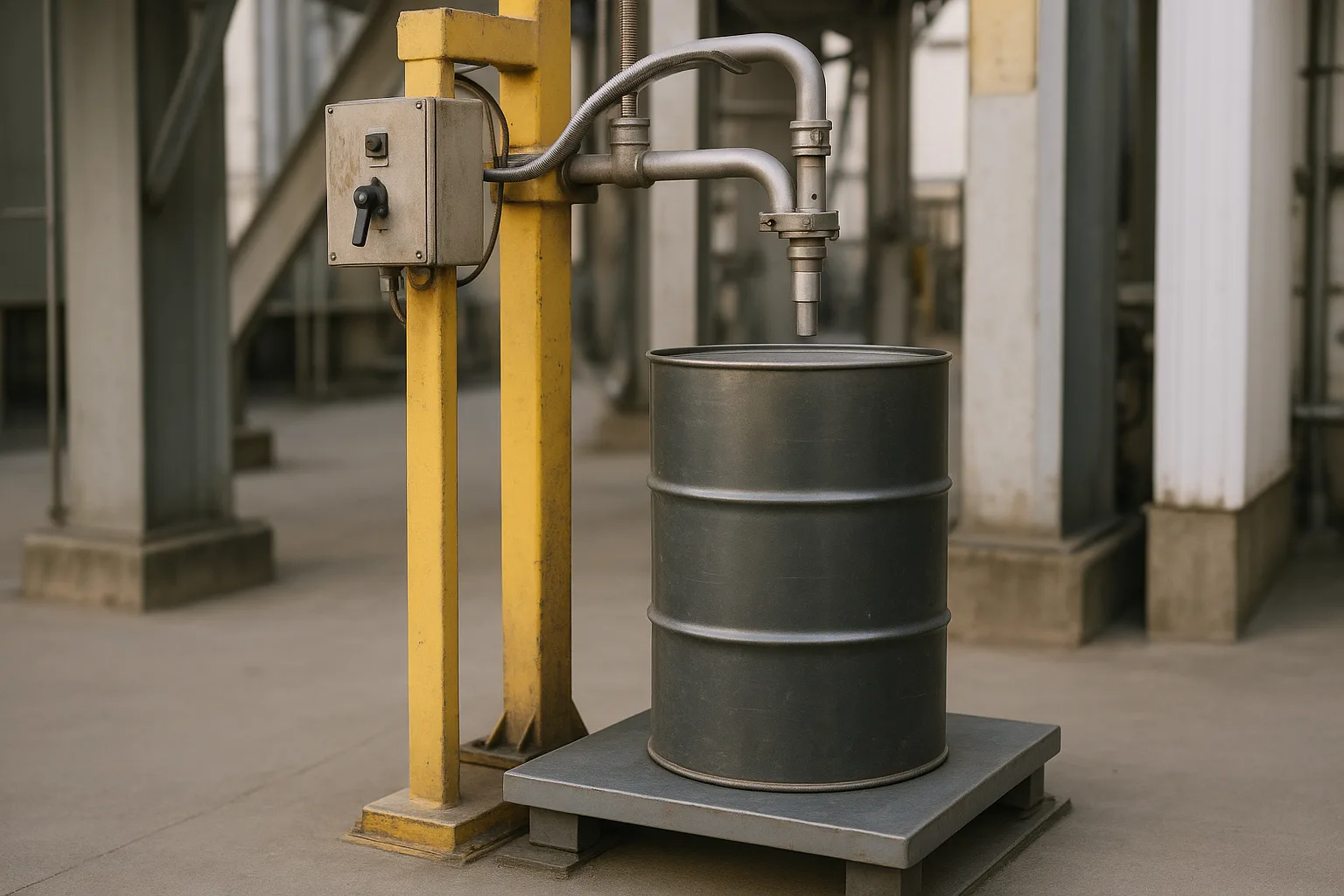
A drum filling station with one steel drum on a scale under the fill head.

Application

Sealed Drum Handling under Dust Collectors

Discharge continuously through a rotary valve or double-flap gate — the same device that acts as the explosion barrier — into a sealed drum interface: clamped covers with flexible sleeves, or continuous-liner systems that are crimped and cut at every change.

The collected dust is the finest, most concentrated fraction on site; the drum change is where containment is either engineered or lost.

Explore
A rotary valve bolted under a hopper outlet, drive and bearing visible on one side.

Application

Shut-off and Isolation in Fuel and Ash Bins

On a fuel bin the gate is part of the fire and entry safety case, not just a flow control.

Ash erodes the seat, biomass fibre wedges the blade, and anyone entering the bin depends on that gate being genuinely closed.

Explore
A rotary valve bolted under a hopper outlet, drive and bearing visible on one side.

Application

Shut-off and Isolation in Plastics Silos

A gate on a pellet silo is simple until a pellet gets caught in the seat.

A trapped pellet keeps the gate from closing fully, which matters most when the gate is the isolation point for work below.

Explore
A rotary valve bolted under a hopper outlet, drive and bearing visible on one side.

Application

Shut-off and Isolation under Cement and Lime Silos

Under a cement or lime silo the gate faces a powder that behaves like a liquid when aerated and like rock when it is not.

Aerated powder finds every gap in a closed gate, and consolidated powder resists the blade that has to cut through it.

Explore
A rotary valve bolted under a hopper outlet, drive and bearing visible on one side.

Application

Shut-off and Isolation under Mineral Silos

Under a mineral silo the gate has to close against a column that is heavy, abrasive and sometimes consolidated.

The force required is far higher than the empty-silo figure, and the blade is a wear part from the first operation.

Explore
A horizontal ribbon blender with its cover open, product visible in the trough.

Application

Shut-off at Mixer and Coater Outlets in Pet Food Plants

The gate under a mixer or coater has to empty the batch completely and then be cleanable.

Fat and fines collect at the seat, and what stays behind is both a hygiene finding and the first ingredient of the next recipe.

Explore
A rotary valve bolted under a hopper outlet, drive and bearing visible on one side.

Application

Silo Isolation and Shut-off in Chemicals

The gate under a chemical silo exists so that someone can open the equipment below it.

That makes it a safety component, and a gate that cannot be proven closed is not one.

Explore
Photorealistic industrial process installation representing Dense-Phase Conveying Selection and Design.

Application

Vacuum Conveying for Battery Powder

Vacuum conveying moves battery powders through an enclosed line, which helps with dust and contamination control — but the enclosure alone proves nothing.

The design has to match the actual powder: its moisture sensitivity, electrostatic behavior, cohesion and quality limits, verified with representative material before the duty is accepted.

Explore
Photorealistic industrial process installation representing Vacuum Conveying from Bulk Bags.

Application

Vacuum Conveying from Bulk Bags to Process Equipment

Vacuum conveying moves powder from a bulk bag through a pickup point into a receiver that discharges to the process.

The transfer works as a system: bag discharge sets the feed, the line moves it, and the receiver sequence protects the batch.

Explore
A rotary valve bolted under a hopper outlet, drive and bearing visible on one side.

Application

Valve and Airlock Selection for Battery Material Production

In battery production a valve has to keep the powder in and everything else out.

The materials carry real occupational exposure limits, and metallic contamination from a worn valve ruins the electrochemical value of the batch.

Explore
A rotary valve bolted under a hopper outlet, drive and bearing visible on one side.

Application

Valve and Airlock Selection for Building Materials Plants

In a cement or lime plant the valve is a wear part, and the only question is how long it lasts and how quickly it can be changed.

Fine mineral powders open rotor clearances steadily, and the first symptom is not a leak you can hear but a conveying line that no longer reaches its rate.

Explore
A rotary valve bolted under a hopper outlet, drive and bearing visible on one side.

Application

Valve and Airlock Selection for Chemical Powder Lines

In chemical plants the valve is rarely chosen for throughput; it is chosen for what the powder does to it and for what it must not let past.

Corrosive and hygroscopic solids attack seats and clearances, and most lines cross a pressure boundary somewhere between the silo and the reactor.

Explore

About applications

Why we organise by job

Nobody buys a rotary valve. They buy a way to get flour out of a silo without losing air pressure.

Equipment catalogues are organised by machine, because that is how machines are built and sold. Plants are organised by job, because that is how problems arrive. Somebody has to unload a tanker, feed a press, keep a baghouse from blinding or stop dust escaping at a transfer point.

This section follows the second order. Each page names a job, in a named industry, and works from the duty to the equipment.

The jobs on this site

  • Receiving: tanker unloading, bulk bag discharge, sack tipping, drum emptying.
  • Storage and reclaim: silo discharge, bin activation, flow aids, level and inventory.
  • Transfer: pneumatic conveying in dilute and dense phase, mechanical conveying, routing to several destinations.
  • Dosing and preparation: gravimetric and volumetric feeding, batching, screening, mixing, milling.
  • Protection: dust collection, explosion venting and isolation, containment for potent compounds.
  • Despatch: bagging, big bag filling, truck and ship loading.

What makes a job difficult

The duty is rarely constant

A conveying line sized for the average rate fails at the peak. A feeder sized for the nominal recipe cannot hold tolerance at the smallest addition. The first question on any application page is therefore the range, not the figure: the lowest rate, the highest rate, and how often each occurs.

The machines interact

Most jobs need a chain, and the weakest link decides the result. A vacuum receiver that cannot clean its filter will starve the feeder below it, whatever the feeder is capable of. A silo that bridges makes the discharge equipment irrelevant.

Where a page recommends equipment, it names the interface as well: what has to be true upstream and downstream for the machine to perform as specified.

The industry changes the answer

The same job has different constraints in different industries. Bulk bag discharge in a food plant has to be cleanable and allergen-segregated. In a cement works, the same job is about wear and dust. In pharmaceuticals, it is about containment and validation.

That is why the pages are written by job and industry together, rather than by job alone.

How to use this section

If you know the job, start here and follow the links into the technologies it uses. If you know the material, start from the material pages and arrive at the same place from the other side. If you know the machine, the technology pages are the way in.

Every application page carries the same structure: the problem as operators describe it, the result a good design delivers, how the job is normally arranged, the factors that decide the selection, and the failure modes that show up when one of them was missed.

What these pages do not do

They do not size equipment. Sizing needs measured material properties, the real duty cycle and the plant layout, and it belongs with the supplier who will stand behind the result.

What they do is shorten the distance between a problem and the right question. Most bad installations are not bad machines; they are machines selected against the wrong duty, or installed without the condition that made them work in the reference plant.

How the duty is written down

Most arguments between a plant and a supplier come from a duty that was never written down properly. Five lines prevent them.

  • Material and condition: name, supplier, particle size distribution, moisture range, temperature at the inlet.
  • Rate: average, peak, and the duration of the peak. A line that runs ten minutes at double rate is a different line.
  • Geometry: horizontal distance, vertical lift, number and radius of bends, the position of every destination.
  • Environment: area classification, hygiene standard, washdown, ambient temperature and humidity.
  • Acceptance: what will be measured on handover, and against which tolerance.

Where the limits sit

Conveying velocity

Dilute phase conveying carries material suspended in air and needs a velocity above the saltation point, which for most powders puts it in the range of roughly fifteen to thirty metres per second. Dense phase moves material as slugs at a fraction of that, typically single digits.

The difference is not a preference. High velocity breaks fragile product and erodes bends; low velocity needs more pressure and a vessel rather than a blower. Fragile or abrasive material pushes the choice towards dense phase, long distances and high rates towards dilute.

Feeding accuracy

A volumetric feeder meters a volume and assumes a density. A gravimetric feeder weighs, and therefore holds tolerance when the density changes. Wherever the recipe tolerance is tighter than the density variation of the material, the question is already answered.

Dust capture

Capture happens at the source or it does not happen. Extraction volume follows the open area and the face velocity needed to hold dust in, not the size of the machine, and a hood that is too far away cannot be fixed with a bigger fan.

The failure modes that repeat

Across every job on this site, the same four causes account for most of what goes wrong after commissioning.

  • Sized for the average. The peak rate was known and left out of the specification, so the line runs at its limit every shift.
  • The interface was nobody's scope. Two suppliers each delivered correctly, and the connection between them was designed by neither.
  • The material changed. A new supplier, a finer grade or a wetter season moved a property that the design depended on.
  • Cleaning was an afterthought. The equipment performs and cannot be cleaned in the time the plant has, so it is opened less often than it should be.

None of these is exotic, and all four are cheap to prevent at the specification stage and expensive to fix afterwards. Each application page names the ones that apply to that job.

Frequently asked questions

What is the difference between an application and a technology page?
A technology page describes a class of machine and how it is selected. An application page describes a job in a named industry and which machines, together, solve it. The same technology appears in many applications.
Why is the same job split by industry?
Because the constraints differ. Bulk bag discharge in food production is a hygiene and allergen problem, in a cement works a wear and dust problem, in pharmaceuticals a containment problem. One page per combination keeps each answer specific.
Can these pages replace a supplier's sizing?
No. They name the duty questions and the decisive properties. Sizing requires measured material data and the real duty cycle, and it belongs with the supplier who warrants the performance.

Partner with powderbulkvideos.com

Put your technical expertise in front of engineers who are already researching.

Build a connected company, video and technology presence with clearly labelled partner visibility and measurable placement performance.